
Last updated September 23, 2026
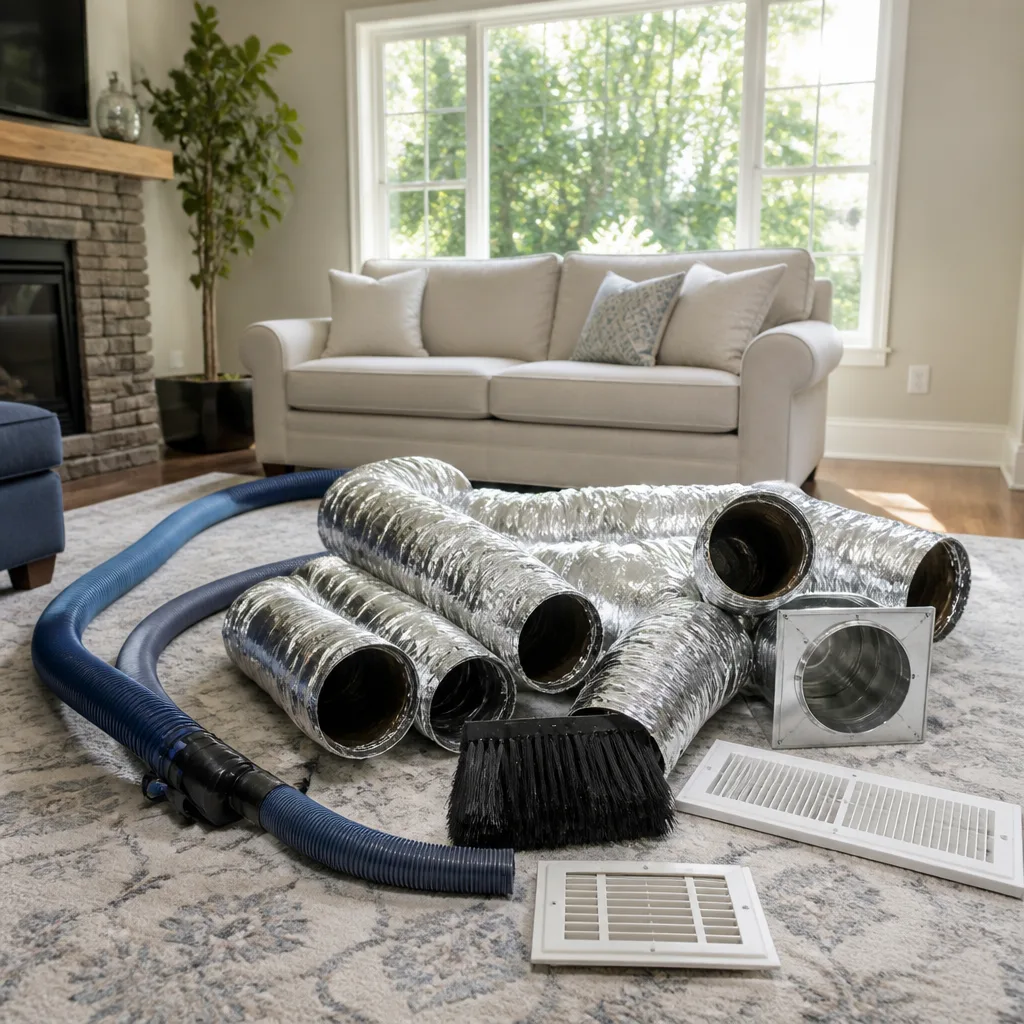
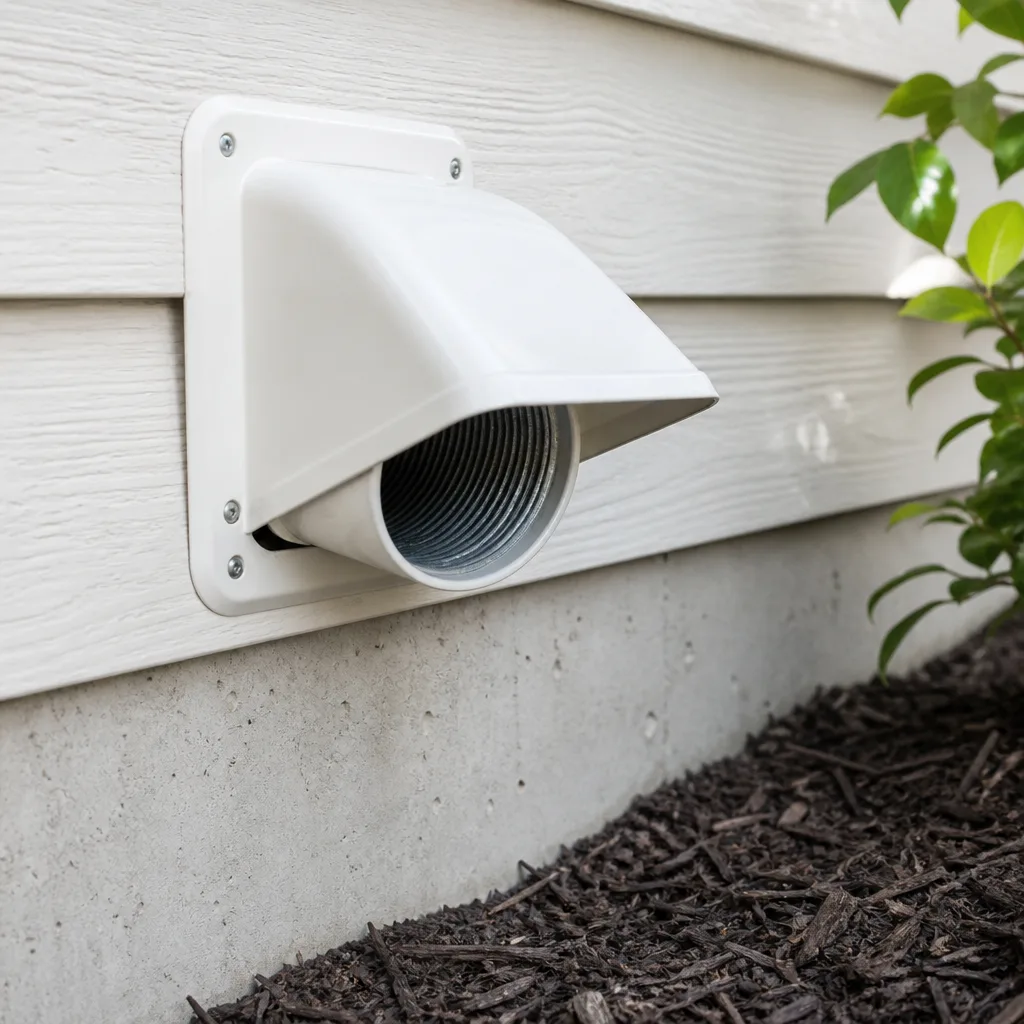
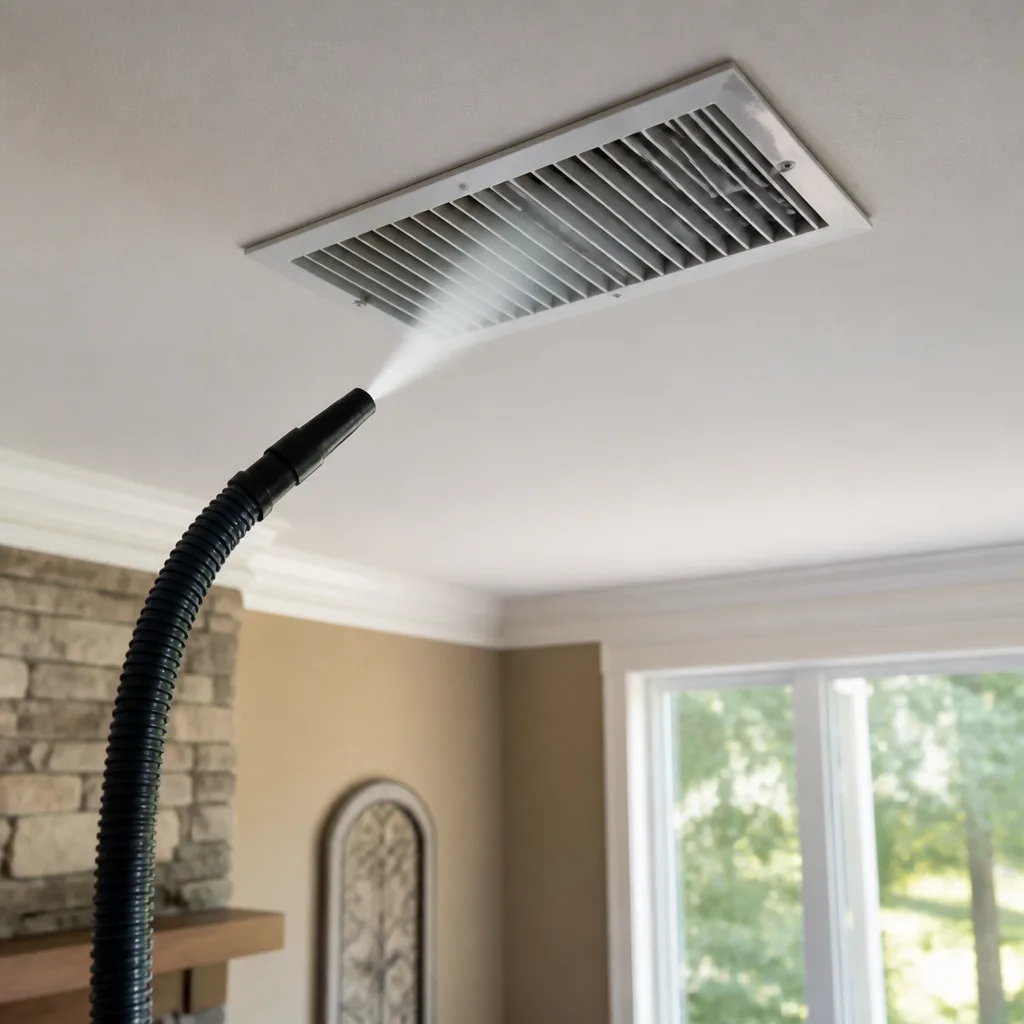
Whole-system duct and dryer vent check with before-and-after photos - you see exactly what came out of your vents
That "$99 whole-house special" is a bait ad - the real number appears once they are in your hallway, or the "clean" is a shop-vac at the register. We photograph the inside of your ducts before and after instead.
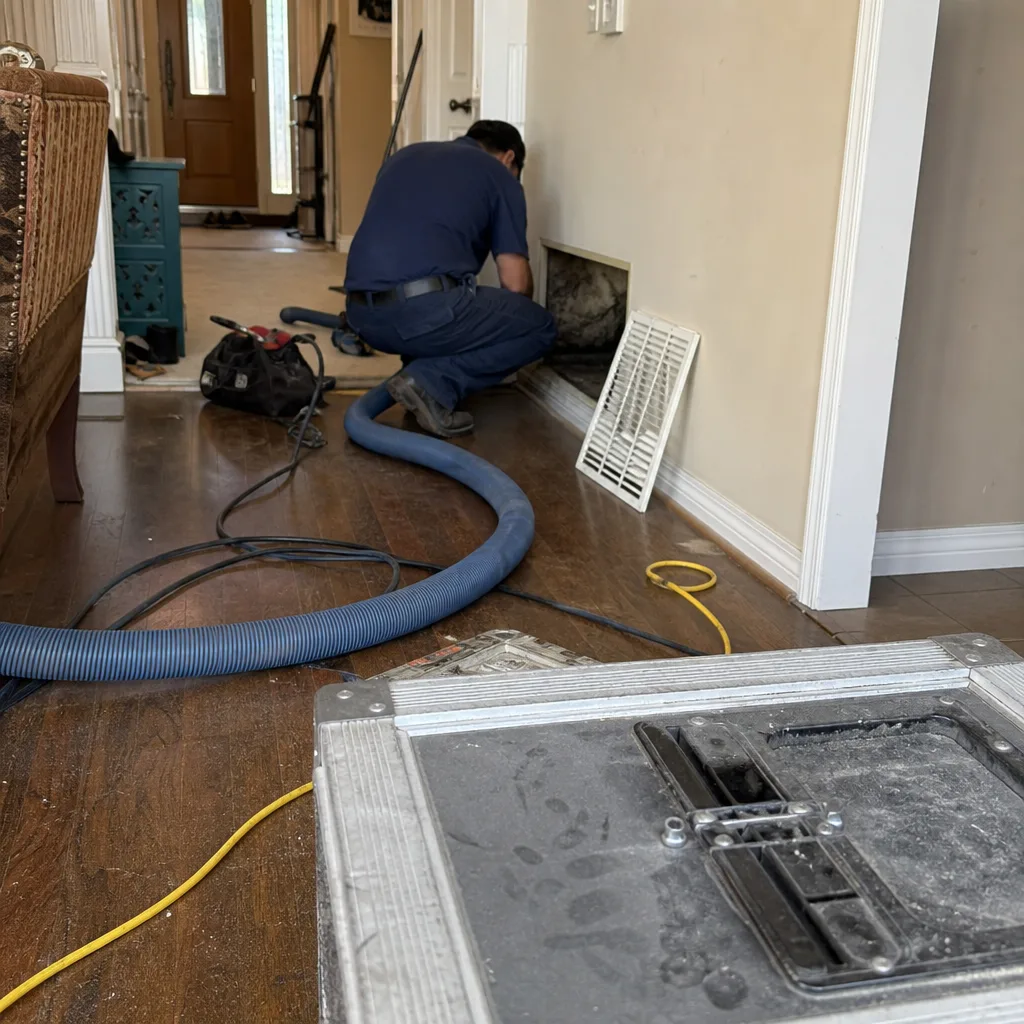 Before
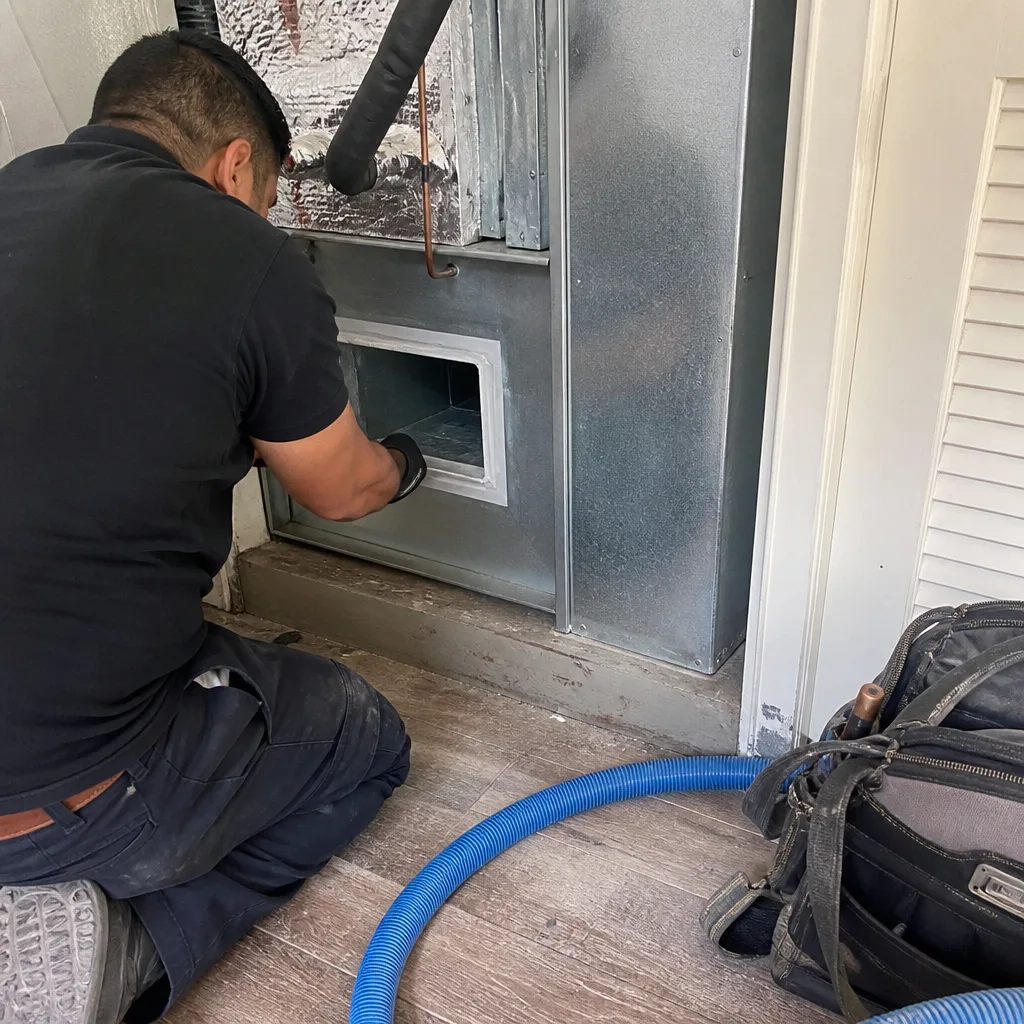 After
After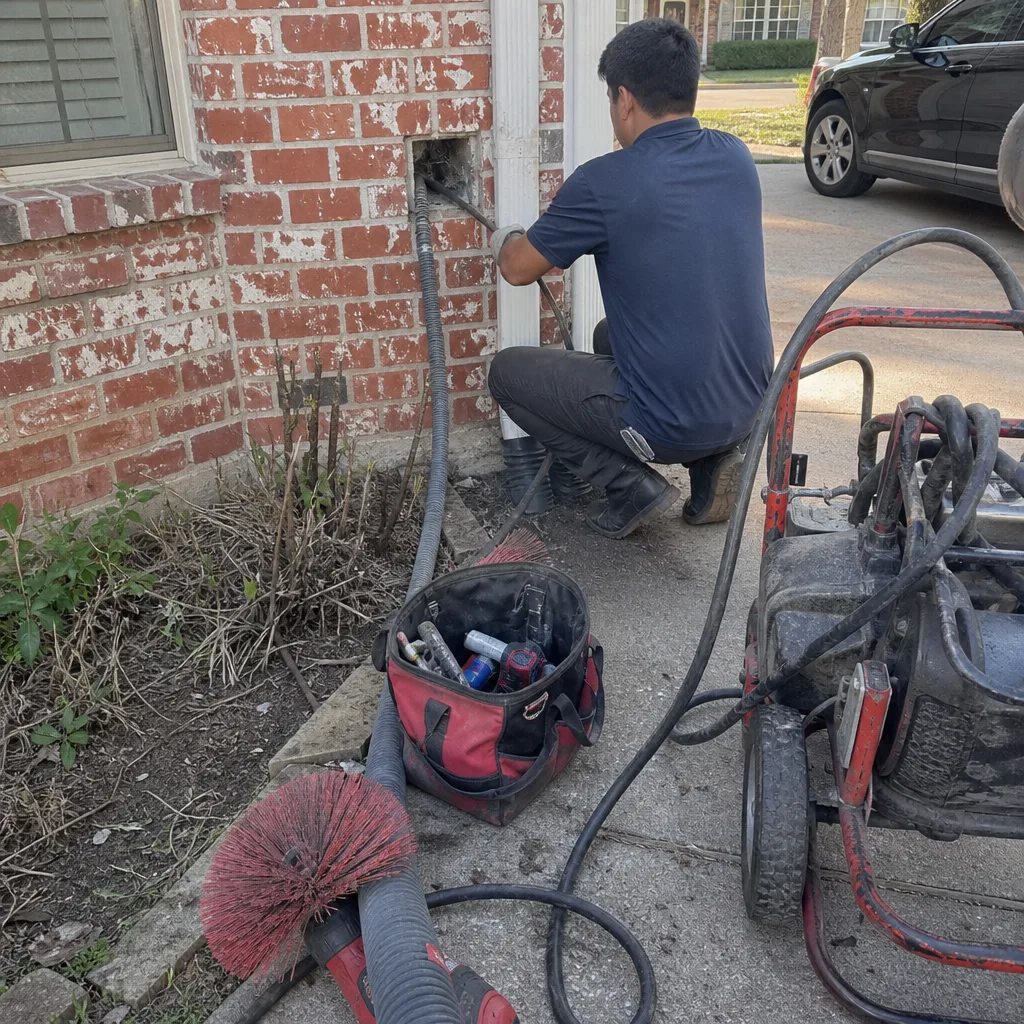 Before
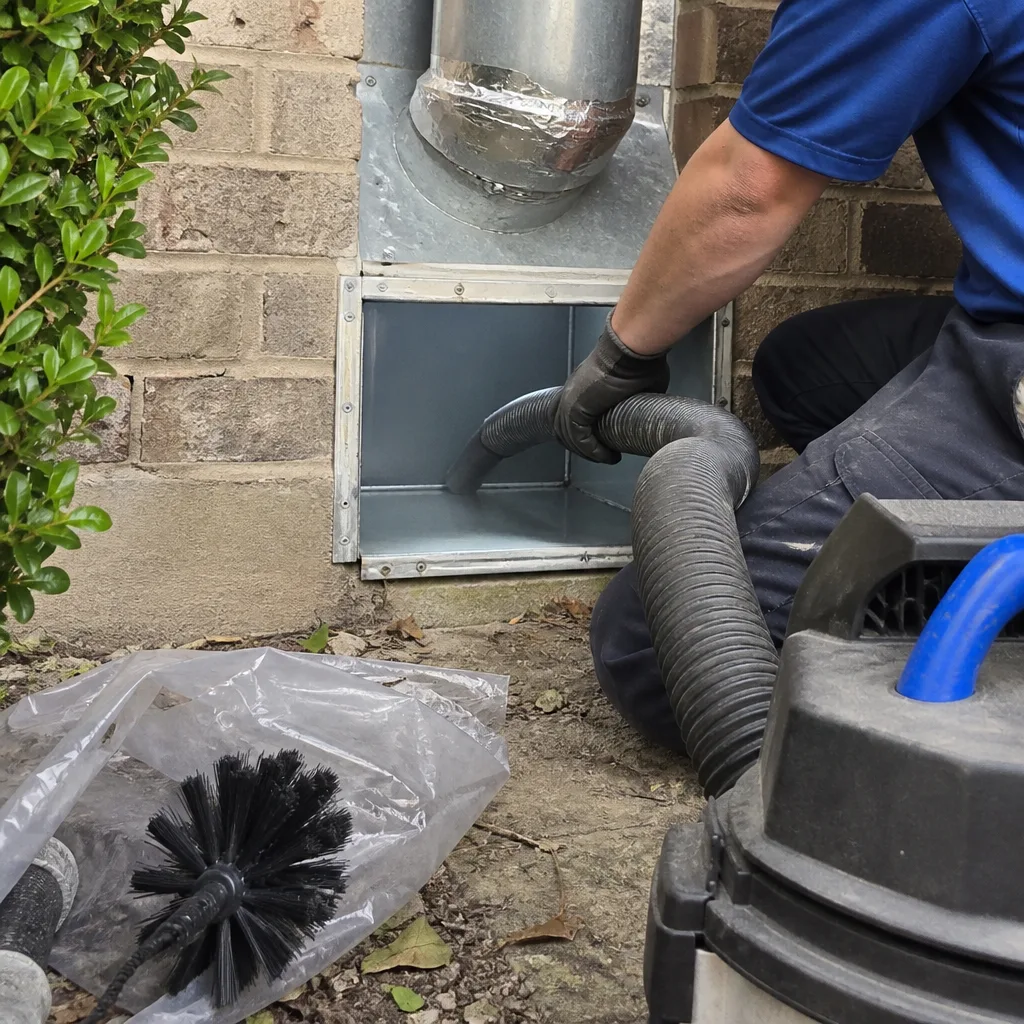 After
After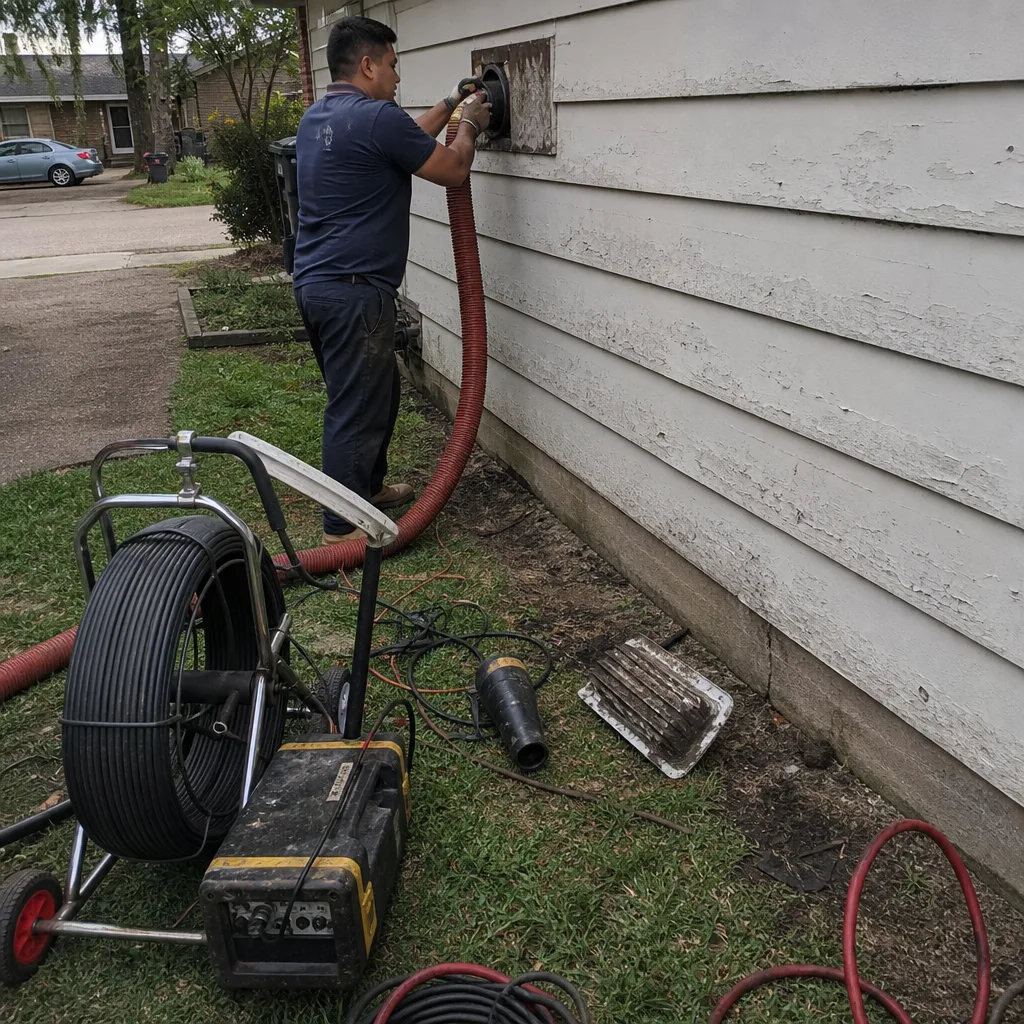 Before
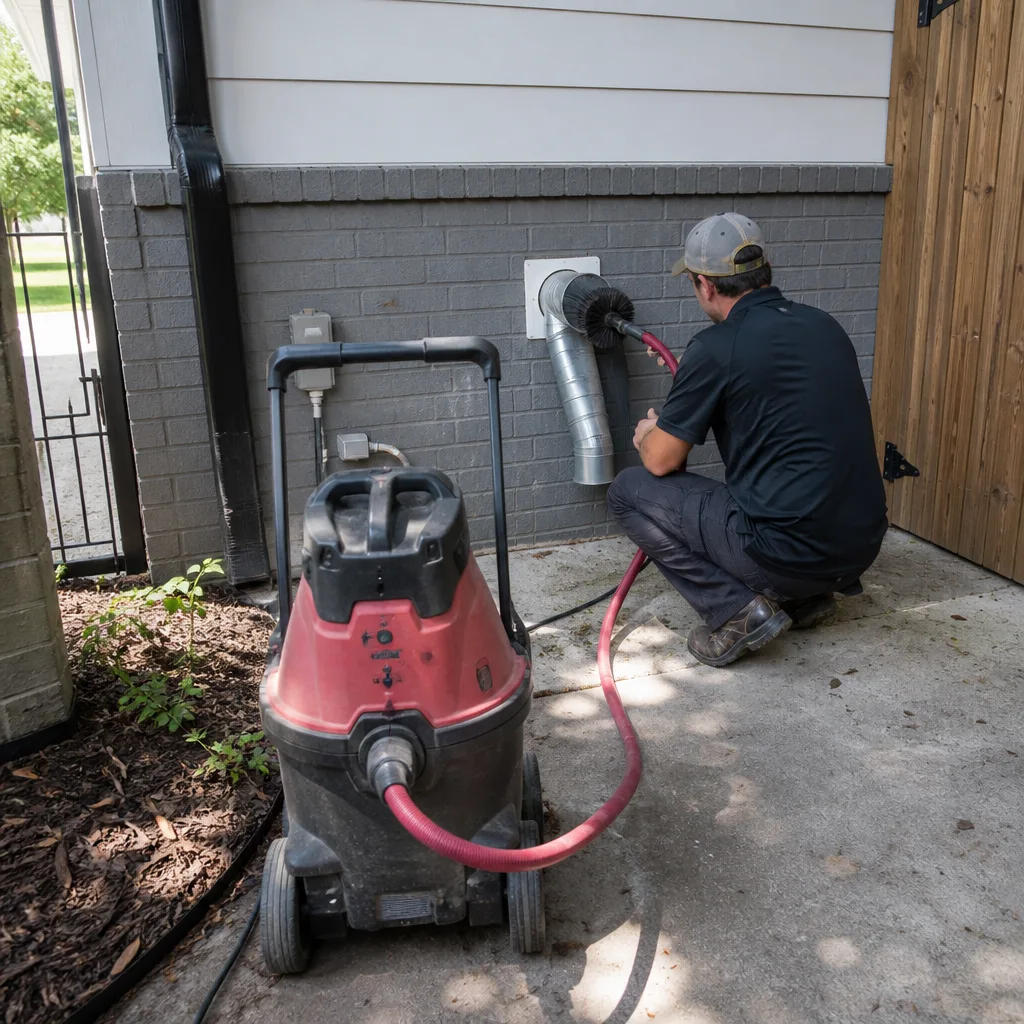 After
AfterAir Duct Cleaning Maintenance Checklist for Houston Homeowners
Your HVAC filter tells you almost nothing about what’s happening inside the duct trunk lines. It only captures what the system is actively pulling through at that moment, not what’s already settled on interior duct walls upstream. In Houston, where air conditioning runs eight to nine months of the year and attic temperatures regularly exceed 140°F, duct systems accumulate debris and suffer material degradation on a timeline that national maintenance guides simply don’t address. This checklist is built for Houston’s specific conditions: 90% humidity summers, clay soil settlement patterns that stress attic framing, and HVAC equipment that never fully rests.
Quick Answer
Houston homeowners should inspect accessible ductwork monthly during cooling season (May through October), replace filters every 30-60 days depending on MERV rating, check attic flex duct connections seasonally for separation and moisture intrusion, and schedule Air Duct Cleaning services with photo documentation every 3-5 years or after any renovation, water intrusion, or pest activity. The critical difference in Houston is timing: pre-summer inspection prevents failures under peak load, while post-first-cold-front inspection catches heat-degraded components before winter heating cycles begin.
Table of Contents
- Why Houston Ducts Need Their Own Checklist
- Month-by-Month Maintenance Calendar
- How to Inspect Your Own Ductwork
- What Your Filter Actually Tells You
- Attic Heat Damage: What to Look For
- Documenting Your Baseline Condition
- Professional Equipment vs. Consumer Tools
- Common Mistakes to Avoid
- When to Call a Professional
- Frequently Asked Questions
- The Bottom Line
BeforeAfterWhy Houston Ducts Need Their Own Checklist
National duct maintenance guides assume moderate climates with defined heating and cooling seasons. Houston doesn’t operate that way. The Gulf Coast climate creates four specific conditions that accelerate duct degradation and contamination:
Perpetual humidity load. Houston’s average relative humidity hovers near 75% year-round, spiking above 90% during summer months. When attic temperatures drop below the dew point (common during evening hours even in July), condensation forms on duct exteriors. Over years, this moisture degrades flex duct insulation jackets, corrodes metal connections, and creates conditions for microbial growth inside the system.
Extended cooling runtime. A Houston air conditioner typically operates 2,800-3,200 hours annually versus 1,500-2,000 hours in temperate climates. More runtime means more air volume passing through the system, more filter loading cycles, and more opportunities for small leaks to become significant bypass points.
Thermal cycling stress. Attic temperatures in Houston can swing from 55°F on a January morning to 145°F by afternoon in August. Flex duct, particularly the common insulated flex used in residential construction since 2000, experiences material fatigue from this expansion and contraction. The vapor barrier jacket, typically a metallized polyester or polyethylene scrim, develops micro-fractures that admit attic air and humidity into the insulation layer.
Clay soil and foundation movement. Houston’s expansive gumbo clay shifts dramatically with moisture changes. This movement transfers through slab foundations to wall framing, then to attic trusses and the ductwork suspended from them. We’ve documented cases in Meyerland and Bellaire where seasonal foundation movement pulled duct connections apart by 1-2 inches, creating substantial conditioned air loss into attic spaces.
These factors mean a generic “change your filter quarterly” approach misses the actual failure modes Houston homeowners encounter. The checklist below addresses each specifically.
Month-by-Month Maintenance Calendar
March-April: Pre-Summer Preparation
This is the critical window before Houston’s cooling season begins in earnest. The system is about to shoulder its heaviest load, and any existing problems will compound under peak demand.
- Replace the filter with a fresh pleated filter, MERV 8-11 depending on your system’s fan capacity. Higher MERV ratings restrict airflow; check your air handler specifications before upgrading.
- Inspect all supply registers for dust accumulation on vanes and surrounding wall surfaces. Heavy buildup indicates debris being forced through the system, not just normal settling.
- Run the system and listen at each register for whistling or irregular airflow. Whistling often indicates a disconnected duct run upstream.
- Check the condensate drain line for flow. A clogged drain in Houston humidity can overflow within hours, and standing water near air handlers frequently migrates into return plenums.
- Photograph accessible ductwork in the attic for baseline documentation (detailed in the section below).
May-September: Peak Cooling Season
Monthly tasks during this period. The system is under maximum stress.
- Inspect the filter monthly. In Houston’s pollen-dust combination, a 30-day replacement interval is typical for standard 1-inch pleated filters. Thicker 4-5 inch media filters may extend to 60-90 days.
- Monitor cooling performance. If the system runs continuously during afternoon hours without achieving setpoint, duct leakage or blockage is a likely contributor. In our experience across Houston, 20-30% of “underperforming” systems traced to duct issues, not equipment capacity.
- Check for water stains on ceiling drywall near supply registers. In high humidity, cold air leaking around register boots can cause condensation on the finished surface.
- Listen for blower motor strain. A whistling or labored sound from the air handler often indicates a collapsed flex duct section creating backpressure.
October-November: Post-First-Cold-Front Transition
Houston’s first significant cold front typically arrives in late October or early November. This transition matters because:
- Heating cycles warm attic ductwork that has been cold all summer, potentially revealing heat-degraded sections that held together under cooling but fail under thermal expansion.
- Humidity drops briefly, then often rebounds; this cycling stresses duct vapor barriers.
- Homeowners switch from continuous fan operation (common in summer for air circulation) to auto mode, changing airflow patterns.
Tasks:
- Run heating mode for a full cycle and inspect all attic-accessible ductwork for warm air escaping at joints (felt by hand) or visible jacket distortion.
- Check flex duct support straps. Summer heat can degrade plastic zip ties and strap material; sagging ducts create low points where condensation collects.
- Replace filter before heating season begins.
December-February: Heating Season Maintenance
- Monthly filter check. Heating airflow is typically lower velocity than cooling; filters load differently but still require monitoring.
- Inspect return air pathways. Houston homes often have return plenums in interior walls or chases; winter temperature differentials can reveal air leakage paths not apparent in summer.
- Document any changes from your October baseline photos.
How to Inspect Your Own Ductwork
Professional duct inspection uses negative-pressure testing equipment, borescope cameras, and airflow measurement tools. But homeowners can perform meaningful visual inspection with no specialized tools beyond a flashlight, smartphone camera, and work gloves. Here’s how to do it safely and effectively.
Attic Access Safety
Houston attics are hazardous environments. Before entering:
- Verify stable flooring or walk boards; many attics have insulation directly over drywall that won’t support weight.
- Wear respiratory protection; fiberglass and cellulose dust are irritants.
- Bring water; attic temperatures above 120°F cause rapid dehydration.
- Limit inspection to morning hours when possible.
- Never step on flex duct; it will collapse and tear.
What to Look For: Flex Duct Connections
Most Houston homes built 1985-present use flexible duct (insulated, wire-reinforced tubing) for supply runs. The critical failure points are:
- Plenum connections. The main trunk line or air handler plenum connects to individual flex runs with metal collars and tension straps. Look for:
- Gaps between collar and flex duct inner liner (visible as dark lines or light showing through)
- Collapsed or ovalized duct shape at the connection point
- Deteriorated tape or mastic sealant, visible as dried, cracked, or missing material
- Mid-run damage. Walk the duct path visually without stepping on it. Look for:
- Sagging between supports (should be supported every 4-5 feet, maximum)
- Crushed sections from storage items or previous work
- Tears or punctures in the outer vapor barrier jacket
- Register boot connections. Where flex duct terminates at the ceiling or wall register, inspect for:
- Detached inner liner from the boot collar
- Insulation pulled back from the connection, exposing bare duct
- Water staining on surrounding framing or drywall
What to Look For: Metal Ductwork
Older Houston homes and some high-velocity systems use galvanized metal duct. Inspect for:
- Rust at joints and seams (indicates chronic condensation)
- Separated longitudinal seams, visible as gaps along the duct length
- Disconnected sections at elbows or transitions
- Missing or deteriorated sealant at joints
Moisture Intrusion Indicators
In Houston’s climate, moisture is the primary duct enemy. Specific signs:
- Dark staining on duct exterior: Indicates water has penetrated the vapor barrier and saturated insulation. The dark color is typically dust and microbial growth.
- Insulation compression: Wet fiberglass loses loft; compressed sections indicate past or present moisture.
- Odor at registers: Musty or earthy smell when system operates suggests biological activity in ductwork or surrounding insulation.
Document everything with dated photographs. This is your evidence baseline, and it becomes valuable if you later need to evaluate contractor recommendations or warranty claims.
What Your Filter Actually Tells You
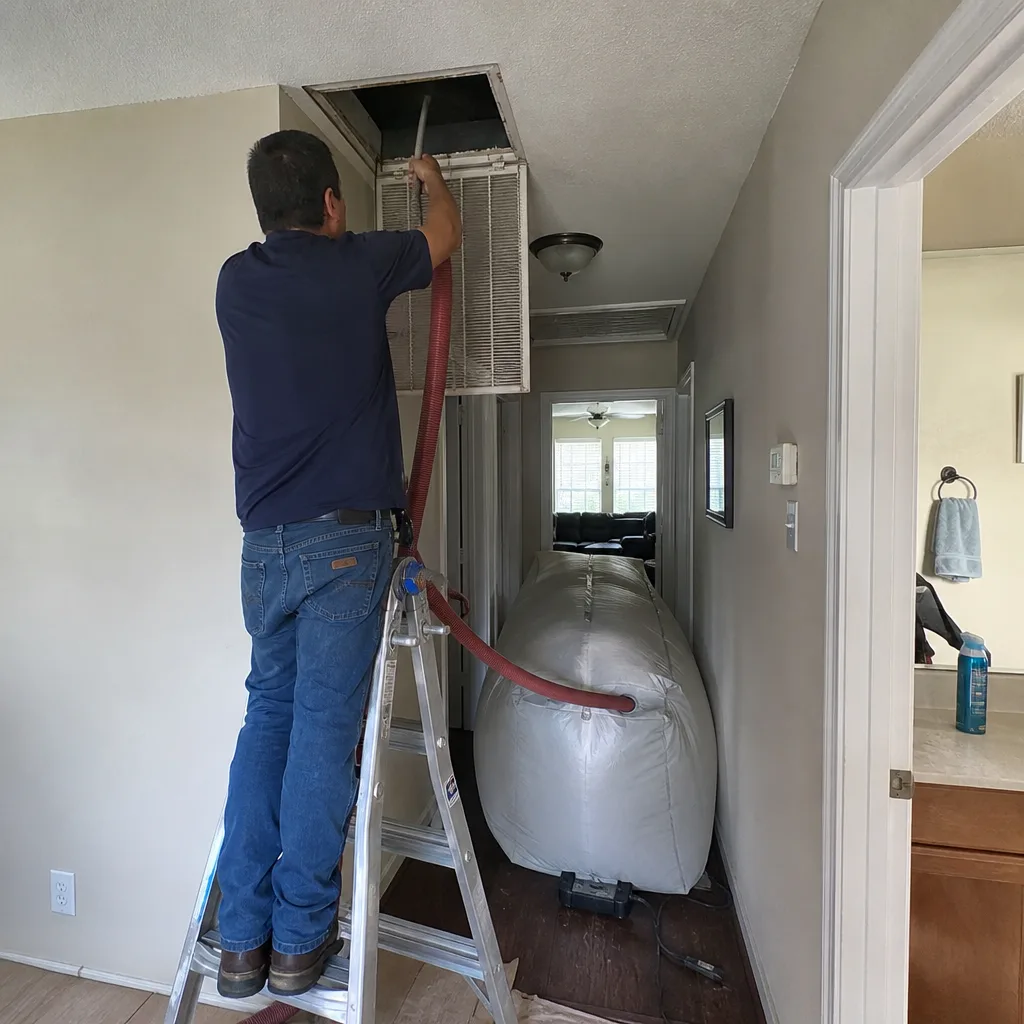
The filter is the most inspected and least understood component in residential HVAC. Homeowners routinely misread what filter condition indicates about the broader system.
What a dirty filter actually means: The filter is doing its job. Air is passing through it, and particulate is being captured. The loading rate (how quickly it gets dirty) indicates airborne particulate volume in your home, not necessarily duct cleanliness upstream. A rapidly loading filter in a Houston home with tight construction often means the return system is pulling air from the correct spaces; a perpetually clean filter can indicate the filter is bypassing air around its edges or the return duct is leaking, pulling unfiltered attic air directly into the air handler.
What filter location reveals: Filters located at the return grille (wall or ceiling) filter air before it enters the return duct. Filters at the air handler filter air after it has traversed the return duct. A grille-located filter that is clean while the air handler filter (if present) is dirty indicates debris accumulation in the return duct between grille and handler. This is common in Houston homes with long return chases through hot attics, where low air velocity allows particulate to settle.
What filter type affects: Basic fiberglass panel filters (MERV 1-4) capture little beyond large debris. Pleated filters (MERV 8-12) capture smaller particles but load faster and restrict airflow more aggressively. Electrostatic filters vary widely in actual performance. In Houston’s high-humidity environment, loaded pleated filters can become growth media if moisture condenses on the media; this is why we recommend against extended-interval filters in Gulf Coast climates.
What the filter cannot tell you:
- Whether the duct trunk lines (the large rectangular or round ducts distributing air from the plenum) have interior debris buildup
- Whether supply ducts have accumulated debris that sloughs off during system cycles
- Whether microbial growth exists on duct interior surfaces
- Whether duct leakage is pulling unconditioned attic air into the system downstream of the filter
We’ve photographed duct interiors in Houston homes where the filter was changed monthly and appeared appropriately loaded, yet the supply trunk contained 1-2 inches of fine dust and construction debris from original build. The filter was working; it simply doesn’t protect what it doesn’t touch.
Attic Heat Damage: What to Look For
Houston attic temperatures represent the single most destructive environmental factor for residential ductwork. Understanding how heat degrades materials helps you identify problems before they become performance failures.
The Mechanism of Heat Degradation
Flex duct consists of three layers: an inner liner (typically polyethylene or metalized polyester), insulation (fiberglass, R-6 or R-8), and an outer vapor barrier jacket (metallized scrim or reinforced polyethylene). In Houston attics:
- The outer jacket experiences continuous UV and thermal degradation, even in “dark” attics where light penetration occurs through soffit vents and gable openings.
- Insulation binders (the adhesives holding fiberglass together) break down above 180°F sustained exposure.
- The inner liner becomes brittle, particularly at stress points (collar connections, bends, support strap contact points).
When the inner liner fails, attic air is drawn directly into the duct stream during negative-pressure conditions (return ducts) or conditioned air escapes into the attic (supply ducts). Either way, the system is no longer moving only conditioned, filtered air.
Specific Signs of Heat Damage
- Jacket discoloration and powdering. The metallic sheen of new flex duct becomes dull, then chalky. Rubbing the jacket produces a metallic powder on your fingers. This indicates advanced UV/thermal degradation of the vapor barrier.
- Insulation settling. Properly installed flex duct maintains uniform diameter. Heat-degraded insulation compacts and settles, creating visible “thin” sections where the inner liner is close to the outer jacket. In severe cases, the duct appears flattened or ovalized even when not under pressure.
- Inner liner tears at collars. The connection between flex duct and metal collar is a stress concentration point. Heat-brittled inner liner tears circumferentially, creating a gap that may be hidden by the outer jacket and tape. Gently flexing the duct near the collar (without disconnecting) can reveal movement that indicates a failed inner connection.
- Tape failure patterns. Duct tape used on original installations (common in Houston construction through the early 2000s) degrades to a hardened, curled state. Mastic sealant may crack or separate from the substrate. These are not merely cosmetic; they indicate the seal is compromised.
Neighborhood-Specific Considerations
In our work across Houston, we’ve observed patterns tied to housing age and construction type:
- Homes built 1995-2005 in suburbs like Katy, Sugar Land, and Pearland: Often used lower-grade flex duct with thinner vapor barriers. These are now reaching 20-30 years of age and showing widespread jacket failure.
- Homes in The Heights, Montrose, and Eastwood with original metal duct: Metal duct doesn’t experience the same heat degradation but is prone to rust at joints where condensation forms. The galvanized coating eventually fails, particularly at cut edges.
- Newer construction with radiant barrier roof decking: Attic temperatures are reduced 20-30°F compared to traditional construction, significantly extending duct life. However, these homes often have more complex duct layouts with longer flex runs, creating more potential failure points.
Documenting Your Baseline Condition
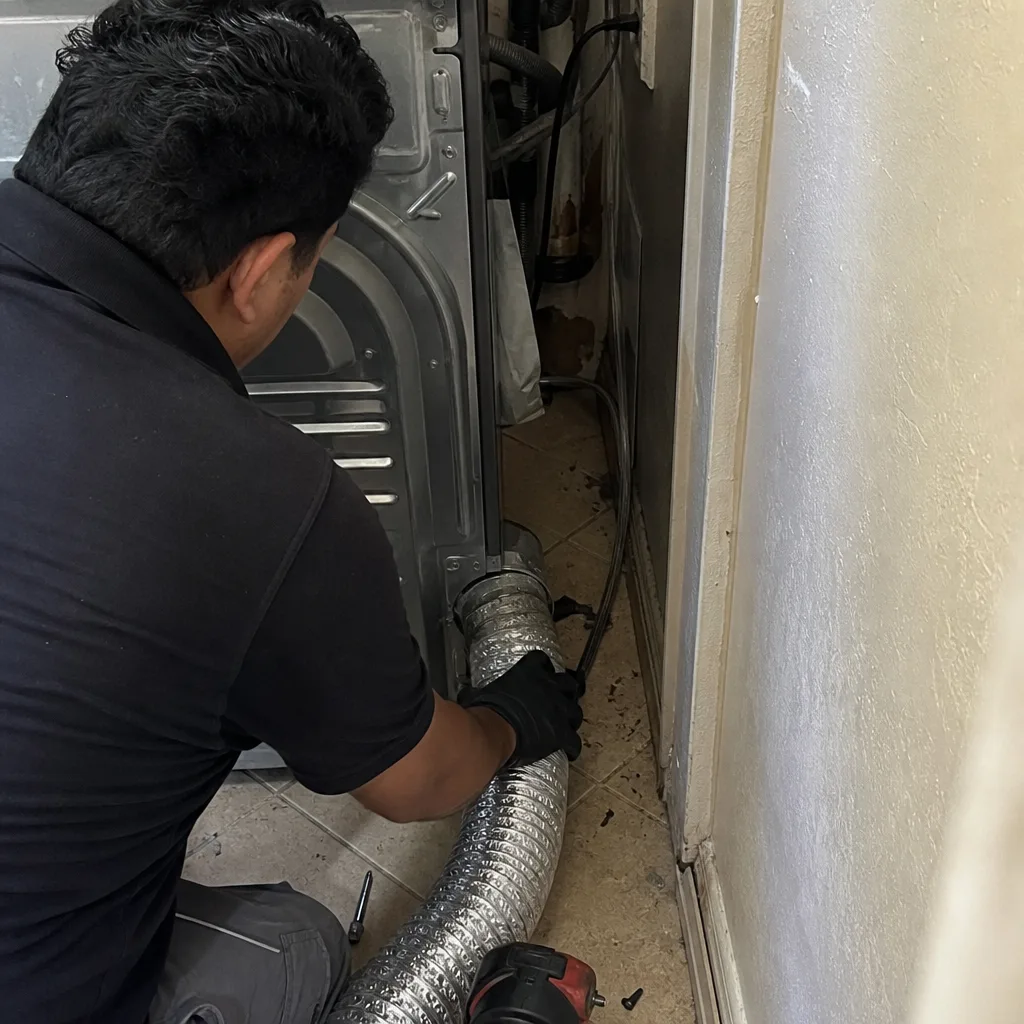
Every maintenance program needs a starting point. Without documentation, you cannot distinguish gradual degradation from sudden failure, and you cannot evaluate whether a contractor’s recommendations are proportional to actual conditions.
What to Document
- Photograph every accessible duct section. Include:
- Wide shots showing duct routing and support
- Close-ups of every connection point (plenum, collars, register boots)
- Any existing damage, staining, or irregularity
- Record system performance metrics.
- Static pressure reading if your thermostat displays it, or note if a technician provides it during service
- Temperature differential across the evaporator coil (typically 16-22°F in cooling mode)
- Run times and cycle frequency during typical summer days
- Note filter change dates and observed loading. A simple log establishes whether loading rates are changing, which can indicate duct leakage or source changes.
- Record any water intrusion events. Houston’s tropical storms and occasional freeze-thaw cycles cause roof leaks and pipe bursts that affect attic ductwork. Date, location, and remediation actions matter for future assessment.
How to Organize Documentation
Digital organization is sufficient: dated folders with photos, a simple spreadsheet for filter and performance logs. The key is consistency. Annual comparison photos, taken from the same positions with the same lighting, reveal changes invisible in day-to-day observation.
This documentation serves multiple purposes. It provides evidence for insurance claims if duct damage results from covered events. It supports warranty claims on newer ductwork. Most importantly, it gives you standing to question contractor recommendations that don’t match observed conditions. For Air Duct Cleaning Warning Signs: A Houston Homeowner’s Reference Guide, check our detailed breakdown. We’ve encountered Houston homeowners who were quoted $4,000-6,000 for “complete duct replacement” based on vague claims of “contamination” or “deterioration,” when their own documentation showed functional systems with localized, repairable issues.
Professional Equipment vs. Consumer Tools
Understanding what professionals bring to duct cleaning and maintenance helps homeowners set realistic expectations for their own inspections and evaluate contractor capabilities.
What Homeowners Can Access
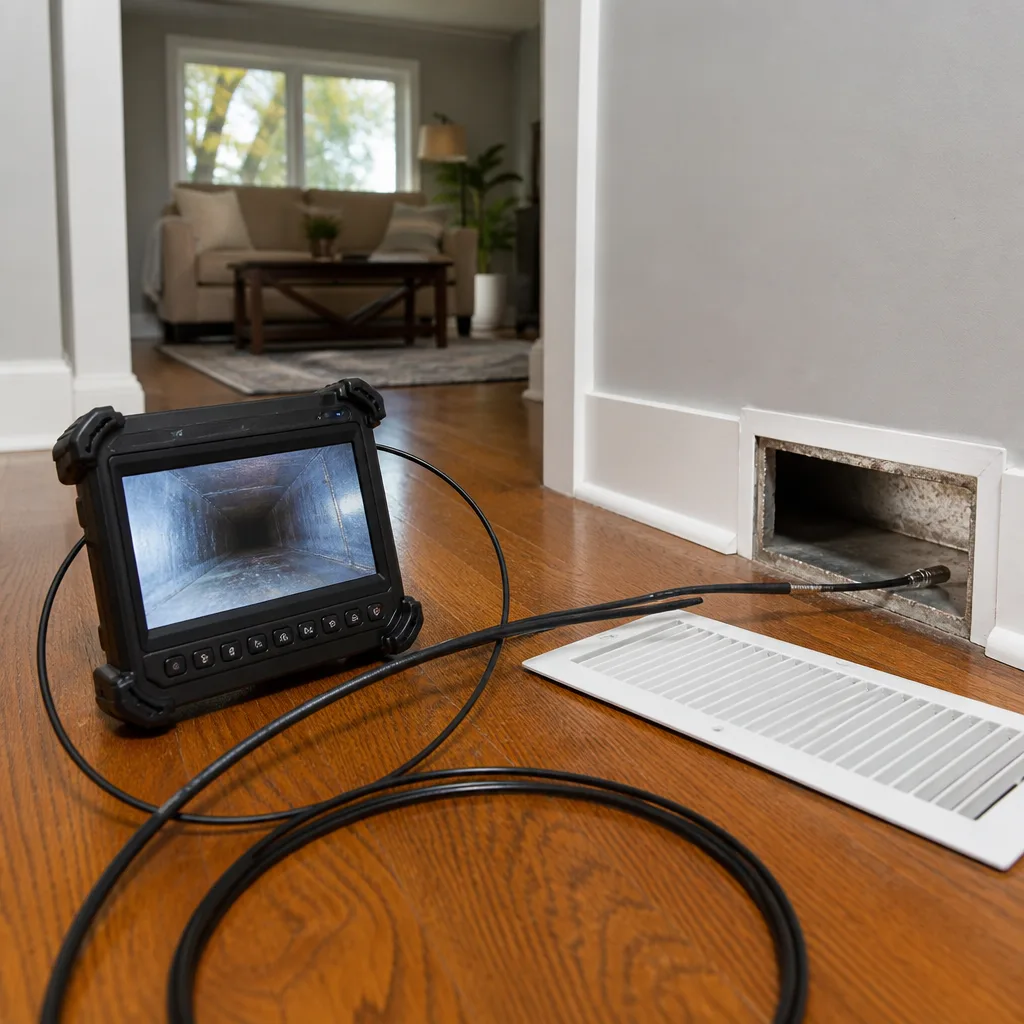
- Basic inspection cameras: Consumer-grade borescopes ($50-200) can access register openings and reveal interior duct conditions for several feet. Image quality varies; adequate for identifying major debris accumulation but not for documenting fine particulate or microbial growth.
- Smoke pencils or incense sticks: Useful for detecting air leakage at register boots and visible joints. In Houston’s still summer air, even small leaks create visible smoke disturbance.
- Infrared thermometers: Can identify temperature anomalies at register boots that indicate duct leakage or insulation failure.
What Professional Equipment Provides
Professional duct cleaning and inspection employs equipment that cannot be replicated with consumer tools:
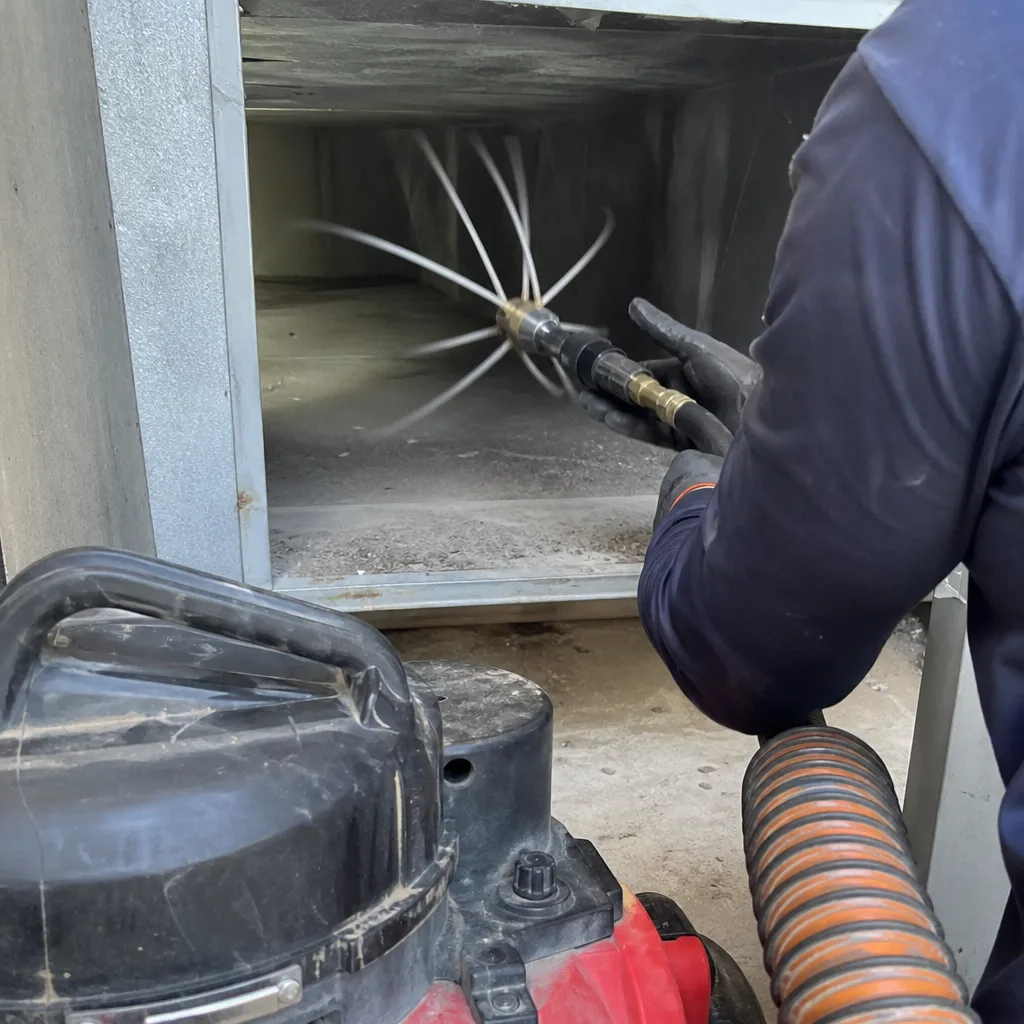
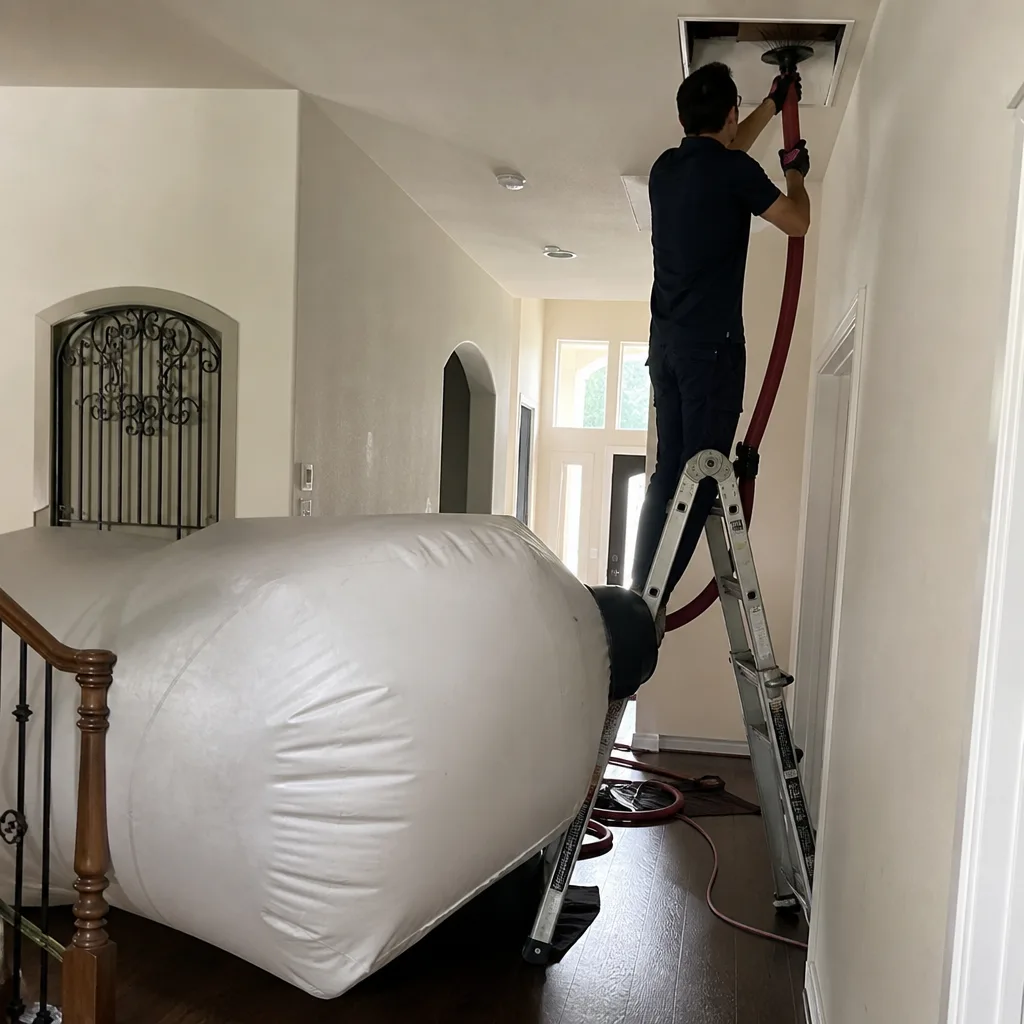
- Negative-pressure extraction systems: These create controlled vacuum throughout the duct system, preventing debris redistribution during cleaning. Brands like Nikro and Abatement Technologies manufacture equipment specifically for this purpose. The negative pressure (typically 2,000-5,000 CFM) is essential for safe, effective cleaning; without it, agitated debris simply resettles.
- Mechanical agitation tools: Rotobrush systems and pneumatic whips dislodge adhered debris from duct interior surfaces. The brushing action is necessary because fine particulate binds to sheet metal and flex duct liner through electrostatic and moisture adhesion.
- High-resolution borescope documentation: Professional inspection cameras record video of every duct run, with sufficient resolution to document cleaning effectiveness. This is the basis for the before-and-after photo record that should accompany any professional service.
- Airflow measurement and pressure testing: Manometers and anemometers quantify system performance before and after service, verifying that cleaning has not damaged ductwork or changed system balance.
- Sanitizing application equipment: Where microbial growth is present, professional application of EPA-registered sanitizers requires controlled droplet size and coverage verification. Honeywell and Aprilaire produce application systems and verification protocols for this purpose.
The distinction matters because consumer-grade tools can identify problems but cannot remediate them effectively. A homeowner with a borescope who finds substantial debris accumulation has useful information; attempting to clean it with a shop vacuum or compressed air typically makes distribution worse by breaking loose debris without capturing it.
At CleanRun Air Duct Cleaning Houston home, our standard includes documented photo record from professional-grade equipment on every visit, with images delivered as part of the job record. This isn’t marketing language; it’s the minimum standard for knowing whether work was actually performed.
Common Mistakes to Avoid
- Replacing filters on a calendar schedule without inspecting loading. A filter that appears clean at 90 days in a low-occupancy Houston home with minimal landscaping may be appropriate; the same interval in a home near construction or with multiple pets is inadequate. Inspect, then decide.
- Sealing visible duct leaks with consumer-grade duct tape. Standard cloth-backed duct tape fails within months in Houston attic conditions. Proper sealing requires mastic compound or foil-backed tape rated for HVAC applications, applied to clean, dry surfaces.
- Ignoring return duct leakage. Homeowners focus on supply registers (where air blows) but return leaks are more damaging to system efficiency and indoor air quality. A return leak in a hot attic pulls 140°F unfiltered air directly into the system, overwhelming cooling capacity and introducing contaminants.
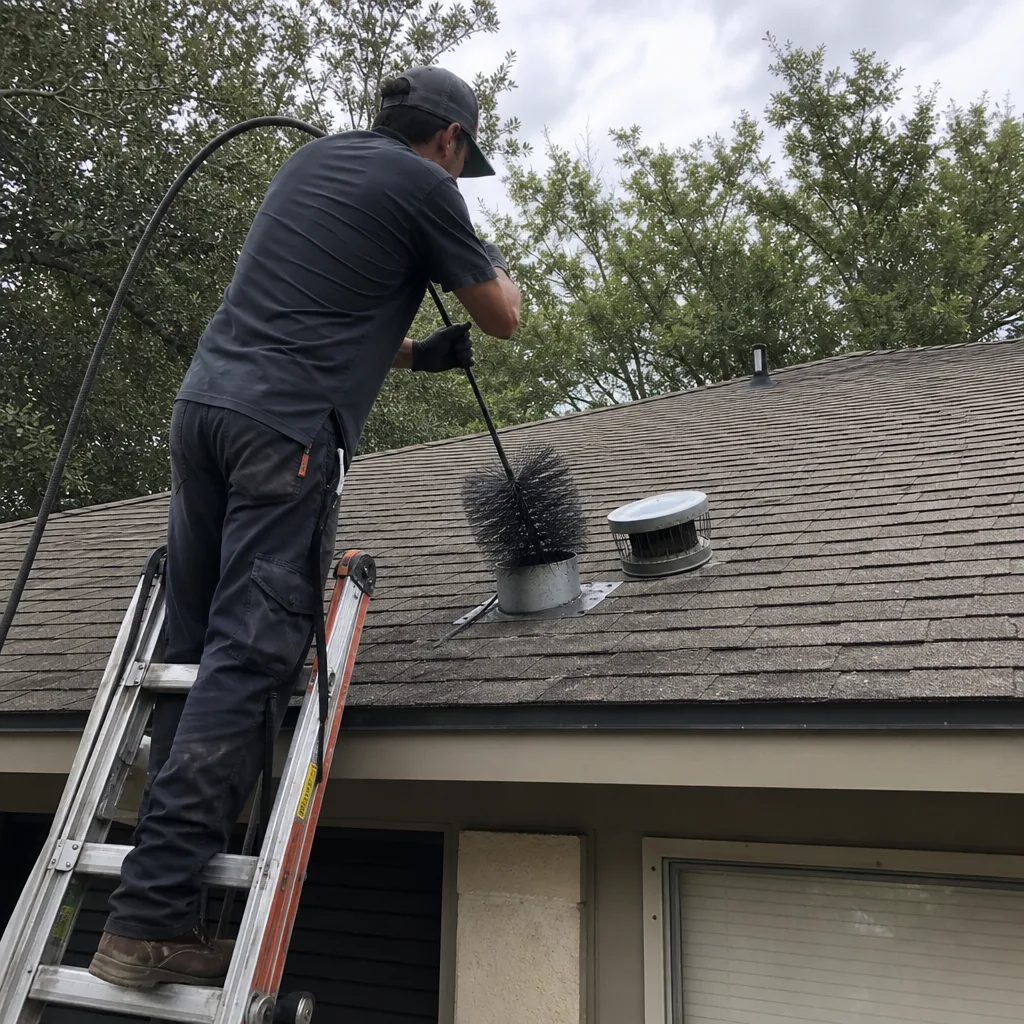
- Cleaning only “visible” duct sections. The trunk lines and plenum, typically hidden in attics or wall chases, contain the majority of system debris. Register-level cleaning without trunk line access is cosmetic, not functional.
- Assuming new construction means clean ducts. Houston’s rapid construction pace means ducts often contain construction debris (drywall dust, wood particles, insulation scraps) from original build. We’ve documented substantial debris in homes less than two years old, particularly in master-planned communities with compressed construction schedules.
- Delaying inspection after water intrusion. Houston’s flood and storm exposure means many homes have experienced attic water intrusion. Even “minor” roof leaks can saturate duct insulation, creating conditions for rapid degradation. Inspection within 30 days of any water event is prudent.
- Accepting “blow and go” cleaning without documentation. Any professional service should provide verifiable evidence of work performed. Without before-and-after documentation from every duct run, you have no basis to evaluate whether cleaning occurred or was effective.
When to Call a Professional
Certain conditions exceed homeowner inspection and remediation capability. Contact a licensed, insured duct professional when you observe:
- Visible mold or microbial growth on duct interior surfaces (not just dust discoloration)
- Multiple disconnected or severely damaged duct sections requiring access to confined attic spaces
- System performance degradation that persists after filter replacement and basic inspection
- Evidence of pest intrusion (droppings, nesting material, entry damage)
- Any duct condition following water intrusion, fire, or significant structural event
- Pre-purchase inspection of existing ductwork in any home acquisition
When selecting a contractor, verify: state licensure for HVAC or mechanical work; general liability and workers compensation insurance; written scope and price before work begins; and commitment to documented photo record of all work. Air Duct Cleaning in Houston varies widely in actual practice; the written deliverables distinguish accountable work from marketing promises.
CleanRun Air Duct Cleaning Houston offers free estimates in Houston - call (346) 251-8919. Every estimate includes a written scope and price under Haven Standard Clause 1, with no obligation. We also provide a Free Second Opinion on any written estimate from another contractor.
Frequently Asked Questions
Whole-system air duct cleaning in Houston typically ranges from $400-$900 for a standard residential system, depending on home size, duct accessibility, and condition. CleanRun provides a written price before any work starts, with no per-vent add-ons or post-arrival upsells. Call (346) 251-8919 for an exact quote - estimates are free.
Every 3-5 years for typical residential systems, or sooner after renovations, water intrusion, pest activity, or observable debris at registers. Houston’s extended cooling season and high particulate load from Gulf moisture and pollen suggest the shorter end of this range for most homes. Homes with recent construction, major landscaping, or located near active development should consider more frequent assessment.
Low quotes typically reflect limited scope (register cleaning only, not trunk lines), inadequate equipment (shop vacuums rather than negative-pressure extraction), or bait-and-switch pricing where the advertised price applies only to a minimal system with substantial add-ons required for actual cleaning. A legitimate whole-system cleaning requires containment, negative-pressure equipment, and time proportional to system size. CleanRun’s written price covers the complete scope with no surprises.
Require documented photo record from every duct run, before and after, delivered as part of the job completion package. Without this, you have only the contractor’s assertion. CleanRun includes this documentation on every visit as standard practice since 2013. You should also observe system performance changes: improved airflow at registers, reduced runtime to achieve setpoint, and decreased dust accumulation on surfaces in the weeks following service.
Homeowners can perform register and boot cleaning, filter replacement, and visual inspection of accessible ductwork. However, trunk line and plenum cleaning requires negative-pressure containment equipment and mechanical agitation tools that are not available for consumer rental. Attempting duct cleaning without proper containment risks redistributing debris throughout the home and damaging duct materials. For the Houston climate specifically, improper cleaning can introduce moisture into the system, creating conditions for microbial growth.
Cleaning alone produces modest efficiency gains, typically 5-15% in systems with substantial debris accumulation. Greater efficiency improvements come from sealing duct leaks, which are common in Houston homes due to thermal cycling and foundation movement. A comprehensive approach that includes both cleaning and leak sealing, documented with pressure testing, provides measurable performance improvement. CleanRun’s HVAC Cleaning in Houston service addresses both components.
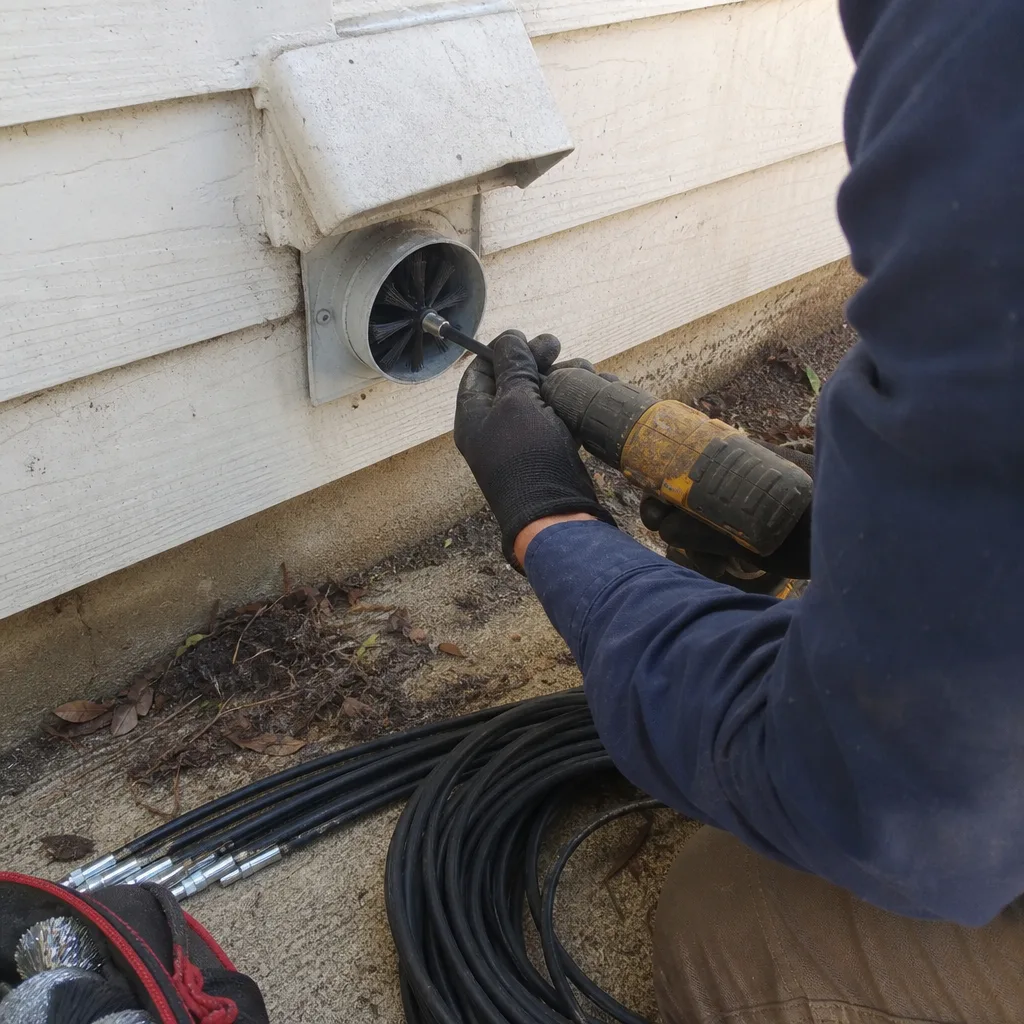
Both systems involve airflow through concealed pathways, and both accumulate lint or debris that creates fire hazards (dryer vents) or efficiency losses (HVAC ducts). However, they require distinct equipment and expertise. Dryer Vent Cleaning in Houston addresses the high-temperature, high-lint environment of clothes dryer exhaust, which presents specific fire risks not present in HVAC ductwork. Maintenance schedules differ: dryer vents typically require annual inspection in Houston’s humid climate, where lint compacts more readily.
The Bottom Line
Houston’s climate demands a duct maintenance approach that national checklists don’t provide. The combination of perpetual humidity, extreme attic heat, extended cooling runtime, and clay soil movement creates specific failure modes: moisture-degraded flex duct jackets, thermally cycled connections, and return leaks that pull unconditioned attic air into living spaces. Effective maintenance means monthly filter inspection during cooling season, seasonal attic duct assessment with documented photography, and professional service with verifiable deliverables every 3-5 years. Explore our more guides & resources for deeper coverage. The goal isn’t perfection; it’s evidence. Know what your system looks like today, track changes over time, and demand the same documentation from any contractor you hire.
Written by Tomas Reyes, Owner at CleanRun Air Duct Cleaning Houston, serving Houston since 2013.