
Last updated September 23, 2026
Whole-system duct and dryer vent check with before-and-after photos - you see exactly what came out of your vents
That "$99 whole-house special" is a bait ad - the real number appears once they are in your hallway, or the "clean" is a shop-vac at the register. We photograph the inside of your ducts before and after instead.
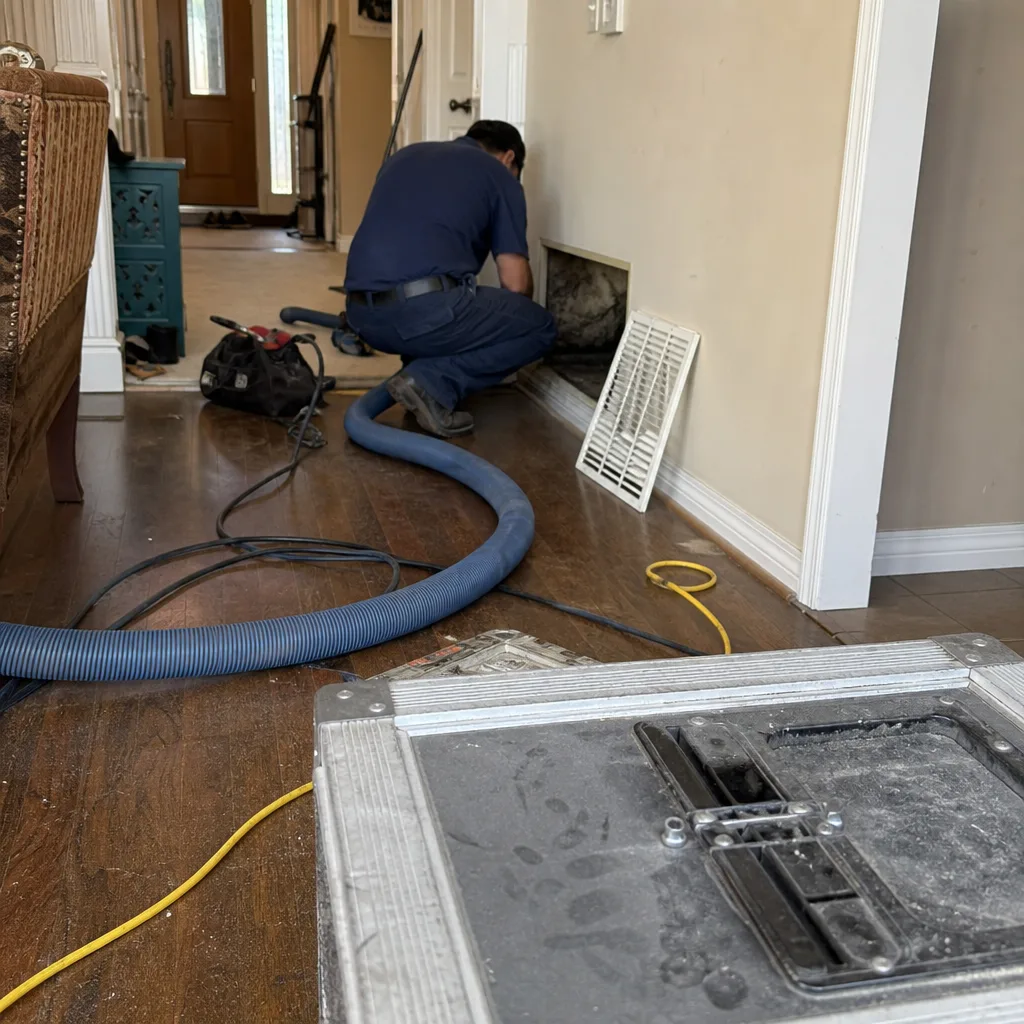 Before
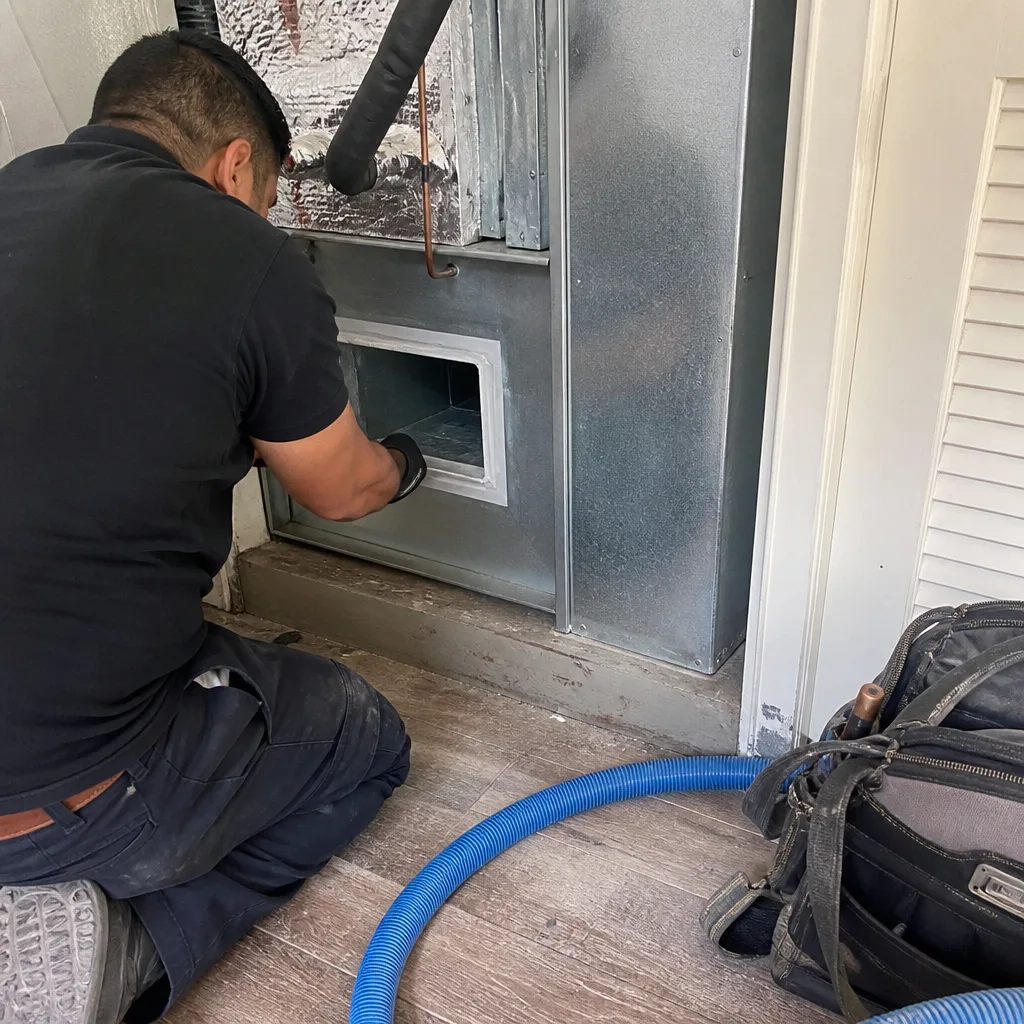 After
After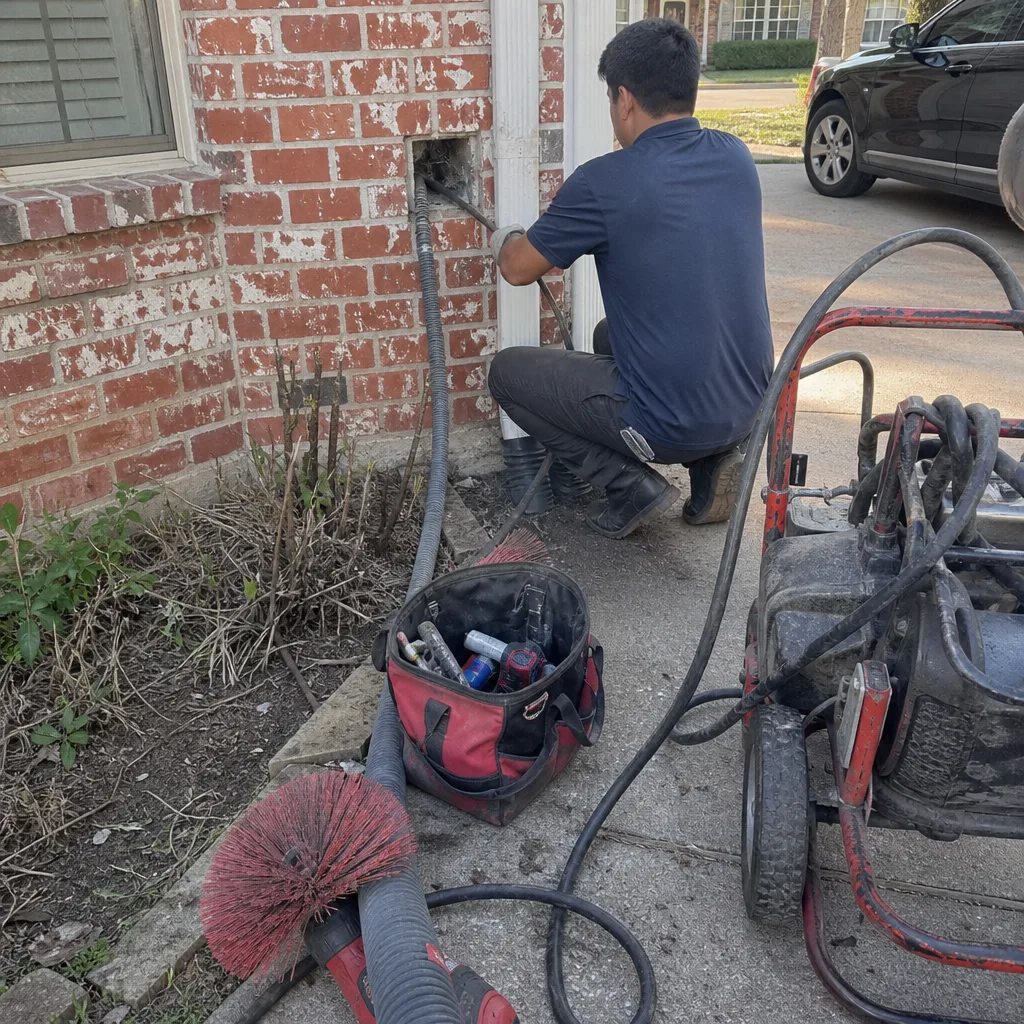 Before
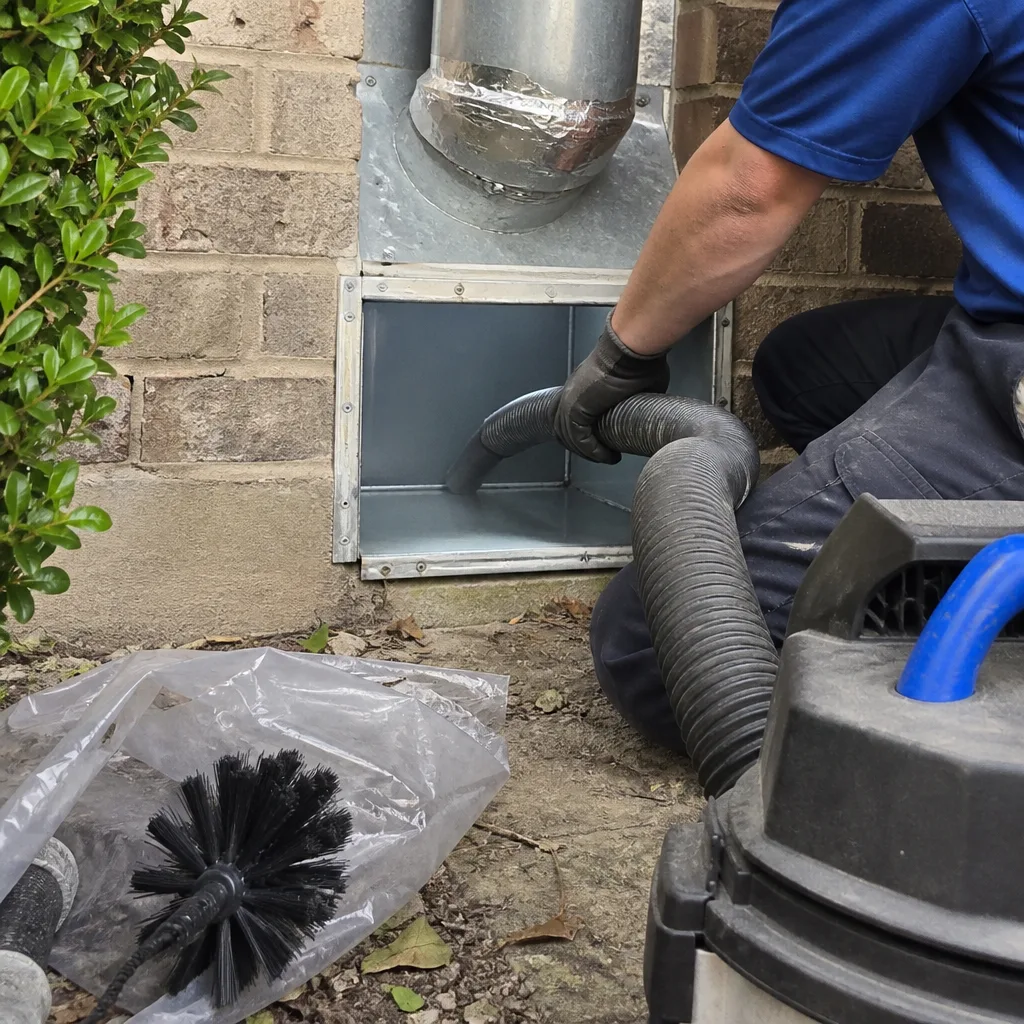 After
After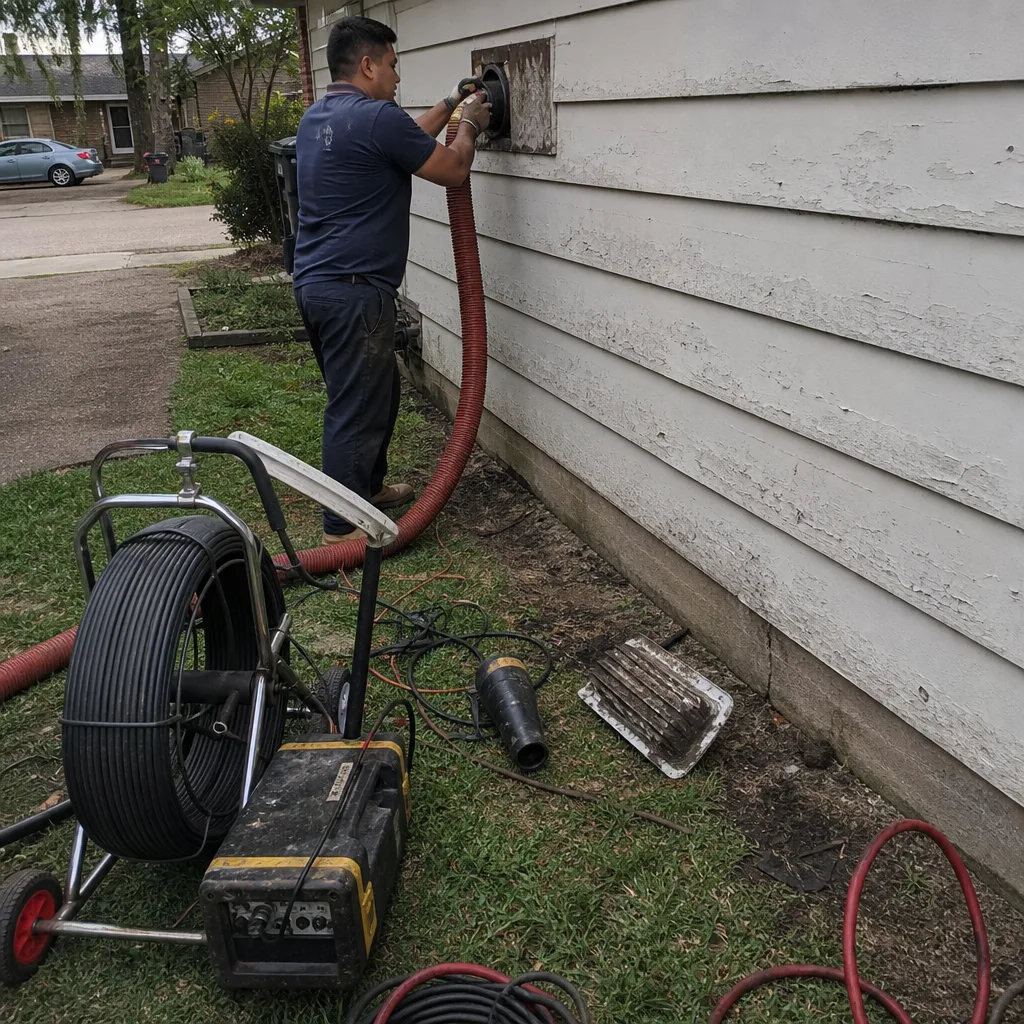 Before
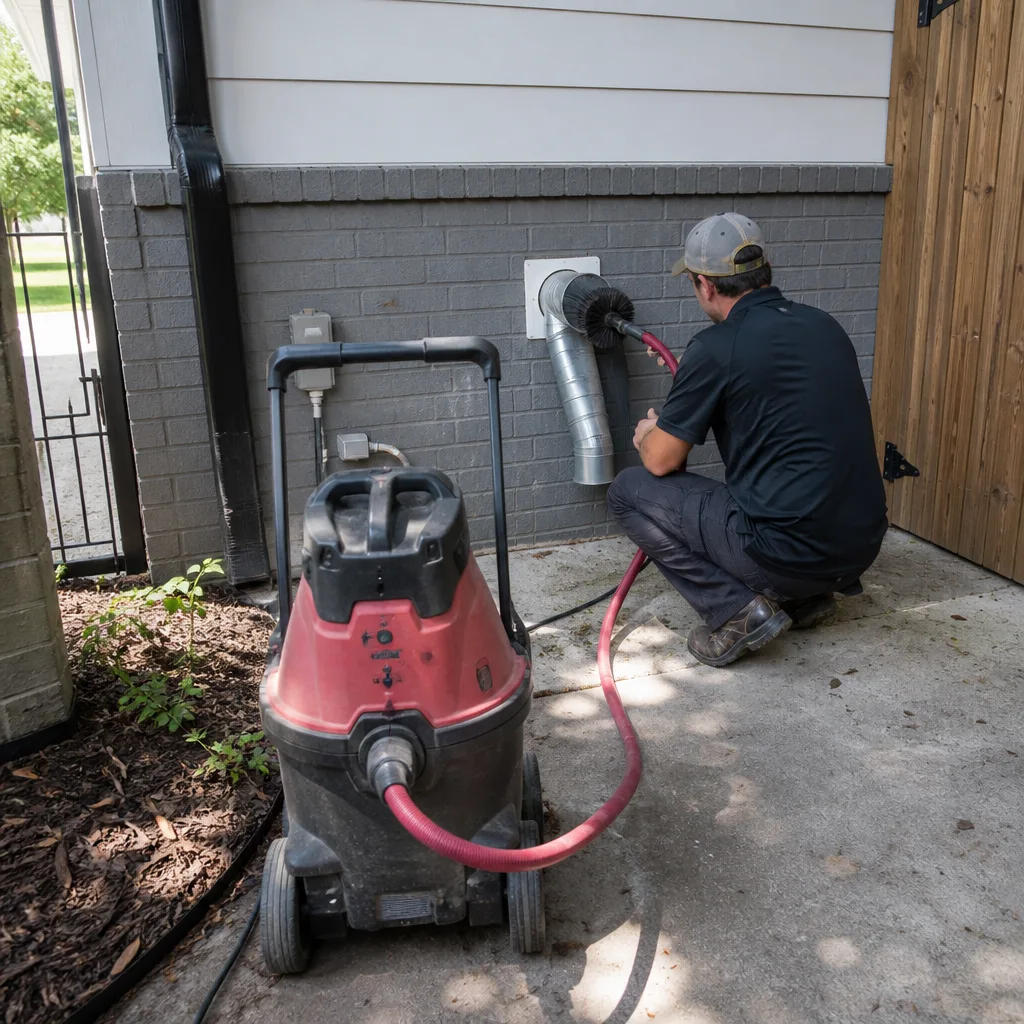 After
AfterThe Complete Guide to Air Duct Cleaning in Houston
The EPA does not recommend annual duct cleaning. The agency says to clean ducts “as needed,” a phrase the $79-coupon industry has quietly ignored for two decades. In Houston, that distinction matters more than in most cities. Our subtropical humidity, expansive clay soil, and year-round air conditioning runtime create contamination patterns inside ductwork that national guides never address. This Air Duct Cleaning guide documents what CleanRun cameras actually find in Houston homes, what those findings mean for your HVAC system and indoor air, and how to tell whether a duct cleaning quote describes real work or vacuum noise.
Quick Answer
Air duct cleaning in Houston typically costs $400-$900 for a complete residential system, depending on home size, duct configuration, and contamination level. A legitimate job takes 3-5 hours, includes before-and-after photography of every duct run, and follows the NADCA ACR standard for negative-pressure extraction. In Houston’s climate, ducts usually need assessment every 3-5 years, though homes near construction, with slab foundation issues, or with prior water intrusion may need more frequent evaluation.
Table of Contents
- What Air Duct Cleaning Actually Does (and Doesn’t Do)
- How Houston’s Climate and Geography Affect Duct Contamination
- What a Camera Inspection Actually Shows: Three Categories of Debris
- How to Read a Legitimate Duct Cleaning Invoice
- The NADCA ACR Standard: What It Requires vs. What Most Houston Companies Actually Do
- Documented Cost Comparison: $79 Coupon vs. Full-Process Cleaning
- Choosing a Duct Cleaning Company in Houston
- Maintaining Your Ducts Between Professional Cleanings
BeforeAfterWhat Air Duct Cleaning Actually Does (and Doesn’t Do)
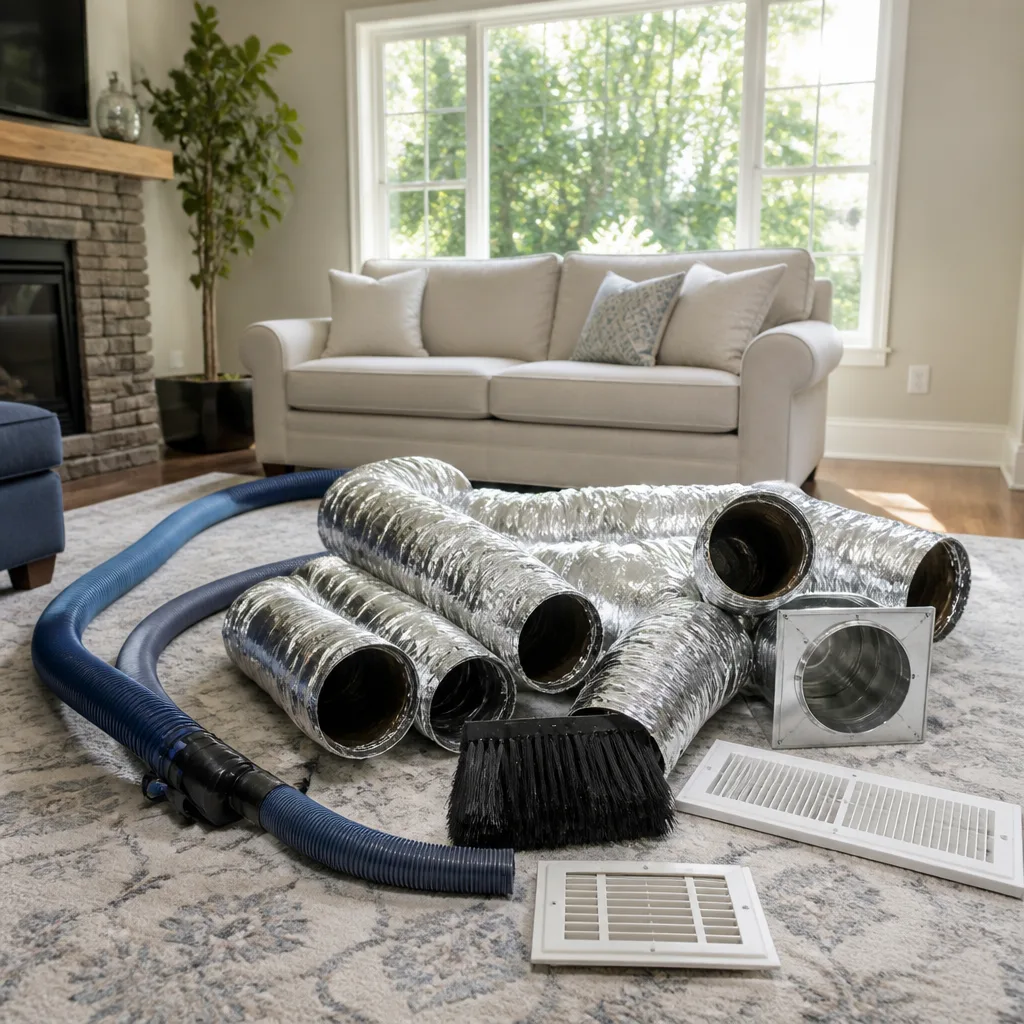
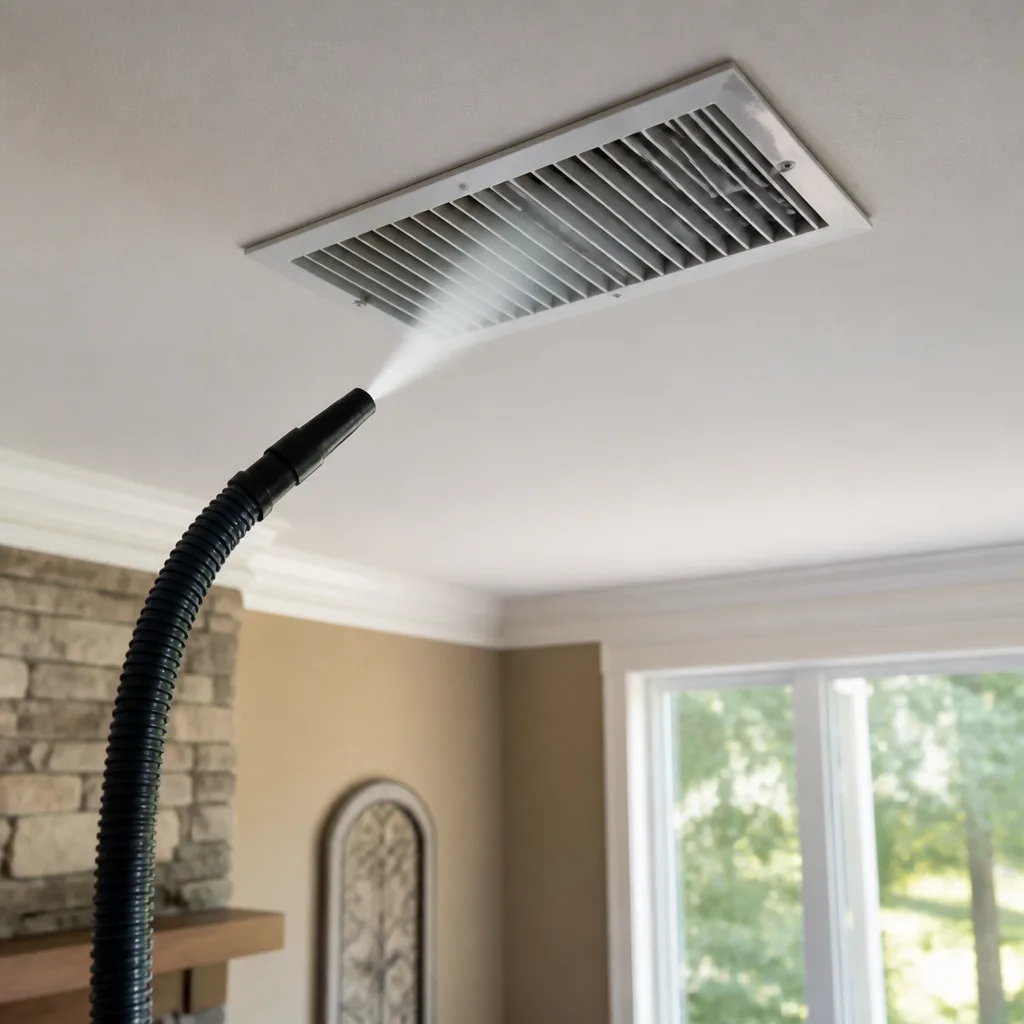
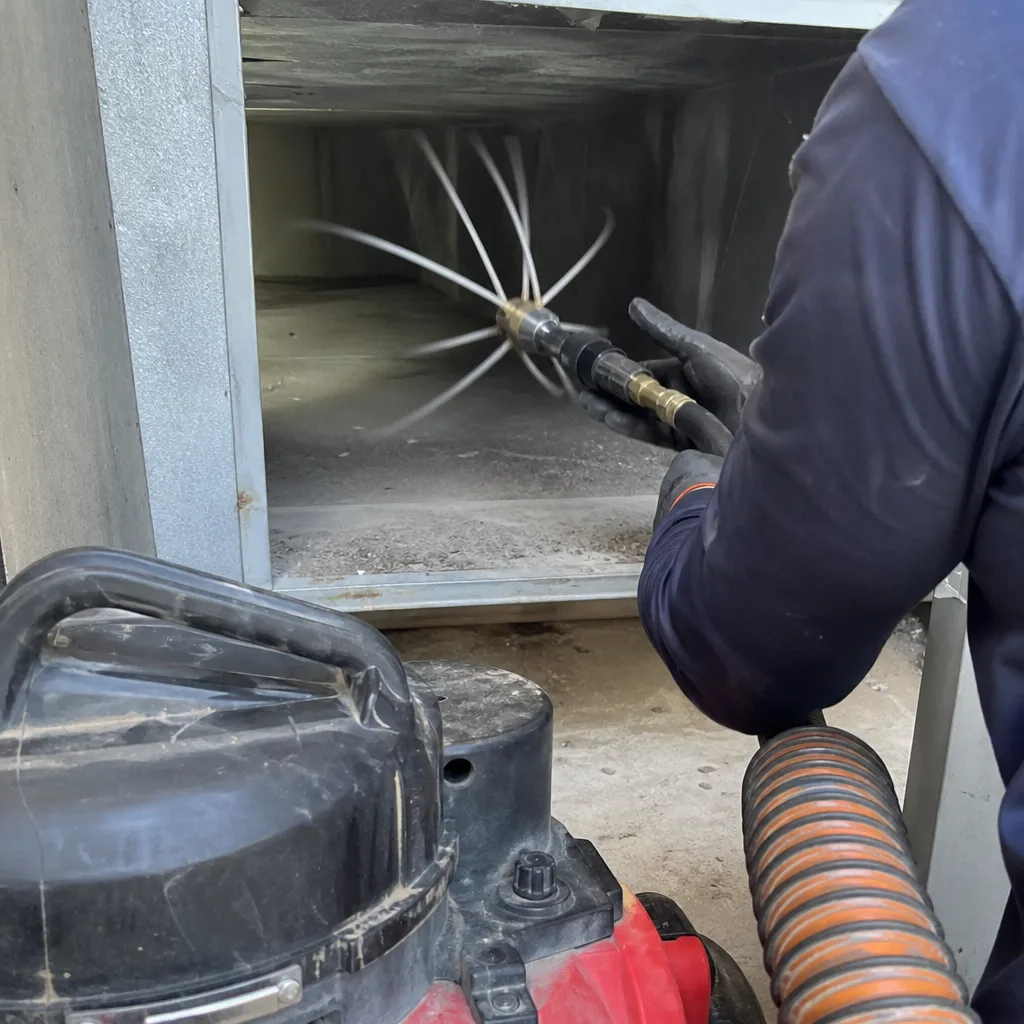
Air duct cleaning removes accumulated particulate matter from the interior surfaces of your HVAC system’s supply and return ductwork. The process uses negative-pressure extraction, a method where a powerful vacuum attaches to the duct system while mechanical brushes or compressed air tools dislodge debris from interior walls. The vacuum maintains suction throughout, preventing dislodged material from entering your living space.
What cleaning does not do: it does not seal leaks, repair disconnected joints, or address mold growth inside porous materials. If your ducts contain active mold on fiberglass-lined plenum walls, cleaning removes the visible growth but does not restore the liner. That requires repair or replacement, which is a separate service.
Here’s what a complete cleaning addresses:
- Supply duct runs: The pathways that deliver conditioned air from your air handler to each room. These accumulate dust, skin cells, pet dander, and debris drawn through return vents.
- Return ductwork: The larger pathways that pull air back to the air handler. Returns typically contain more debris than supplies because they operate under negative pressure and draw in unfiltered room air.
- Supply and return plenums: The central chambers where multiple duct runs converge. The plenum (the sheet-metal box attached to your air handler) often contains the heaviest buildup.
- Register boots and grilles: The visible vent covers and the short metal transitions behind them.
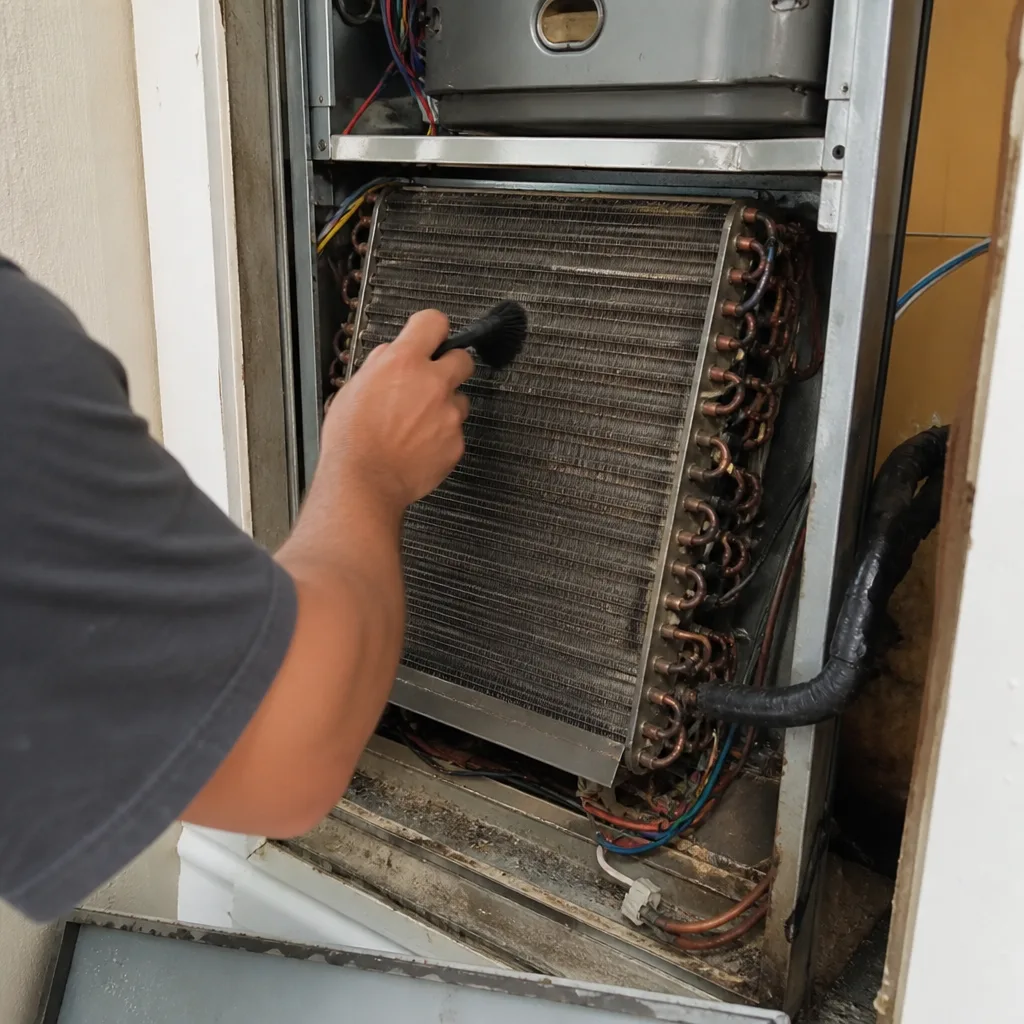
- Air handler cabinet and blower compartment: The interior of your HVAC unit, including the blower wheel and evaporator coil housing.
What cleaning does not address, and what honest companies disclose upfront: leaks at joints or seams, deteriorated flex duct, undersized returns, or contaminated insulation inside the duct envelope. In Houston, we regularly find that homes built between 2015 and 2020 in communities like Bridgeland, Cypress Creek Lakes, and Sienna have supply plenums with incomplete sealing at the air handler connection. Cleaning improves airflow and reduces particulate load, but it does not fix the leakage that lets attic air mix with conditioned air.
The health claims deserve direct language. The EPA states that duct cleaning has never been proven to prevent health problems, and no study has conclusively demonstrated that clean ducts reduce indoor air particle levels more than routine HVAC filter changes. What cleaning does do: it removes reservoirs of dust, debris, and biological material that can support odor, reduce system efficiency, and circulate when disturbed. For homeowners in Houston with new construction residue, post-renovation dust, or documented rodent activity, the benefit is mechanical and hygienic, not medical.
How Houston’s Climate and Geography Affect Duct Contamination
Houston’s environment creates duct contamination patterns that differ materially from drier or cooler climates. Understanding these patterns helps homeowners recognize when cleaning is warranted and when it is not.
Subtropical humidity and condensation cycles. Houston averages 75-80% relative humidity for much of the year, with summer dew points regularly exceeding 70°F. When cool, conditioned air moves through metal ductwork in a hot, humid attic, the temperature differential creates condensation on exterior duct surfaces. If the duct envelope has any breach, that moisture can migrate to interior surfaces. We see this most often in homes in Memorial, Bellaire, and West University, where 1960s-1980s construction used uninsulated or poorly insulated metal ducts in ventilated attics. The interior result: a thin, adherent layer of dust bound by moisture, not the dry, fluffy accumulation typical of Phoenix or Denver ducts.
Expansive clay soil and slab foundations. Houston’s gumbo clay expands when wet and contracts when dry, creating subtle foundation movement. This movement stresses ductwork embedded in or beneath the slab, particularly in homes with underground supply systems. In neighborhoods like Meyerland, Braeswood Place, and parts of Clear Lake, we find supply boots that have separated from slab ducts, creating negative-pressure infiltration points. The system pulls air from beneath the slab, through soil gaps, and into the duct. That air carries clay particulates, construction debris from the original build, and in some cases, groundwater vapor. The debris is fine-grained and dense, not the coarse household dust that accumulates from normal occupancy.
Year-round HVAC runtime. Houston’s cooling season runs from March through November, with heating needs in December through February that still circulate air through the same ductwork. A typical Houston home moves air through its ducts 4,000-5,000 hours annually, compared to 2,000-2,500 in mixed climates with substantial windows-open seasons. More runtime means more filter cycles, more pressure fluctuations at joints, and more opportunities for leakage-driven infiltration.
Construction and renovation density. Houston’s inner-loop neighborhoods, Heights, East End, and Montrose, have seen continuous infill construction and remodeling for two decades. Homes within 500 feet of active construction show measurably higher coarse particulate loads in returns. The debris is identifiable: drywall dust, sawdust, and concrete particulate that entered through open windows, door gaps, or the HVAC system itself during pre-occupancy construction phases.
Pollen and biological load. Houston’s long growing season produces extended pollen cycles. Oak pollen in spring, grass pollen in summer, and ragweed in fall all enter homes and accumulate in ductwork. In homes with outdoor air intakes or economizer cycles, the load is higher. We document this with photo records showing seasonal stratification: a pale layer of pollen on top of darker household dust.
What a Camera Inspection Actually Shows: Three Categories of Debris
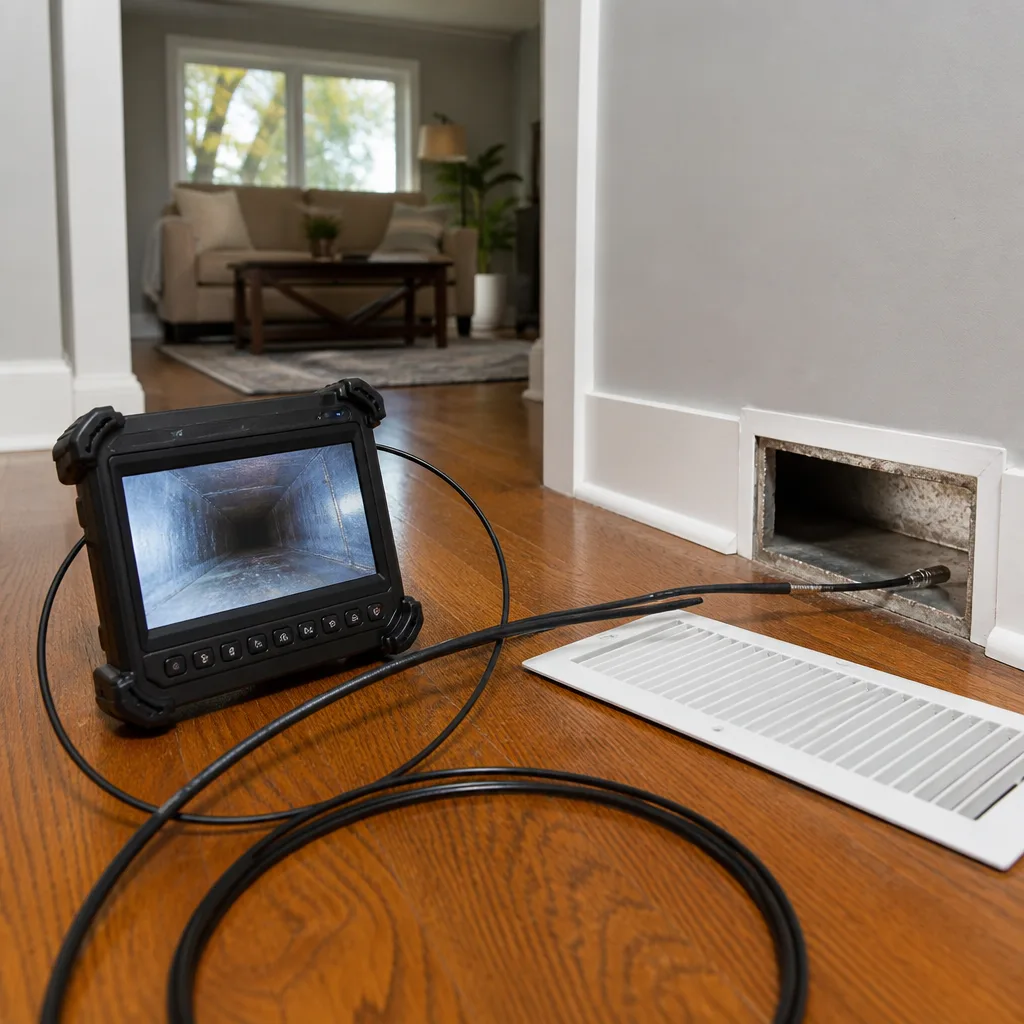
CleanRun has photographed the interior of every duct run on every job since 2013. The images fall into three distinct categories, and the distinction matters for what cleaning can and cannot accomplish.
Category 1: Settled construction dust and household accumulation. This is the most common finding. The debris is dry, heterogeneous, and loosely adhered. Colors range from gray to tan, with visible fibers, skin cells, and lint. In Houston homes built 2015-2025, we regularly find construction residue that was never fully evacuated during builder turnover: drywall dust at the first elbow, wood particulate near return boxes, and occasionally fastener debris (screws, wire nuts) that fell into open ducts during construction. This material responds well to negative-pressure extraction. A Rotobrush system with appropriate brush sizing removes it completely in most cases.
Category 2: Active mold growth. Mold in ducts appears as discrete patches, usually green, black, or white, with a fuzzy or slimy texture. It requires moisture to grow, so its presence indicates a water source: condensation from poor insulation, duct leakage into humid attic air, or past flooding. In Houston, we find active mold most often in:
- Homes with uninsulated or damaged flex duct in ventilated attics, particularly in older subdivisions like Spring Branch and Garden Oaks
- Properties with prior roof leaks or Harvey-related water intrusion, even when the leak was “repaired”
- Systems with oversized AC units that short-cycle and fail to dehumidify adequately, a common issue in new construction with 3-ton units cooling 1,200 square feet
Cleaning removes visible mold from metal surfaces. It does not remove mold from porous fiberglass duct liner, and it does not address the moisture source. When CleanRun cameras find active mold, the photo record is shared with the homeowner, and we recommend remediation that includes moisture source elimination, not just cleaning.
Category 3: Rodent debris. This is the category homeowners most often miss until odor or airflow reduction prompts investigation. Rodent debris includes droppings, nesting material (shredded insulation, paper, vegetation), and in advanced cases, carcasses. The debris is concentrated at low points in duct runs, near disconnected joints, and in unused branches. In Houston, roof rats are the primary culprit, entering through gaps in soffits, roof vents, or uncapped duct openings during construction.
Rodent debris requires more than cleaning. The contamination is localized but heavy, and it often includes biohazardous material. NADCA guidelines recommend physical removal of bulk debris, followed by thorough cleaning, then sanitizing of affected surfaces. CleanRun’s documented photo record shows the extent before any work begins, so homeowners understand why a “standard” cleaning quote does not apply.
How to Read a Legitimate Duct Cleaning Invoice
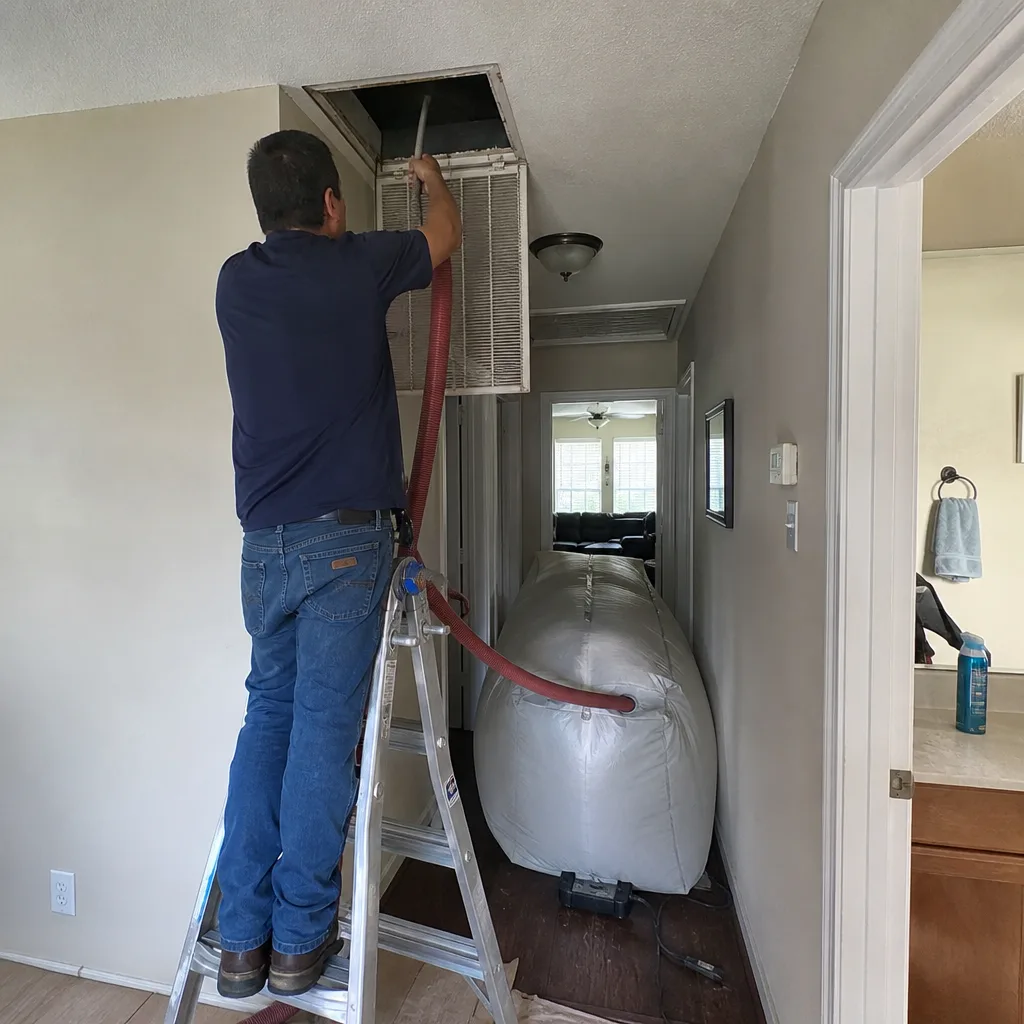
The invoice tells you what was actually done. A legitimate Houston duct cleaning invoice contains specific line items that describe scope, equipment, and deliverables. Here’s what to look for, and what its absence reveals.
Required line items on a complete job:
- System inspection and photo documentation. Before any cleaning begins, the technician should photograph the interior of representative duct runs. The invoice should note “pre-cleaning photo record” or equivalent. Without this, there is no baseline to evaluate results.
- Supply plenum cleaning. The plenum is the central distribution box attached to your air handler. It is the largest single surface area in most residential systems and the most debris-heavy. A quote that omits the plenum is omitting the hardest, most important part of the job.
- Return box and return trunk cleaning. The return side pulls unfiltered air; it is always dirtier than the supply side. Cleaning only supplies is roughly half a job.
- Individual supply duct runs. Each run from plenum to register should be listed by count or by room. “Clean all supply ducts” without a count is vague; “10 supply runs” is specific and verifiable.
- Individual return duct runs. Same standard as supplies.
- Register and boot cleaning. The visible grilles and the short transitions behind them.
- Air handler cabinet and blower cleaning. The interior of your HVAC unit, including the blower wheel. This requires partial disassembly and is often omitted in low-price jobs.
- Post-cleaning photo record. Documented evidence that cleaning occurred. Every run, before and after.
What flat-rate coupon quotes often omit:
- The supply plenum, which requires additional access time and larger-diameter equipment
- Return ductwork, which is more difficult to access and clean
- The air handler cabinet, which requires mechanical disassembly
- Photo documentation of any kind
- More than a nominal number of supply runs, with additional runs priced at steep per-item rates
CleanRun’s written pricing under Haven Standard Clause 1 lists every component before work begins. The price is flat per system, not per vent, and it includes all of the above. Homeowners in Houston should demand the same specificity from any provider.
The NADCA ACR Standard: What It Requires vs. What Most Houston Companies Actually Do
The National Air Duct Cleaners Association publishes the ACR standard, the industry’s only widely recognized procedural guideline. NADCA certification indicates that a company owns appropriate equipment and employs at least one technician who has passed a written exam. It does not, by itself, guarantee that every job follows ACR protocols.
The ACR standard requires:
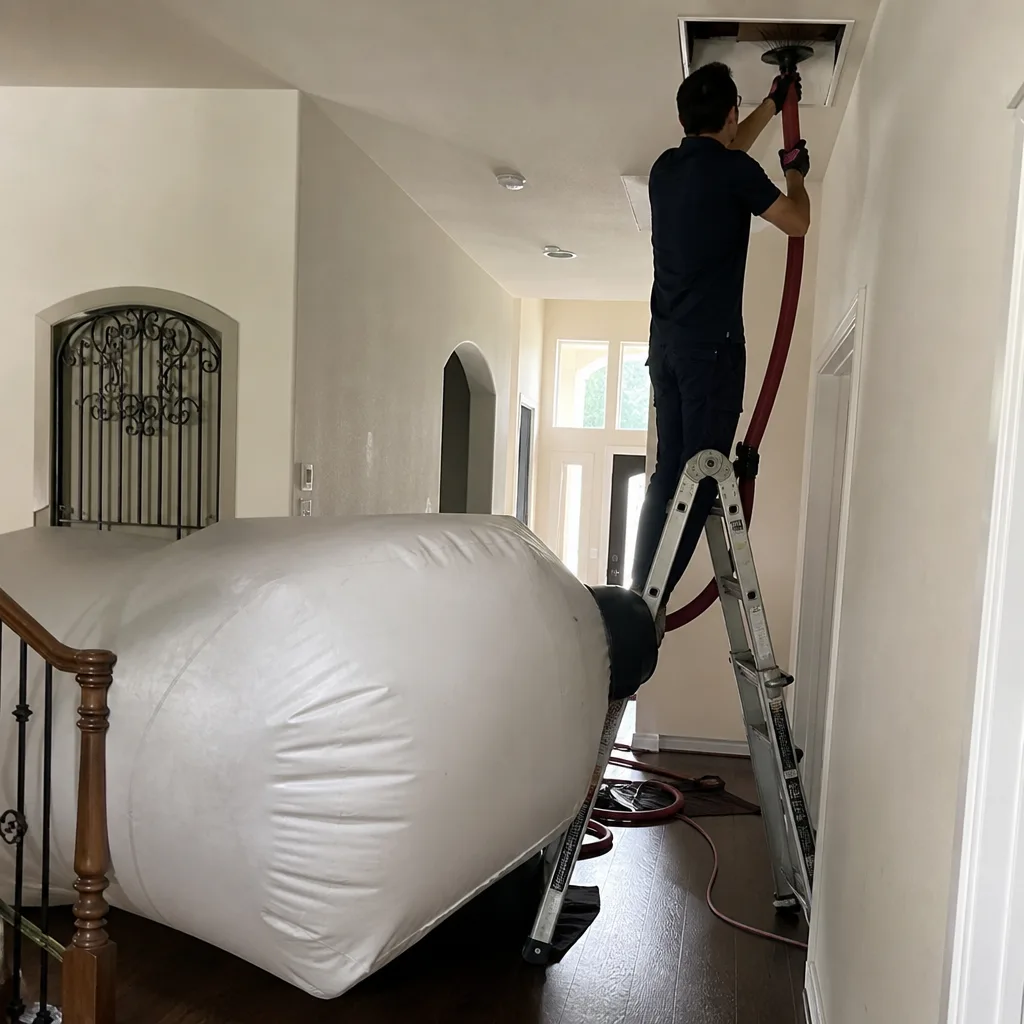
- Negative-pressure extraction during all cleaning operations, meaning the system is under vacuum while agitation occurs
- Containment of dislodged debris, preventing migration into occupied space
- Protection of HVAC components sensitive to debris or moisture
- Documentation of system condition before and after cleaning
- Adherence to OSHA and EPA guidelines for handling potentially hazardous materials
What CleanRun observes in Houston: many companies use contact cleaning (brushes or compressed air without continuous negative pressure), portable equipment inadequate for the system size, or skip the return side entirely. The ACR standard is not enforced by any regulatory body in Texas. Compliance is voluntary and unverified unless the customer asks specific questions.
Key questions to ask any Houston duct cleaner:
- Will the system be under continuous negative pressure during agitation? (The answer should be yes, with equipment specified: Nikro, Abatement Technologies, or equivalent commercial negative-air machines.)
- How many supply and return runs will be cleaned, and how is that verified? (Count them yourself; the number should match the invoice.)
- Will I receive dated, labeled photographs of the interior of each run before and after? (Not a single “representative” photo, but documentation of your actual system.)
- What happens if the post-cleaning photos show debris remaining? (A company with a genuine guarantee has a specific answer.)
CleanRun’s 365-Day Done Right Promise is a written guarantee, not a policy subject to manager approval. If our photo record shows incomplete cleaning, or if airflow testing indicates remaining obstruction, we return and correct it. Haven Standard Clause 4: Documented Results.
Documented Cost Comparison: $79 Coupon vs. Full-Process Cleaning
The Houston market is saturated with duct cleaning offers ranging from $79 to $1,200. The price spread reflects genuinely different scopes of work, though most homeowners discover the difference only after the technician arrives.
The $79-$149 coupon job:
- Typically covers 8-10 supply registers only, with returns and plenum excluded
- Uses a portable shop vacuum or small rotary brush, not a negative-pressure extraction system
- Takes 45-90 minutes on-site
- Includes no photo documentation
- Often results in upsell attempts for “mold treatment,” “sanitizing,” or additional runs at $40-$75 each
- Final invoice frequently reaches $400-$600 despite the advertised price
The full-process cleaning ($400-$900 in Houston):
- Covers all supply runs, all return runs, both plenums, register boots, and air handler cabinet
- Uses truck-mounted or commercial portable negative-pressure extraction (Nikro, Abatement Technologies) with mechanical agitation (Rotobrush or equivalent)
- Takes 3-5 hours for a typical 2,000-square-foot home
- Includes complete photo record of every run, delivered as part of the job documentation
- Price is agreed in writing before work begins, with no per-vent add-ons
The footage cleaned differs substantially. A typical Houston home has 10-14 supply runs and 2-4 return runs, totaling 150-250 linear feet of ductwork. The coupon job cleans perhaps 50-80 feet (visible register areas only). The full-process job cleans the complete system. The time difference, 90 minutes versus 4 hours, is not inefficiency. It is the difference between surface contact and complete extraction.
CleanRun’s pricing follows Haven Standard Clause 1: written price before any work starts, flat per system, no per-vent charges. Homeowners can compare our written scope directly against any competitor’s written scope.
Choosing a Duct Cleaning Company in Houston
The Houston market includes hundreds of duct cleaning providers, from dedicated HVAC contractors to carpet cleaners with portable equipment. For help choosing, see our How to Hire a Air Duct Cleaning Contractor in Houston: A Step-by-Step Guide. Selection criteria should focus on verifiable practices, not longevity or scale.
Verify these specifics:
- Written pricing before work begins. Not an estimate, not a “starting at” figure, but a fixed scope and price signed by both parties. CleanRun’s Haven Standard Clause 1 requires this on every job.
- Photo documentation as standard. Not available “upon request” or for an additional fee, but included on every visit as a standard deliverable. Ask to see examples from actual Houston homes.
- Equipment specificity. The company should name the brands and models it uses. Rotobrush, Nikro, Abatement Technologies, Honeywell, Aprilaire, and Guardsman are professional-grade tools that customers can research independently. Vague references to “commercial equipment” are not sufficient.
- Technician verification. Background-checked, uniformed, identified by name before arrival. Haven Standard Clause 3: Verified Crews.
- Physical business presence. A Houston address, not a dispatch service routing calls to out-of-state call centers. The license number should be published and verifiable with the Texas Department of Licensing and Regulation.
Red flags specific to the Houston market:
- Quotes based on register count without inspecting the system. The number of visible grilles does not indicate duct configuration or contamination level.
- “Free mold testing” that invariably finds mold. Legitimate mold assessment requires laboratory analysis, not a flashlight and a worried expression.
- Pressure to add chemical treatments, sealants, or “coating” products. The EPA does not recommend biocides or sealants in ductwork except in specific, limited circumstances.
- Refusal to provide a written scope or written guarantee. Verbal promises are not enforceable.
CleanRun Air Duct Cleaning Houston operates under the full H.A.V.E.N. Standard, with all calls answered by a live person. Our technicians are background-checked and uniformed, and every job includes the documented photo record and 365-Day Done Right Promise. Air Duct Cleaning in Houston is our core service, not an add-on.
Maintaining Your Ducts Between Professional Cleanings
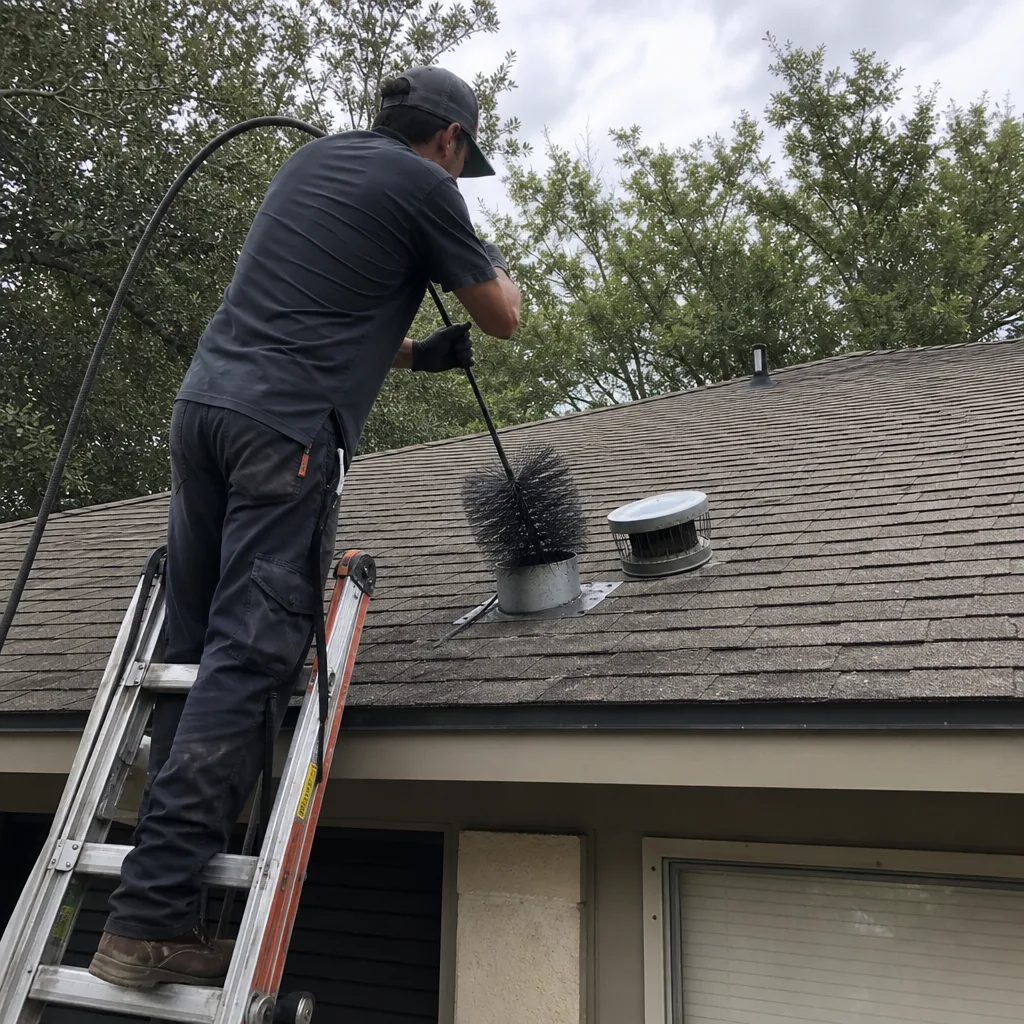
Professional cleaning addresses accumulated debris. Between cleanings, homeowners can reduce recontamination and extend cleaning intervals. For related guidance, see our DIY vs Professional Air Duct Cleaning: The Houston Homeowner’s Decision Guide.
Filter discipline. Use MERV 8-13 pleated filters, changed every 60-90 days in Houston’s high-pollen, high-dust environment. Higher MERV ratings trap more particulate but increase static pressure; verify your system can handle MERV 13 without blower strain. Never run the system without a filter, even temporarily.
Register and grille maintenance. Vacuum visible registers monthly with a brush attachment. Remove and wash grilles annually. This prevents surface debris from being drawn into the duct when the system cycles on.
Humidity control. Maintain indoor relative humidity below 60% to inhibit mold growth. In Houston, this typically requires air conditioning plus supplemental dehumidification during shoulder seasons. Honeywell and Aprilaire whole-home dehumidifiers integrate with central HVAC systems and maintain consistent levels.
Prompt leak response. Any roof leak, plumbing leak, or condensation issue that affects ductwork should be addressed within 24-48 hours. Mold growth begins within 48-72 hours of moisture introduction on organic debris.
Construction protection. During renovation, seal registers and returns in work areas. Run the HVAC system on “fan only” with a fresh filter after construction concludes, then change the filter again. Consider professional cleaning after major renovation, particularly if drywall work or flooring replacement occurred.
Annual visual inspection. Remove a few register covers annually and inspect the first few feet of duct with a flashlight. Look for debris accumulation, moisture staining, or unusual odors. Document with your own photos for comparison year to year.
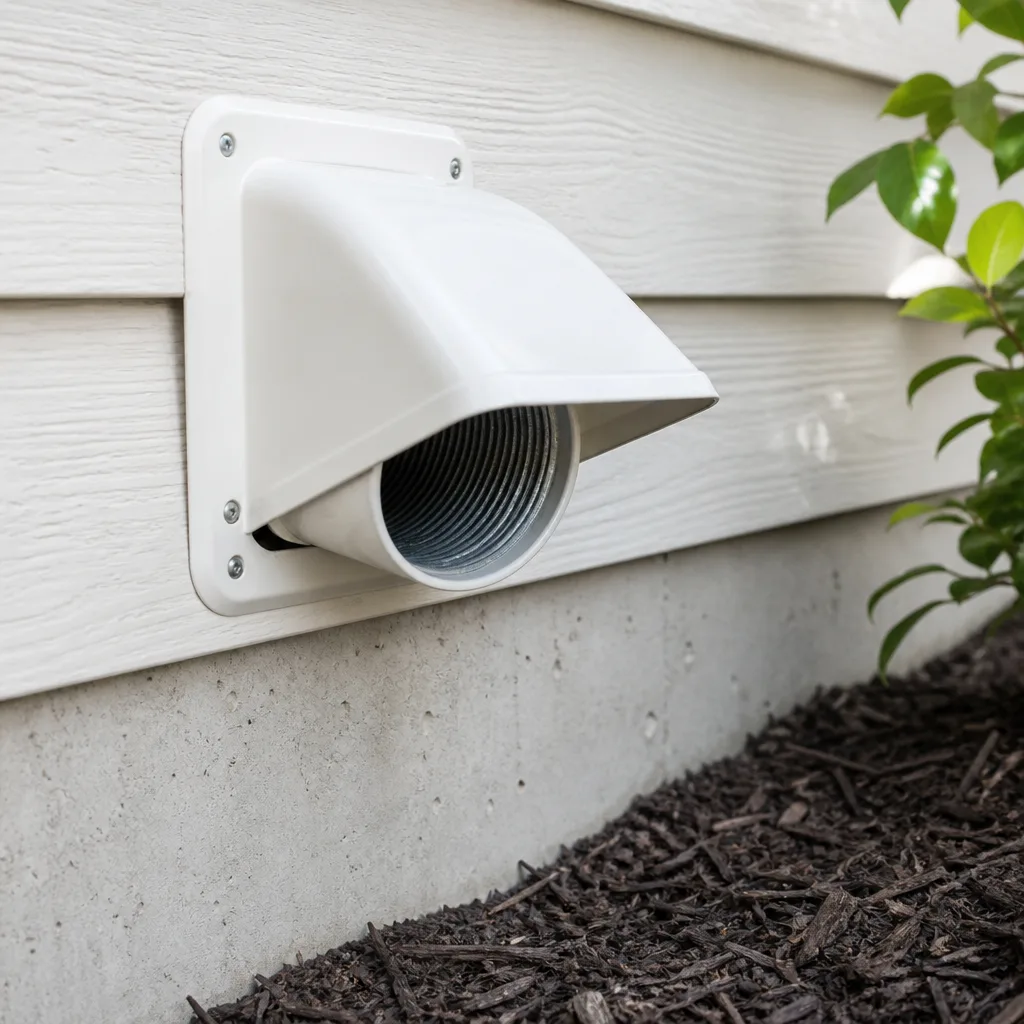
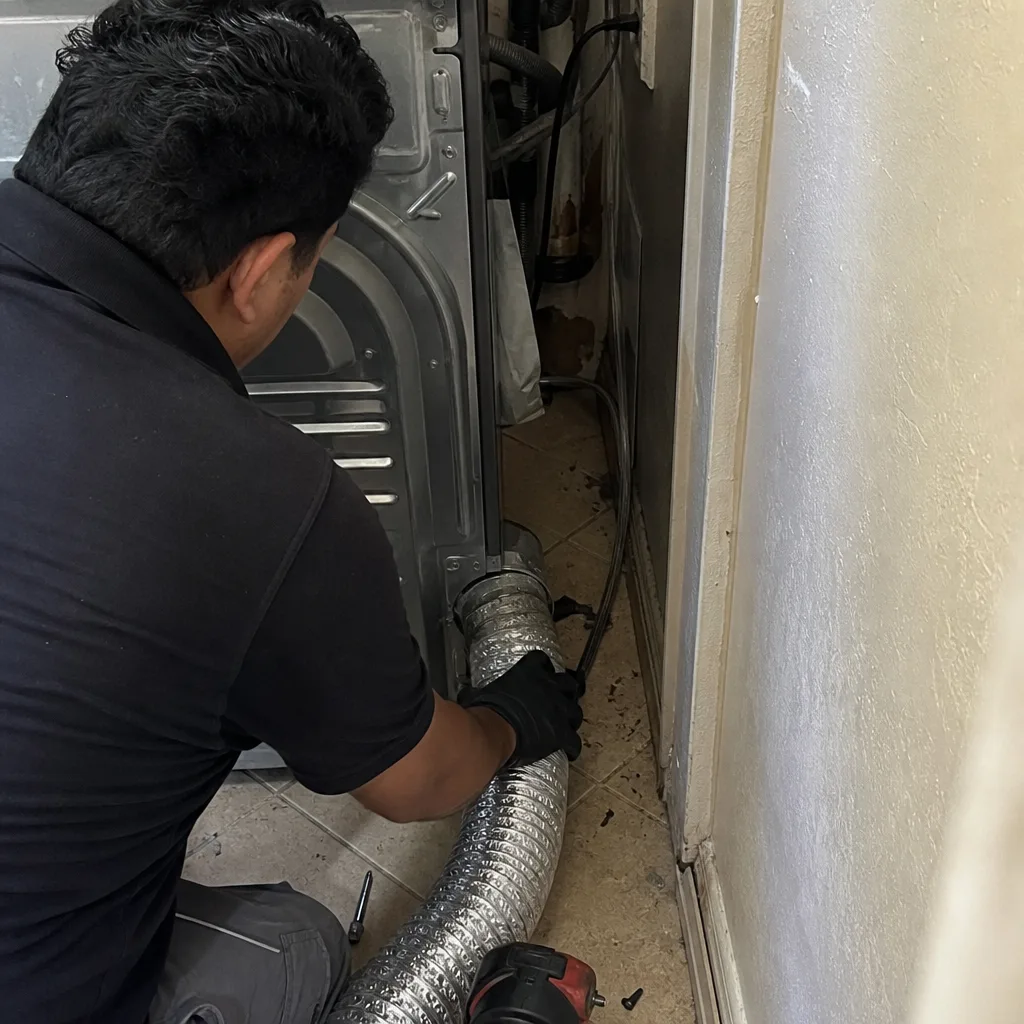
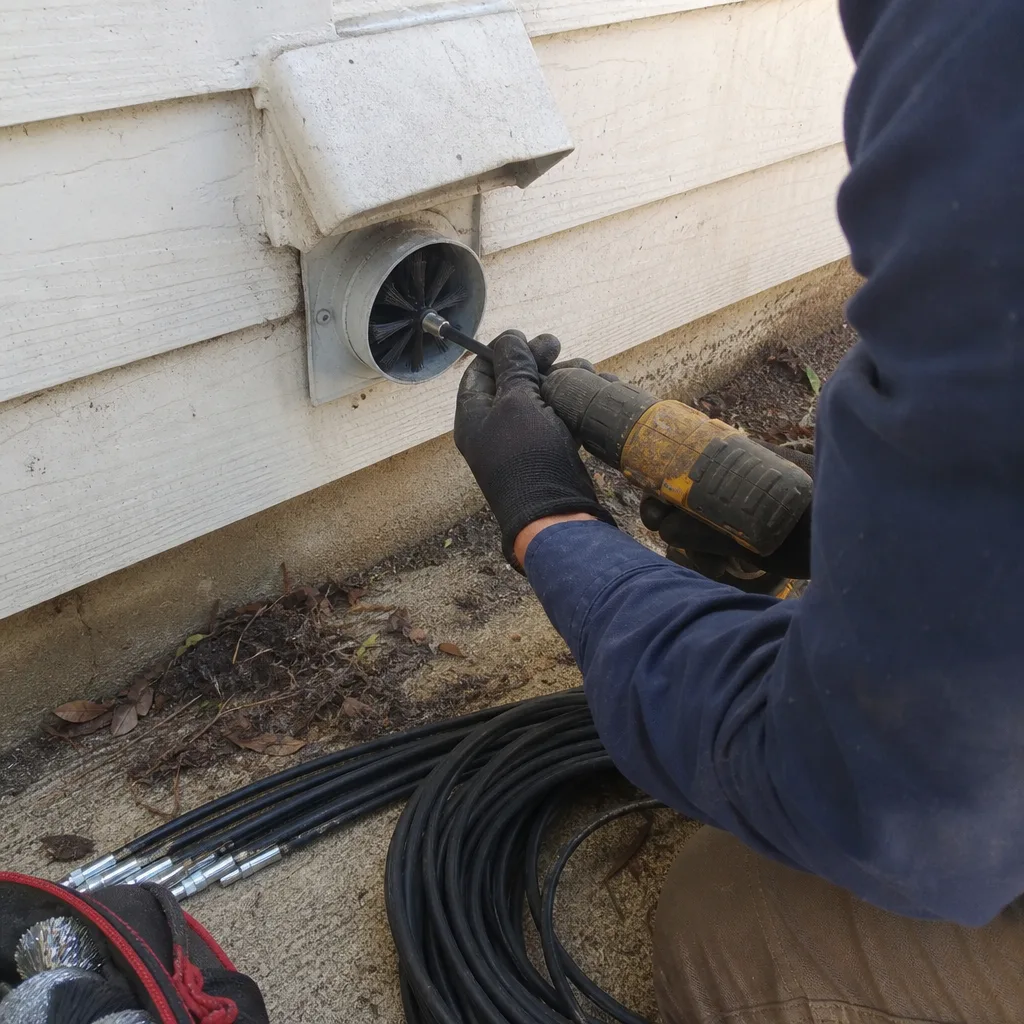
For Dryer Vent Cleaning in Houston, a related but distinct service, annual cleaning is recommended due to fire risk from lint accumulation. Dryer vents are not part of HVAC ductwork and require separate equipment and procedures.
Common Mistakes to Avoid
- Accepting a per-vent price. Per-vent pricing incentivizes the company to minimize time per run and omit difficult-to-access components. It also obscures the total cost until the technician counts vents on arrival. Insist on whole-system pricing with a written scope.
- Ignoring the return side. Returns are always dirtier than supplies. A quote that addresses only supply registers is incomplete by definition. In Houston’s climate, return leaks also draw humid attic air, compounding moisture issues.
- Assuming new construction means clean ducts. Post-construction duct cleaning is one of our most common Houston requests. Drywall dust, sawdust, and construction debris accumulate during build phases when filters are absent or bypassed. The debris is fine-grained and adherent, requiring professional extraction.
- Delaying after water intrusion. Hurricane Harvey and subsequent flooding affected thousands of Houston homes. Ductwork in flooded homes, even those with “clean” water, requires assessment for contamination and moisture retention. Delaying inspection allows mold establishment that becomes more expensive to address.
- Confusing duct cleaning with duct sealing. Leaky ducts waste energy and draw in unconditioned air. Cleaning does not seal leaks. If your ducts leak, you need sealing (typically with mastic or aerosol sealant) as a separate service. CleanRun offers HVAC Cleaning in Houston that includes assessment of both cleanliness and leakage.
- Expecting health miracles. Duct cleaning improves system hygiene and can reduce odor and particulate circulation. It does not cure asthma, eliminate allergies, or replace medical treatment. Companies that imply otherwise are selling hope, not service.
- Failing to verify insurance. Any technician working in your attic, on your roof, or with your electrical system should carry general liability and workers’ compensation insurance. Request a certificate of insurance before work begins.
When to Call a Professional
Schedule a professional duct assessment when you observe visible debris at registers, persistent musty odors when the HVAC cycles, reduced airflow at specific vents, or evidence of rodent activity. After any water intrusion event, professional inspection is warranted even if ducts appear unaffected. Homes near active construction in Houston’s ongoing development corridors, including the Energy Corridor, Greater Heights, and East End, should be evaluated for construction dust infiltration.
CleanRun Air Duct Cleaning Houston offers free estimates in Houston. Every estimate includes a written scope and price before any work begins, with no obligation. For more guides & resources, visit our blog. Call (346) 251-8919 to schedule.
Frequently Asked Questions
Complete residential duct cleaning in Houston typically ranges from $400 to $900, depending on system size, accessibility, and contamination level. A legitimate job includes all supply and return runs, both plenums, the air handler cabinet, and before-and-after photography. Quotes below $200 generally cover only visible register areas and omit the components where most debris accumulates. Call (346) 251-8919 for a written estimate with exact pricing for your system.
Low quotes typically reflect reduced scope, not efficiency. A $79-$149 coupon usually covers 8-10 supply registers only, with returns, plenums, and photo documentation excluded. The technician then upsells additional services at $40-$75 per item, often producing a final invoice of $400-$600. The equipment used is frequently a portable shop vacuum or small rotary brush, not commercial negative-pressure extraction. Ask for a written line-item scope before comparing prices.
Demand dated, labeled photographs of the interior of every duct run before and after cleaning. The photos should show your home’s specific ductwork, not stock images. CleanRun includes a Documented Photo Record on every visit as a standard deliverable, not an optional add-on. If a company cannot or will not provide this, the work is unverifiable.
The EPA recommends cleaning “as needed,” not on a fixed schedule. For most Houston homes, assessment every 3-5 years is reasonable. Homes with new construction residue, recent renovation, prior water intrusion, or rodent activity may need more frequent evaluation. Annual filter changes and humidity control extend intervals. The presence of visible debris, odors, or airflow reduction indicates need regardless of elapsed time.
Moderately, in specific circumstances. Heavy debris accumulation on the evaporator coil or blower wheel can restrict airflow and reduce efficiency. Cleaning these components restores design airflow. However, clean ducts alone do not compensate for leaky ductwork, improper system sizing, or deferred maintenance. The efficiency gain from duct cleaning alone is typically 5-15% in systems with significant accumulation, and negligible in systems that are already relatively clean.
Active mold growth occurs in a minority of Houston homes but is more common here than in drier climates. It requires moisture, so its presence indicates a water source: condensation from poor insulation, duct leakage, or past flooding. Mold is identifiable by visual inspection, not by smell alone. Cleaning removes visible mold from metal surfaces but does not address porous materials or moisture sources. Remediation requires both.
The Bottom Line
Air duct cleaning in Houston is a legitimate maintenance service when performed completely and documented honestly. The city’s climate and construction patterns create specific contamination risks that national guides do not address. A complete job costs $400-$900, takes 3-5 hours, includes every duct run and plenum, and produces verifiable before-and-after evidence. The $79 coupon delivers a fraction of that scope, with upsell pressure replacing upfront honesty. Homeowners should demand written pricing, photo documentation, and equipment specificity before allowing any technician into their attic or duct system.
Written by Tomas Reyes, Owner at CleanRun Air Duct Cleaning Houston, serving Houston since 2013.