
Last updated September 23, 2026
Whole-system duct and dryer vent check with before-and-after photos - you see exactly what came out of your vents
That "$99 whole-house special" is a bait ad - the real number appears once they are in your hallway, or the "clean" is a shop-vac at the register. We photograph the inside of your ducts before and after instead.
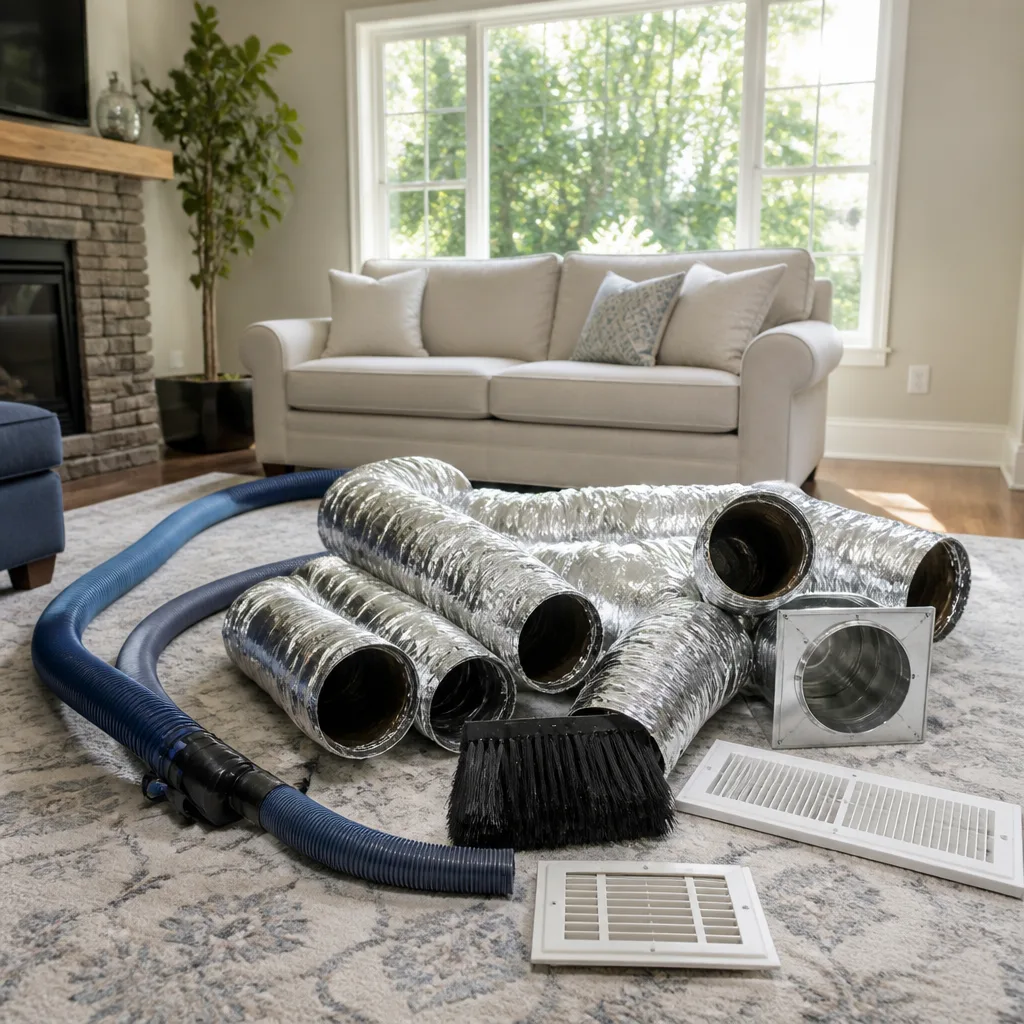
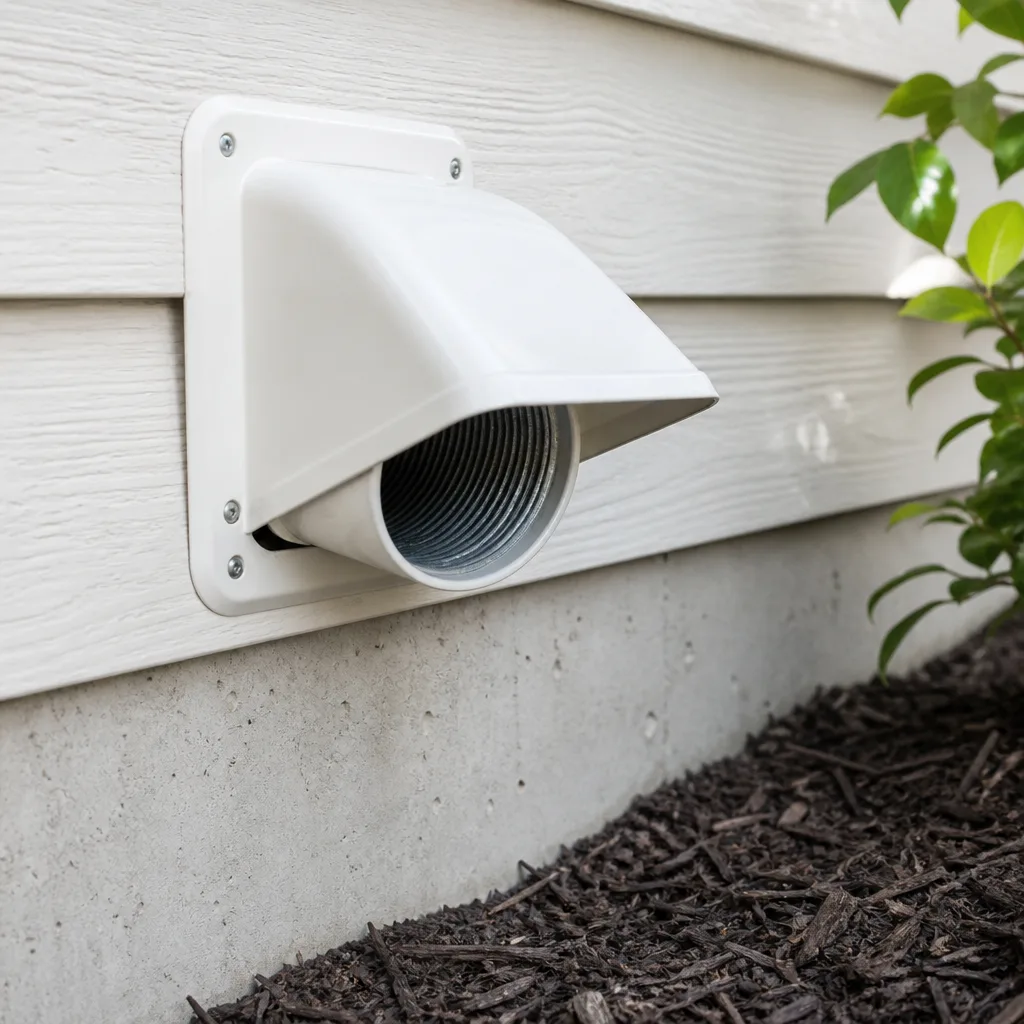
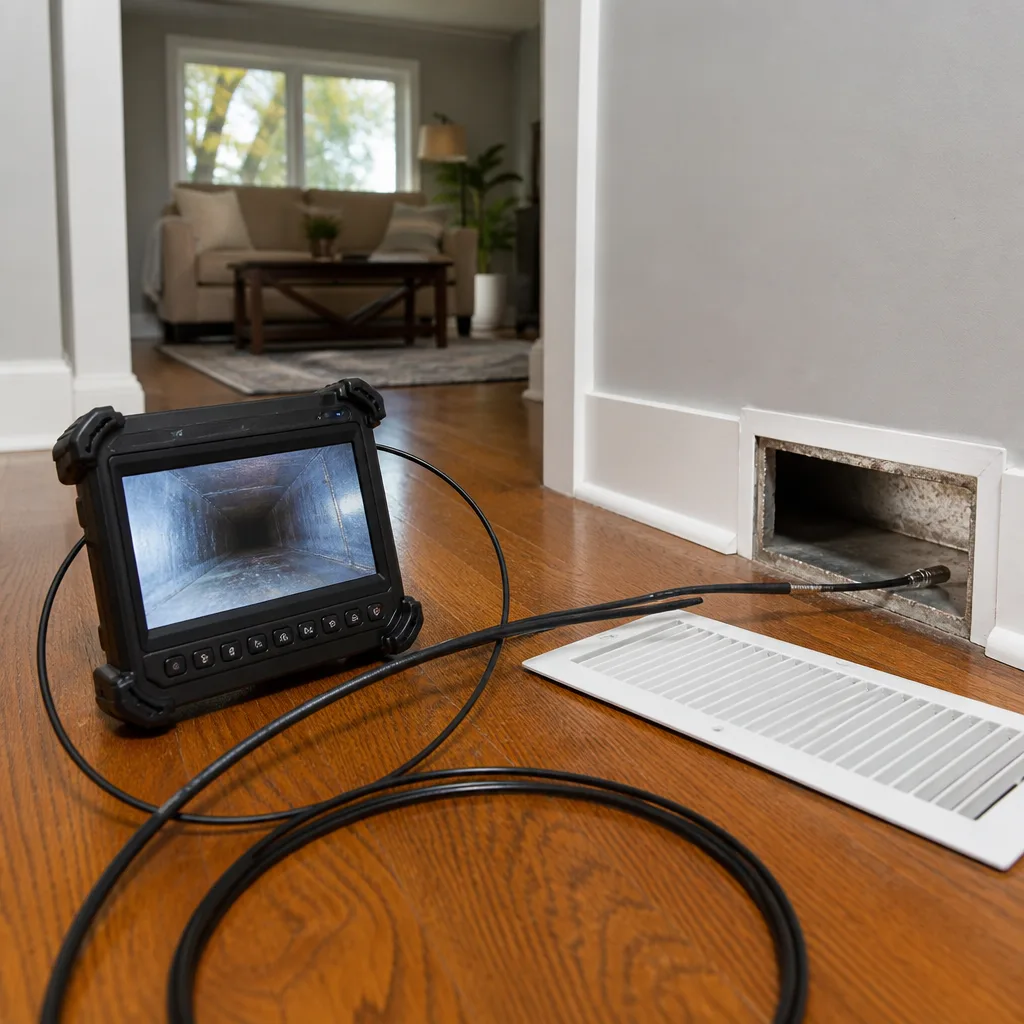
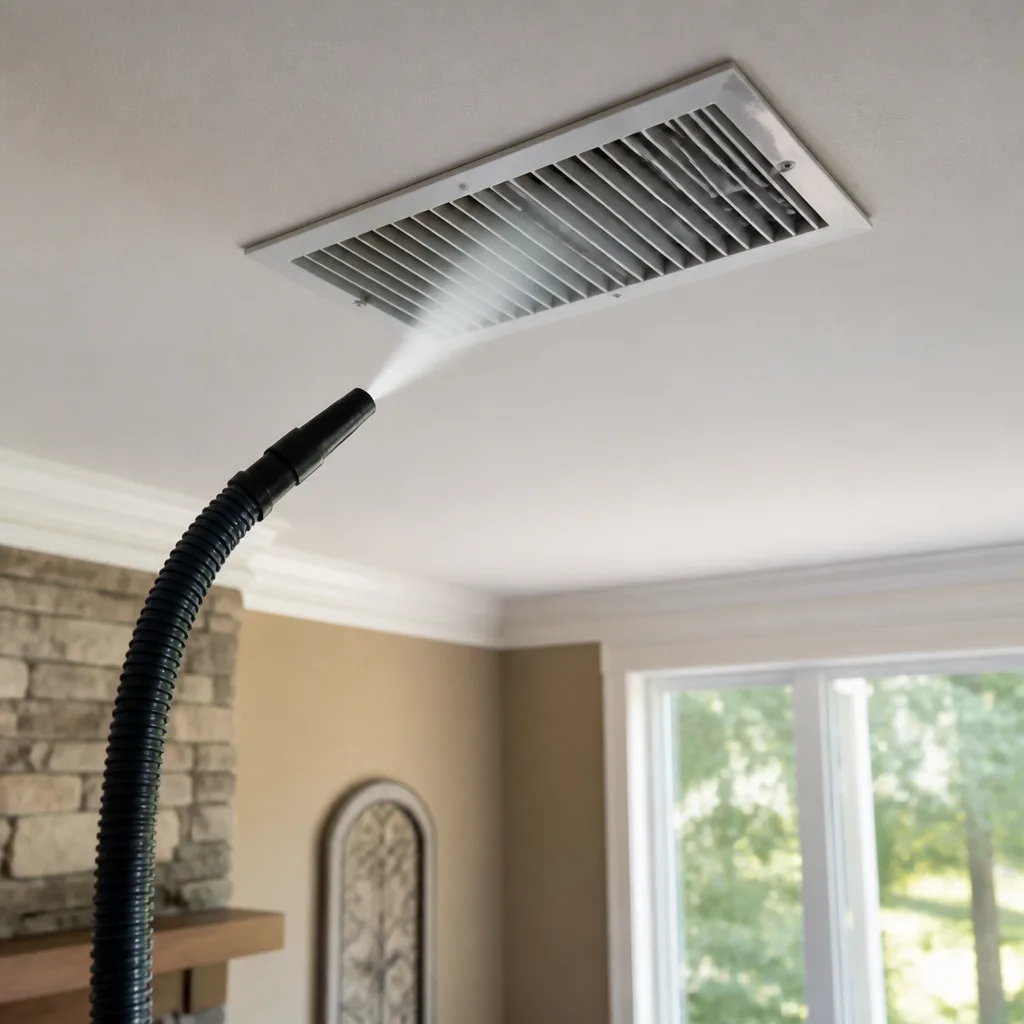
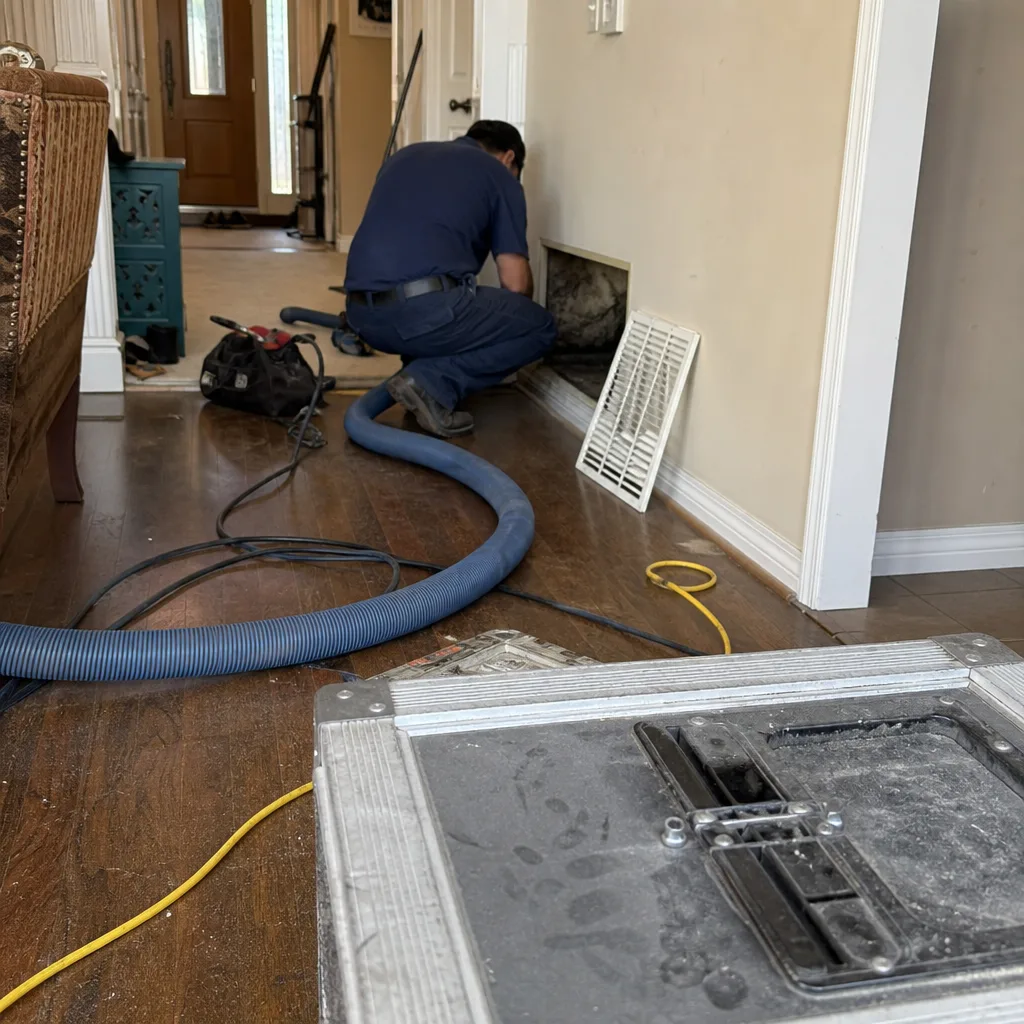 Before
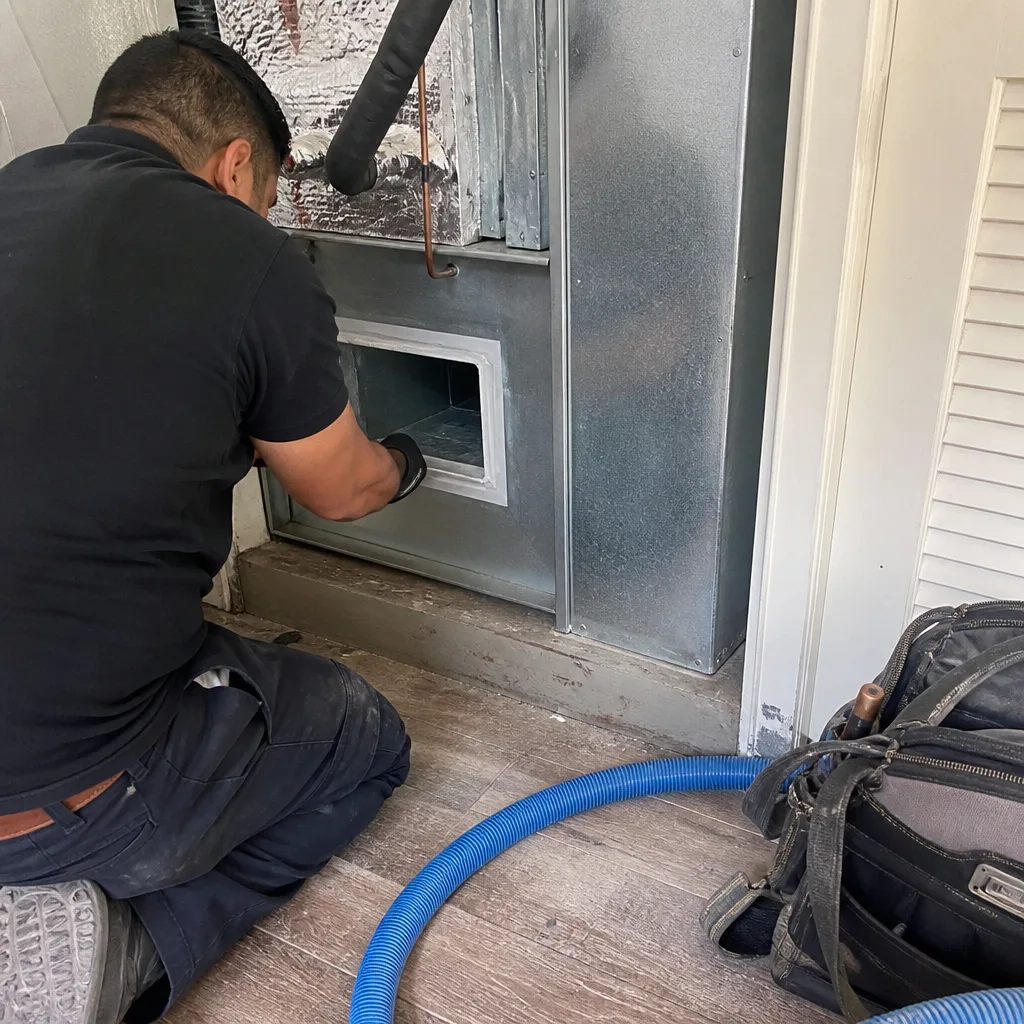 After
After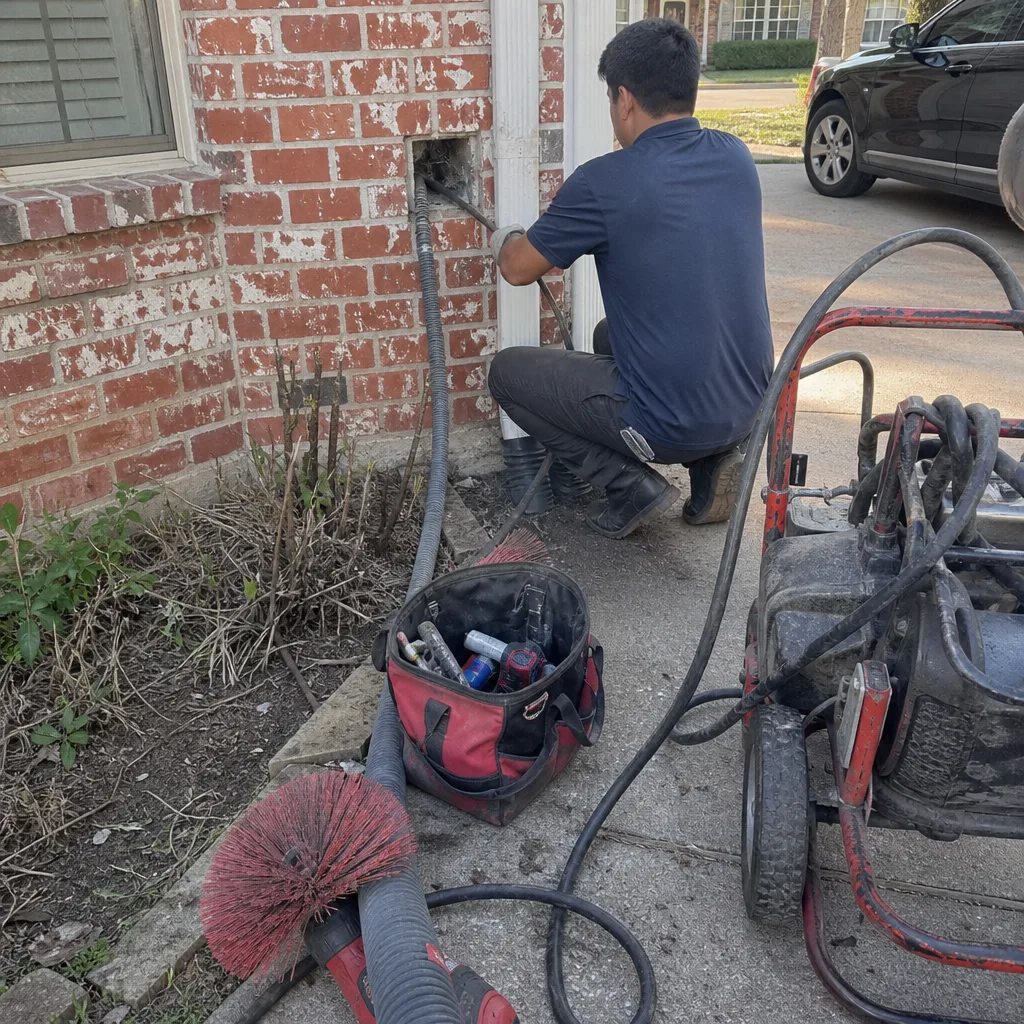 Before
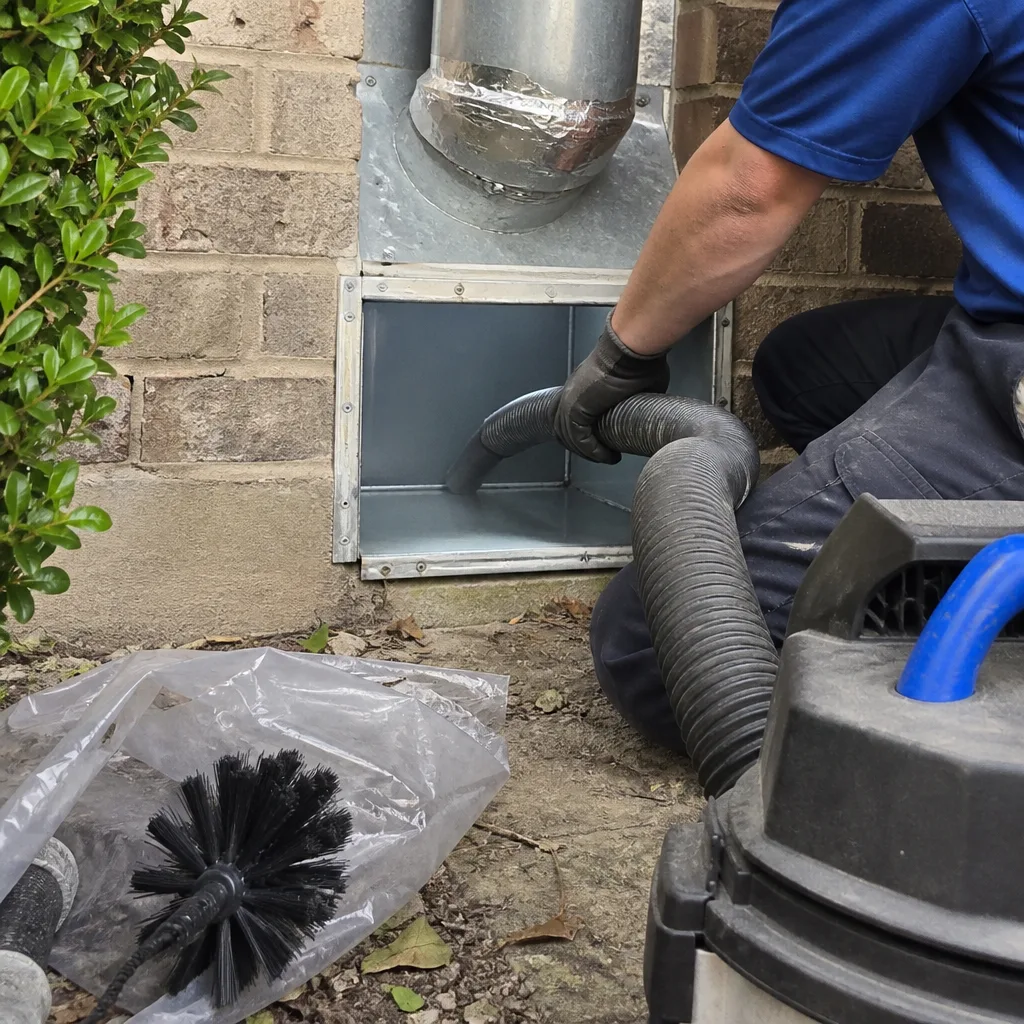 After
After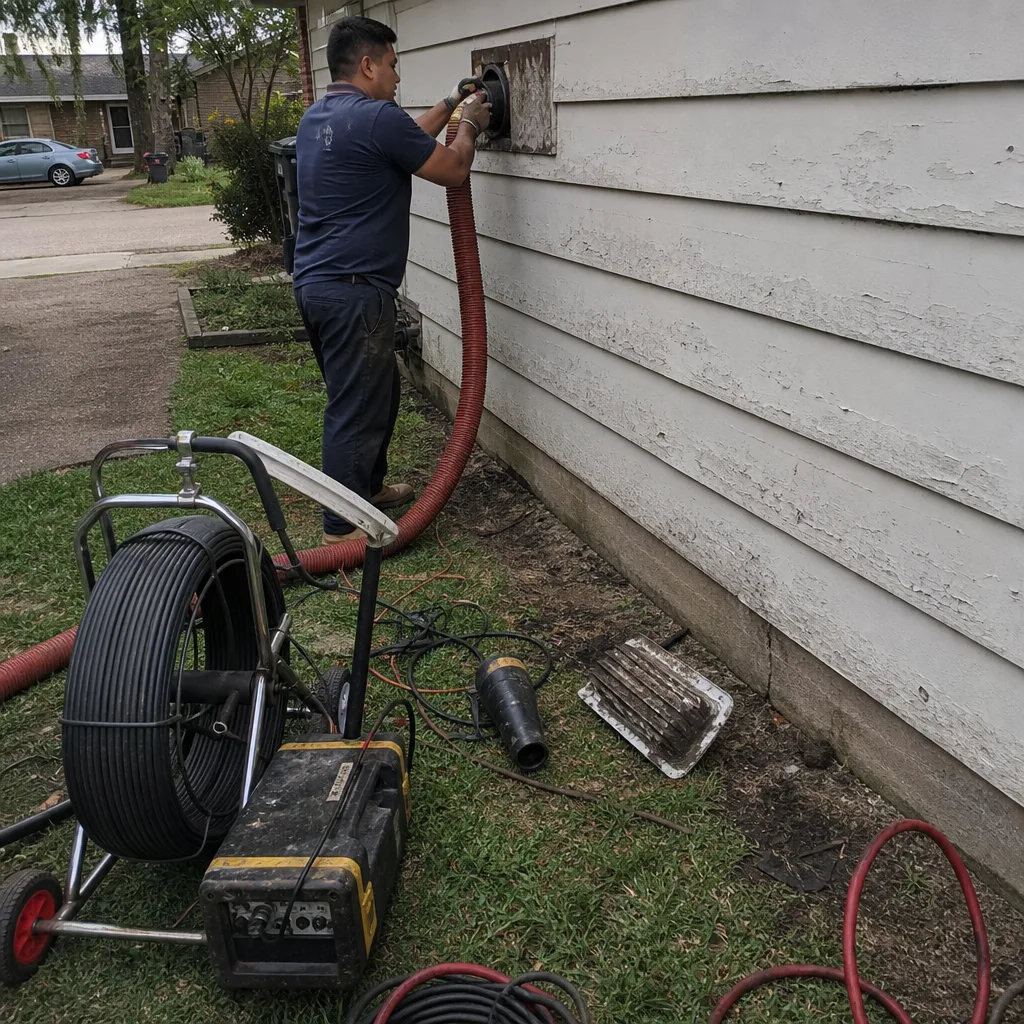 Before
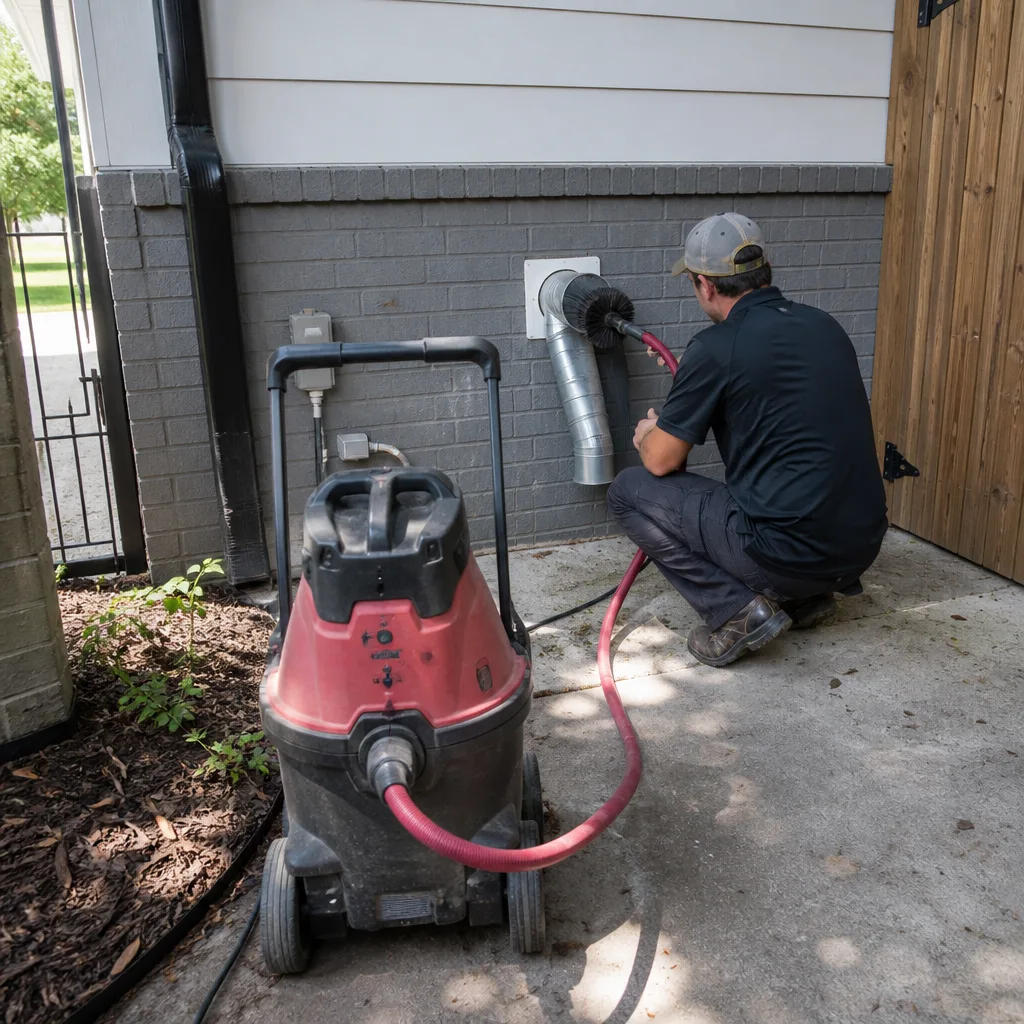 After
AfterAir Duct Cleaning Cost Breakdown: The Houston Homeowner’s Reference for 2026
The $79 duct cleaning special has been the same price for fifteen years despite inflation. That is not a bargain. It is a business model built on getting a technician through your door at a loss, then recovering margin through upsells once they are standing in your Houston living room. In this guide, we will show you exactly what legitimate duct cleaning costs in Houston in 2026, line by line, so you can compare any quote against real deliverables: labor hours, equipment type, number of duct runs cleaned, and whether you receive a documented photo record or a verbal promise. You will learn why some Houston homes cost more to clean than others of the same square footage, what the coupon model actually includes versus what gets added to your invoice, and how to read a written estimate like a technician would.
Quick Answer
A legitimate, documented-process Air Duct Cleaning for a typical 2,000 square foot Houston home in 2026 costs between $450 and $850. The exact figure depends on your number of duct runs (not square footage), whether your system uses flex duct or sheet metal, attic access difficulty, and whether the job includes coil cleaning and a full photo record. The $79-$149 coupon model typically covers a single vacuum pass of visible registers and excludes the plenum, main trunk lines, and documentation.
Table of Contents
- The Two-Track Pricing System in Houston
- Line-Item Breakdown: What Each Dollar Pays For
- What the $79 Coupon Model Actually Includes
- Houston-Specific Cost Factors
- Fair Price Ranges for 2026: Three Tiers
- How to Read a Written Estimate Like a Technician
- Common Mistakes to Avoid
- When to Call a Professional
- Frequently Asked Questions
- The Bottom Line
BeforeAfterThe Two-Track Pricing System in Houston
Houston’s air duct cleaning market operates on two parallel tracks that rarely intersect. Understanding which track a contractor is running on tells you more about your final invoice than any slogan or star rating.
Track One: The Coupon Model
This is the $79-$149 special you see in mailers, social media ads, and door hangers across Houston neighborhoods from The Woodlands to Pearland. The price has not moved since roughly 2010. In that same period, technician wages have risen, fuel costs have doubled, and insurance premiums have climbed. The math does not work unless the initial price is a loss leader.
We have seen the inside of homes in Memorial and Sugar Land where a coupon technician spent twenty minutes on site, ran a portable vacuum at each register, and left a handwritten invoice for $680 in “required” add-ons. The customer called us for a second opinion. Our camera showed the main trunk line had never been touched.
Track Two: The Documented-Process Model
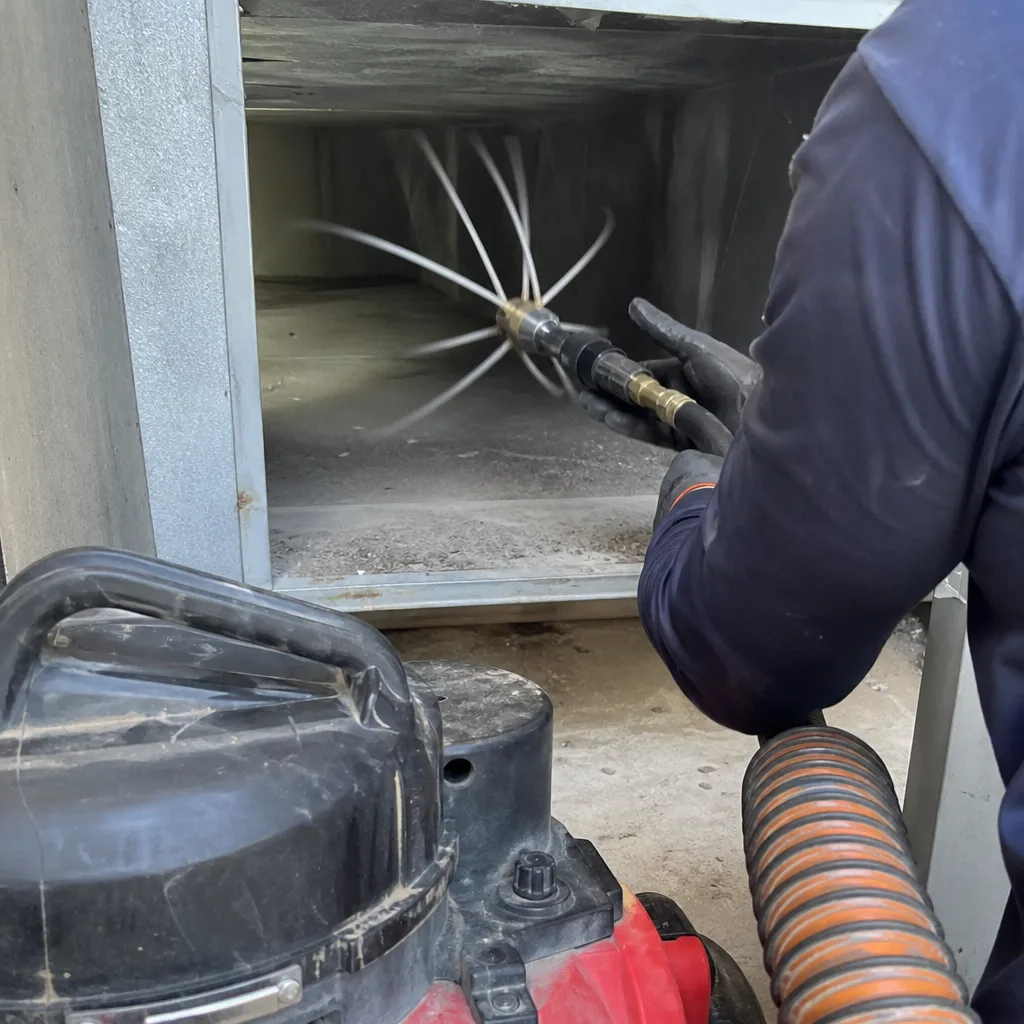
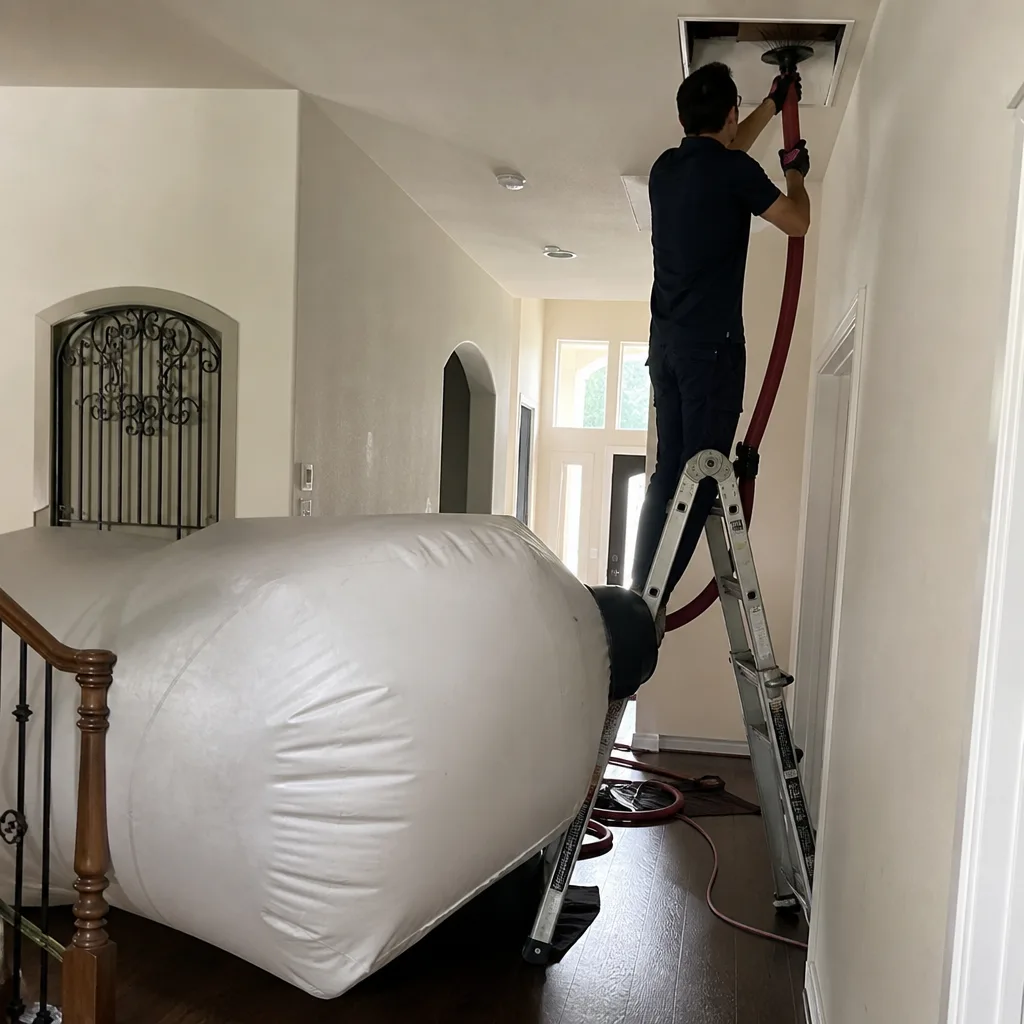
This is the $450-$900 range for a typical Houston home. Contractors on this track price for the full scope of work upfront, arrive with truck-mounted negative-pressure extraction systems or professional-grade portable units from manufacturers like Rotobrush or Nikro, and deliver a written scope with a documented photo record of every duct run.
The difference is not luxury versus economy. It is completeness versus partiality. A documented-process cleaning addresses the complete air path: return grille, return duct, filter rack, blower compartment, evaporator coil, supply plenum, main trunk, branch ducts, and each supply register. The coupon model typically stops at the register. For a full breakdown of what should be included, see our Air Duct Cleaning Maintenance Checklist for Houston Homeowners.
CleanRun has operated on the documented-process track since 2013. Every job starts with a written price under Haven Standard Clause 1, and every job concludes with before-and-after photography inside every duct run. We have served over 52,000 Houston-area homes on this model.
Line-Item Breakdown: What Each Dollar Pays For
Here is how a legitimate Houston duct cleaning quote is built. If your estimate does not show these line items, ask why.
| Line Item | What It Covers | 2026 Houston Price Range |
|---|---|---|
| Labor (2 technicians, 2.5-4 hours) | Setup, access, cleaning, reassembly, documentation | $280-$420 |
| Equipment & consumables | Negative-pressure vacuum (truck-mount or portable), agitation tools, HEPA filtration, protective materials | $60-$120 |
| Per-duct-run cleaning | Each supply and return branch duct, photographed before and after | $15-$35 per run |
| Register/grille cleaning | Removal, soak, and reinstall of supply and return covers | $40-$80 |
| Plenum & trunk line access | Cutting access panels in sheet metal, sealing after cleaning | $50-$100 |
| Coil cleaning (if included) | Evaporator coil access and foaming clean | $80-$150 |
| Photo documentation | Digital record of every duct run, delivered to customer | $30-$60 |
| Sanitizing treatment (optional) | EPA-registered application, not a fog-and-go | $75-$150 |
A few notes on reading this table. First, “per duct run” pricing is the honest way to quote. Square footage is a poor proxy for duct complexity. We have cleaned 1,800 square foot homes in Houston’s Heights with fourteen duct runs because of a finished attic conversion, and 3,200 square foot homes in Katy with nine runs because of an open-concept design. A quote based on square footage alone is guessing.
Second, equipment matters. Truck-mounted negative-pressure systems from manufacturers like Nikro or Abatement Technologies pull 5,000+ CFM and maintain constant suction through the entire job. Portable units vary widely. A Rotobrush portable with HEPA filtration is professional-grade. A shop vacuum with a 2.5-inch hose is not. The equipment line item tells you which one is showing up.
Third, documentation time is real time. At CleanRun, our technicians photograph every duct run before agitation and after extraction. Those images are compiled into a job record the customer receives before we leave. This adds roughly thirty minutes to a typical Houston home. It also means the customer knows the work happened. Without it, you have a verbal assurance.
What the $79 Coupon Model Actually Includes
To understand what you are actually buying with a coupon special, it helps to know what the technician is instructed to do. We have reviewed the training materials from several coupon-model companies operating in Houston. The pattern is consistent.
What the coupon price covers:
- A single portable vacuum connection at one register, run for 10-15 minutes
- Visual inspection of visible register surfaces
- A “free” mold test that is actually a sales pitch for sanitizing
Common upsells added on site:
| Upsell | Typical Added Charge | Actual Market Value |
|---|---|---|
| “Main line cleaning” (the trunk line the coupon excludes) | $200-$350 | Included in any legitimate quote |
| “Deep cleaning” per additional register | $25-$45 each | Included in per-run pricing |
| Coil cleaning | $150-$250 | $80-$150 when quoted upfront |
| Sanitizing fog treatment | $125-$200 | $75-$150 with EPA-registered product |
| “Access panel” installation | $75-$125 per panel | $50-$100, often unnecessary |
The total invoice for a ” $79 special” in Houston typically lands between $400 and $750. The customer receives partial cleaning, no documentation, and a transaction built on adversarial selling rather than upfront agreement.
We have documented this pattern in homes across Houston, from new construction in Cypress to 1970s builds in Bellaire. In one case in Spring Branch, the coupon technician never accessed the return side of the system at all. The return duct, where the most concentrated debris accumulates, was untouched. The customer paid $589 and received a register vacuuming.
The H.A.V.E.N. Standard exists partly in response to this model. Haven Standard Clause 1 requires a written price before any work starts. Clause 4 requires documented verification of completed work. These are not marketing claims. They are structural protections against the upsell economy. For Air Duct Cleaning Permits, Codes & Inspections in TX: What You Need to Know, review our regulatory guide.
Houston-Specific Cost Factors
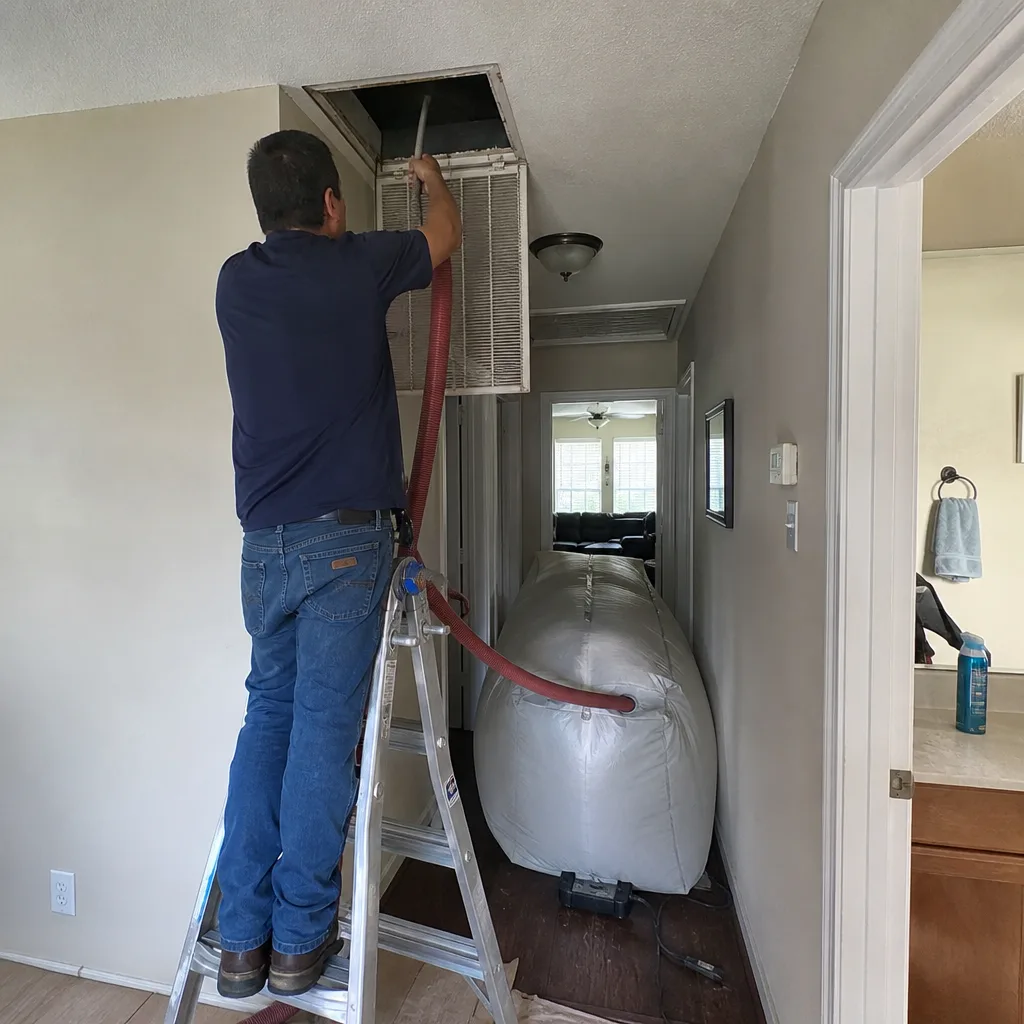
Three Houston-specific variables push duct cleaning costs higher or lower regardless of which contractor you choose.
1. Attic Access and Temperature Conditions
Houston attics in July average 130-150°F. Technicians cannot work safely in those conditions for extended periods without breaks, hydration protocols, and sometimes modified scheduling. A job that takes three hours in March may take four hours in August, or require a two-visit approach. Legitimate contractors build this into labor estimates. Coupon models often do not, leading to rushed work or rescheduling.
Attic access type matters too. Pull-down stairs in a hallway are straightforward. Scuttle holes in closet ceilings, tight crawl spaces in pier-and-beam homes near Buffalo Bayou, or truss-constrained attics in newer Houston subdivisions add setup time and sometimes require specialized equipment to protect your finishes.
2. Flex Duct Versus Sheet Metal
Houston’s housing stock is mixed. Post-1985 construction often uses flexible duct (insulated plastic over a wire coil), which is lighter and easier to install but more fragile to clean. Aggressive agitation can tear the inner liner or detach connections. Proper flex duct cleaning requires lower-pressure techniques, smaller-diameter tools, and more technician attention per run. This adds time.
Pre-1985 homes and higher-end construction in River Oaks, Tanglewood, and similar areas more often use galvanized sheet metal with fiberglass liner or bare metal. Sheet metal tolerates aggressive brushing and higher suction. It also requires access panel cutting to reach the trunk line, which adds material and sealing time but reduces per-run labor.
A legitimate Houston quote should specify which duct type you have and adjust accordingly. A quote that does not ask is not really quoting.
3. Humidity and Microbial Growth Patterns
Houston’s average annual relative humidity exceeds 75%. This creates conditions inside ductwork that do not exist in drier climates: condensation at insulation gaps, microbial growth at register boots where conditioned air meets humid wall cavities, and degraded flex duct insulation that sheds particles into the airstream.
These conditions do not always require sanitizing, but they do require recognition. A technician working in Houston should inspect for these patterns and document them. If your quote does not account for humidity-related findings, the inspection was superficial.
In our experience across Houston’s 52,000+ jobs, homes within two miles of Buffalo Bayou, White Oak Bayou, or Brays Bayou show higher rates of register-boot condensation staining. Homes in Energy Corridor and West Houston, where construction boomed during 2015-2020, show more flex duct degradation from rapid-build schedules. These are not value judgments. They are observations that inform how we scope a job.
Fair Price Ranges for 2026: Three Tiers
Here is what you should expect to pay in Houston for a complete, documented air duct cleaning in 2026. These ranges assume a typical single-system home with 8-14 duct runs.
| Tier | Price Range | What Is Included | What to Verify |
|---|---|---|---|
| Low End: Basic Documented Process | $400-$550 | All supply and return duct runs, main trunk lines, register cleaning, basic photo documentation | Equipment brand and model; whether coil is included; number of photos delivered |
| Mid-Range: Complete System Cleaning | $550-$750 | All duct runs, trunk lines, plenum, evaporator coil, blower compartment, full photo record, written scope | Coil access method (in-place vs. pull-and-clean); HEPA filtration on vacuum; technician credentials |
| Premium: Full Documentation + Sanitizing | $750-$950 | Complete system cleaning, EPA-registered sanitizing treatment, video scope inspection, extended photo/video record, 365-day workmanship guarantee | Sanitizing product EPA registration number; guarantee terms in writing; video delivery format |
The gap between low end and premium is not markup. It is scope. A $450 job that cleans every duct run with a Rotobrush portable, delivers photos, and includes a written scope is legitimate. A $450 job that omits the coil, skips the return side, and leaves no record is not a bargain. It is an incomplete service.
At CleanRun, our Houston pricing falls in the mid-range to premium tiers depending on system complexity. Every quote includes the full scope in writing before work begins, per Haven Standard Clause 1. The 365-Day Done Right Promise applies at every tier.
How to Read a Written Estimate Like a Technician
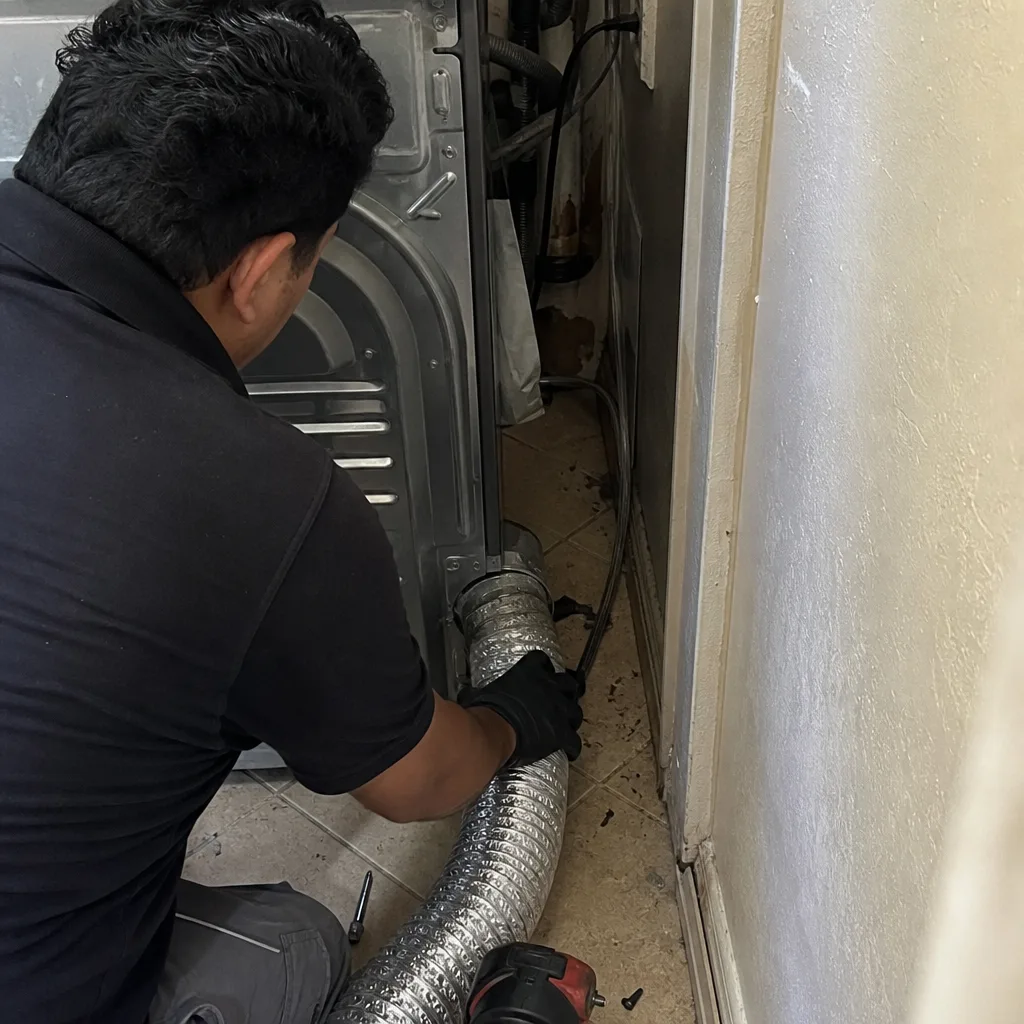
A written estimate is a comparison tool, not just a price. Here is how to evaluate one.
- Check for a duct run count, not just square footage. A 2,500 square foot home with ten duct runs and a 2,500 square foot home with sixteen duct runs are different jobs. The estimate should specify how many supply and return runs are included. If it says “whole house” without a number, the scope is undefined.
- Look for equipment specification. The estimate should state whether the contractor uses truck-mounted or portable negative-pressure extraction, and ideally name the manufacturer. “Professional equipment” is not a specification. “Nikro HP20G gas-powered HEPA vacuum” or “Rotobrush Beast series portable with HEPA filtration” is. These are verifiable claims.
- Verify coil inclusion. The evaporator coil is part of the air path. If it is dirty, cleaned ducts recontaminate immediately. The estimate should state whether coil cleaning is included, and if not, why not. Some newer Houston homes have coils in packaged units where access is limited; this should be noted, not omitted.
- Confirm documentation deliverables. “Before and after photos” means different things to different contractors. The estimate should specify: how many photos, of what components, in what format, delivered when. At CleanRun, our standard is minimum two photos per duct run (before and after), compiled into a digital job record delivered before departure.
- Read the guarantee terms. A “satisfaction guarantee” with no written terms is a sentiment. The estimate should attach or reference the actual guarantee document. Our 365-Day Done Right Promise is printed on every written scope. If the work is not right, we make it right. The mechanism is specified.
- Check for license and insurance verification. In Texas, air duct cleaning contractors are not state-licensed as a standalone trade, but reputable Houston contractors hold general liability insurance, workers compensation, and often HVAC-related certifications. The estimate should include license numbers or insurance certificates on request. CleanRun publishes our credentials on every written estimate.
The absence of these elements does not mean a contractor is dishonest. It means the estimate is incomplete, and incomplete estimates lead to invoice surprises. The H.A.V.E.N. Standard was designed to eliminate this ambiguity. Every clause addresses a specific failure mode we have observed in the Houston market.
Common Mistakes to Avoid
- Comparing coupon prices to documented-process quotes. The $79 special and the $550 quote are not versions of the same service. They are different products with different scopes. Compare deliverables, not top-line prices.
- Assuming square footage predicts cost. In Houston’s varied housing stock, a 1,500 square foot townhome in Midtown can have more duct complexity than a 3,000 square foot ranch in The Woodlands. Insist on a duct run count.
- Accepting verbal scope changes. If a technician arrives and announces “your main line needs cleaning too, that’s extra,” stop. This is the coupon model in action. A legitimate scope is agreed in writing before work starts. Any finding that changes scope should trigger a revised written estimate, not a verbal upsell.
- Ignoring equipment verification. Ask what vacuum system will be used. Look it up. A contractor using professional-grade equipment from Rotobrush, Nikro, or Abatement Technologies has invested in verifiable tools. A contractor using unbranded or consumer-grade equipment has not.
- Skipping the documentation question. Ask specifically: “Will I receive photos of the inside of my ducts, and when?” If the answer is vague, the documentation may not exist. At CleanRun, we have delivered a photo record on every job since 2013. It is not an upgrade. It is standard.
- Neglecting to check for Houston-specific experience. A contractor familiar with Houston’s humidity patterns, common flex duct issues in local construction eras, and attic access challenges in your neighborhood will scope more accurately. Ask how many homes in your area they have cleaned. Generic national chains often lack this context.
When to Call a Professional
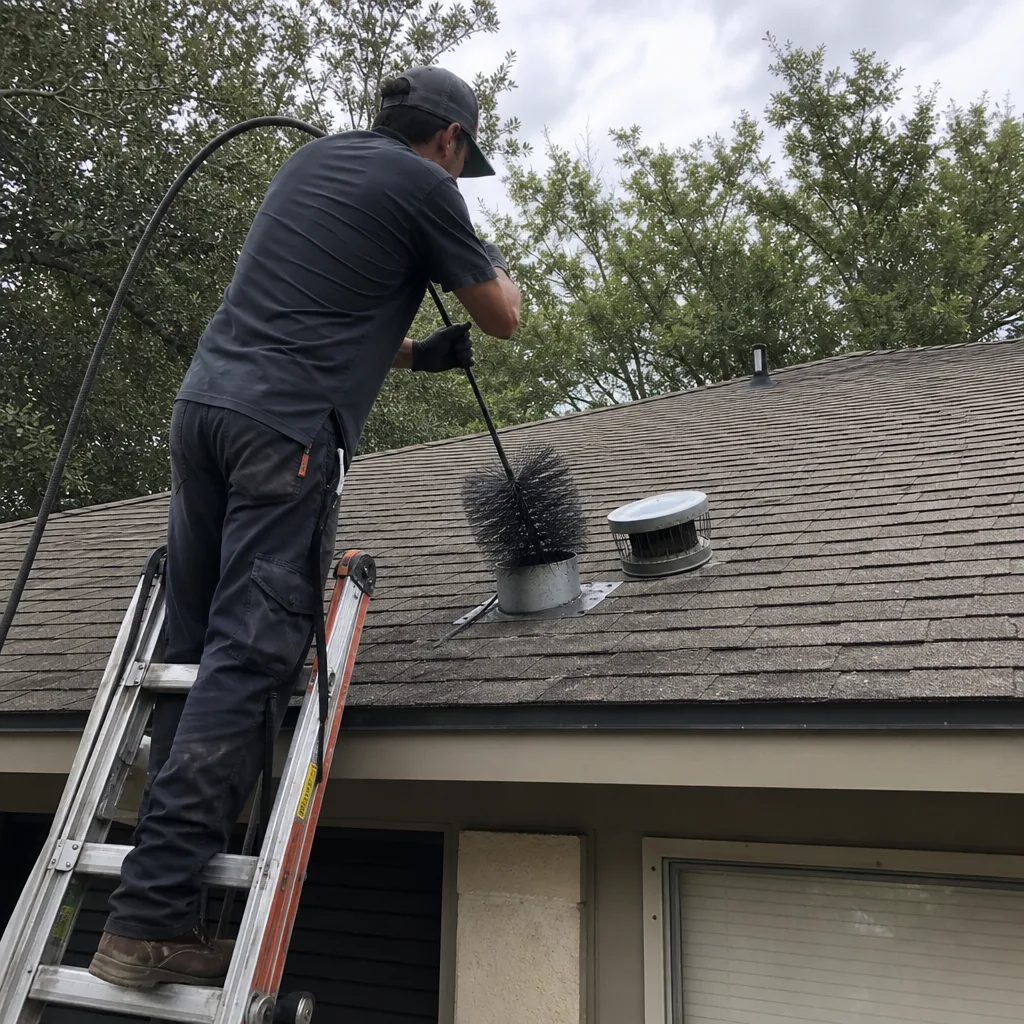
Call for a professional duct cleaning assessment when you notice visible debris at registers, reduced airflow from specific vents, musty odors when the system cycles, or if your home was built during Houston’s 2015-2020 construction boom and has never been cleaned. Browse our more guides & resources for additional home maintenance tips. New construction debris (drywall dust, insulation scraps, sawdust) often remains in ductwork from build-out and shows up as fine particulate at registers within the first two years.
Also call if you are comparing quotes and need a second opinion. CleanRun offers a Free Second Opinion on any written estimate. Bring a competitor’s quote; we will put our number next to it in writing, line item by line item, so you can compare actual deliverables.
CleanRun Air Duct Cleaning Houston offers free estimates in Houston. Our technicians are background-checked, uniformed, and identified by name before arrival, per Haven Standard Clause 3: Verified Crews. Call (346) 251-8919 to schedule.
Frequently Asked Questions
A complete, documented-process air duct cleaning for a typical Houston home ranges from $450 to $850, with premium services including coil cleaning and sanitizing reaching $750-$950. The exact figure depends on your number of duct runs, duct material, attic access difficulty, and whether coil cleaning is included. Call (346) 251-8919 for a written estimate with exact line items for your home.
The $79-$149 quotes are loss-leader pricing designed to get a technician inside your home, where upsells typically drive the final invoice to $400-$750. These quotes exclude main trunk lines, the plenum, coil cleaning, and documentation. A legitimate $450+ quote includes the complete air path and delivers verifiable proof of work. The cheaper initial price is not a discount. It is an incomplete scope.
Require a documented photo record of the inside of every duct run, delivered before the crew leaves. At CleanRun, we photograph each run before agitation and after extraction, compile the images into a job record, and deliver it to the customer as standard practice. If a contractor cannot or will not show you the inside of your ducts, you have no verification that cleaning occurred.
For most Houston homes, every 3 to 5 years is adequate. Homes with pets, recent renovations, or residents with respiratory sensitivities may benefit from more frequent cleaning. Houston’s high humidity can accelerate microbial growth at register boots, so visual inspection every two years is prudent even if full cleaning is not yet needed. We do not recommend routine annual cleaning unless specific conditions warrant it.
No. The number of duct runs determines the price. Square footage is a rough correlate at best. We have cleaned 1,800 square foot Houston homes with fourteen duct runs and 3,200 square foot homes with nine. A quote based only on square footage is estimating, not pricing. Insist on a duct run count in your written estimate.
A legitimate Houston duct cleaning estimate should specify: number of supply and return duct runs included; equipment type and manufacturer; whether coil and blower cleaning are included; documentation deliverables (photo count, format, timing); guarantee terms in writing; and total price with no open-ended line items. At CleanRun, every estimate meets this standard under Haven Standard Clause 1. If your estimate lacks these elements, the scope is undefined.
The Bottom Line
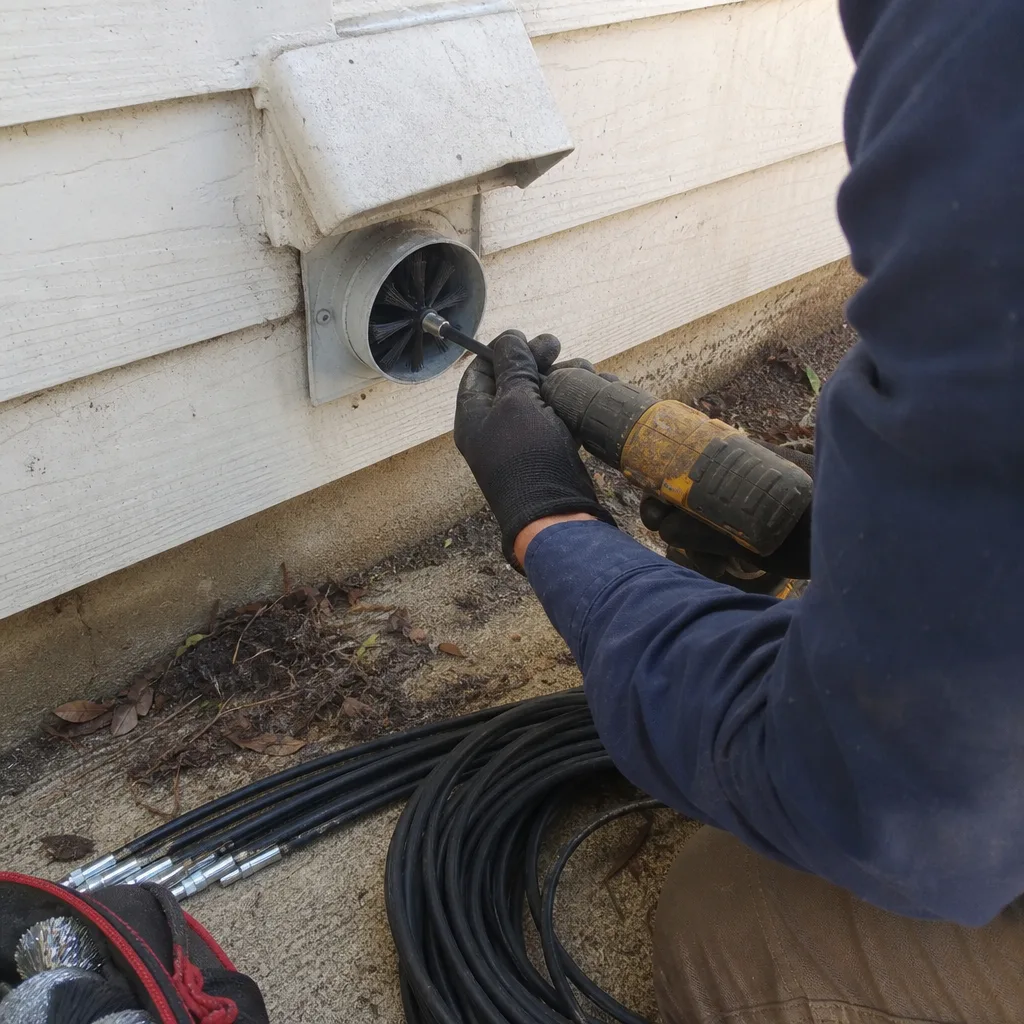
Air duct cleaning in Houston in 2026 costs what it costs to do completely: $450-$850 for most homes, with legitimate variation based on duct count, material, and access difficulty. The $79 coupon model survives by hiding the true scope and recovering margin through on-site upsells. The documented-process model, which CleanRun has operated since 2013, prices the full job upfront, delivers verifiable proof of work, and stands behind the result with a written guarantee. The question is not which is cheaper. It is which delivers what was promised, in writing, before the truck arrives.
Written by Tomas Reyes, Owner at CleanRun Air Duct Cleaning Houston, serving Houston since 2013.