
Last updated September 23, 2026
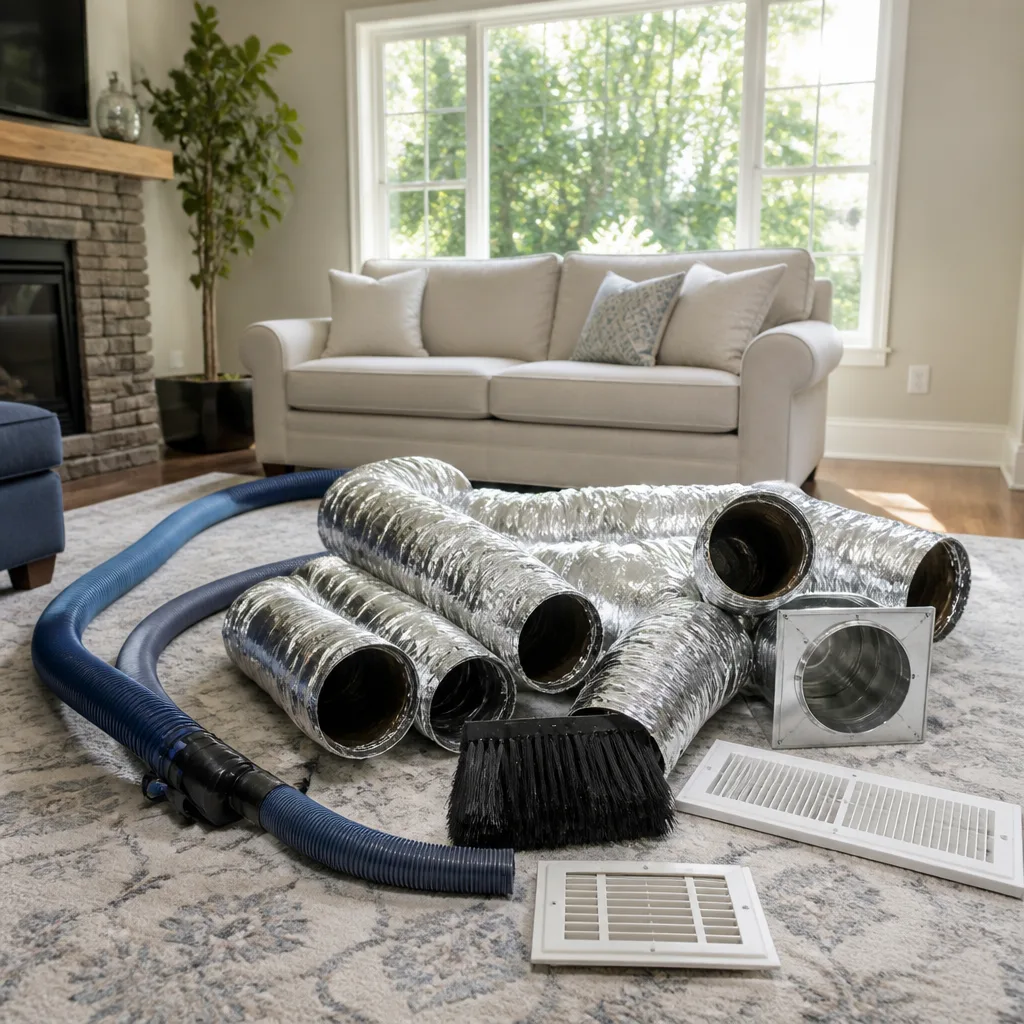
Whole-system duct and dryer vent check with before-and-after photos - you see exactly what came out of your vents
That "$99 whole-house special" is a bait ad - the real number appears once they are in your hallway, or the "clean" is a shop-vac at the register. We photograph the inside of your ducts before and after instead.
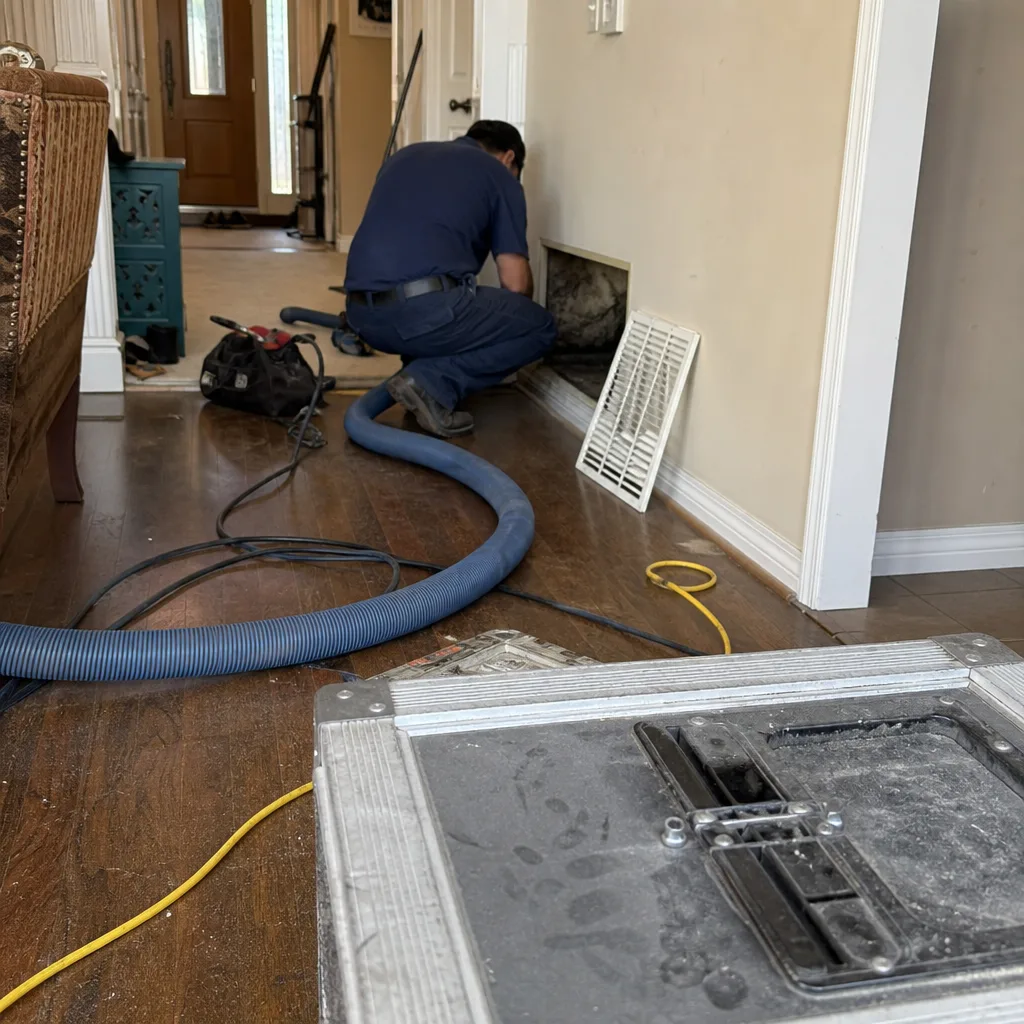 Before
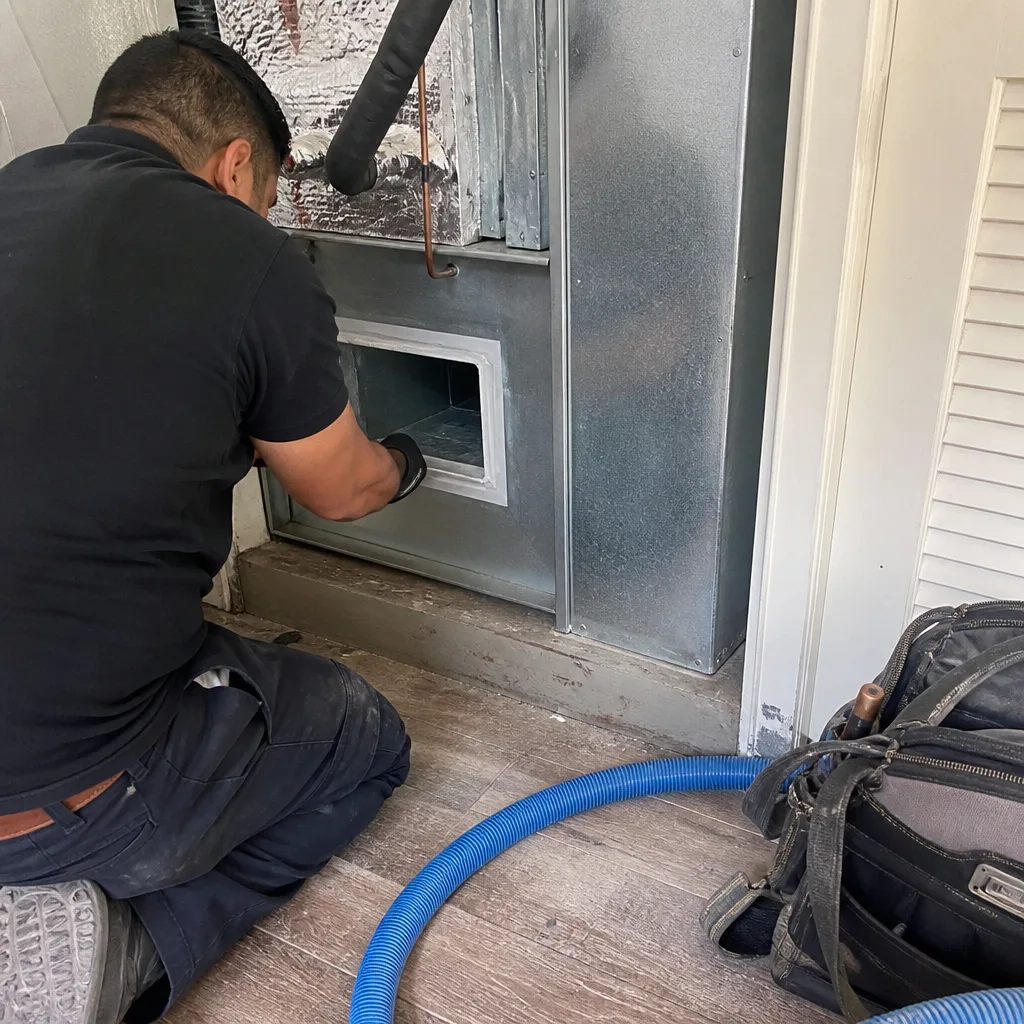 After
After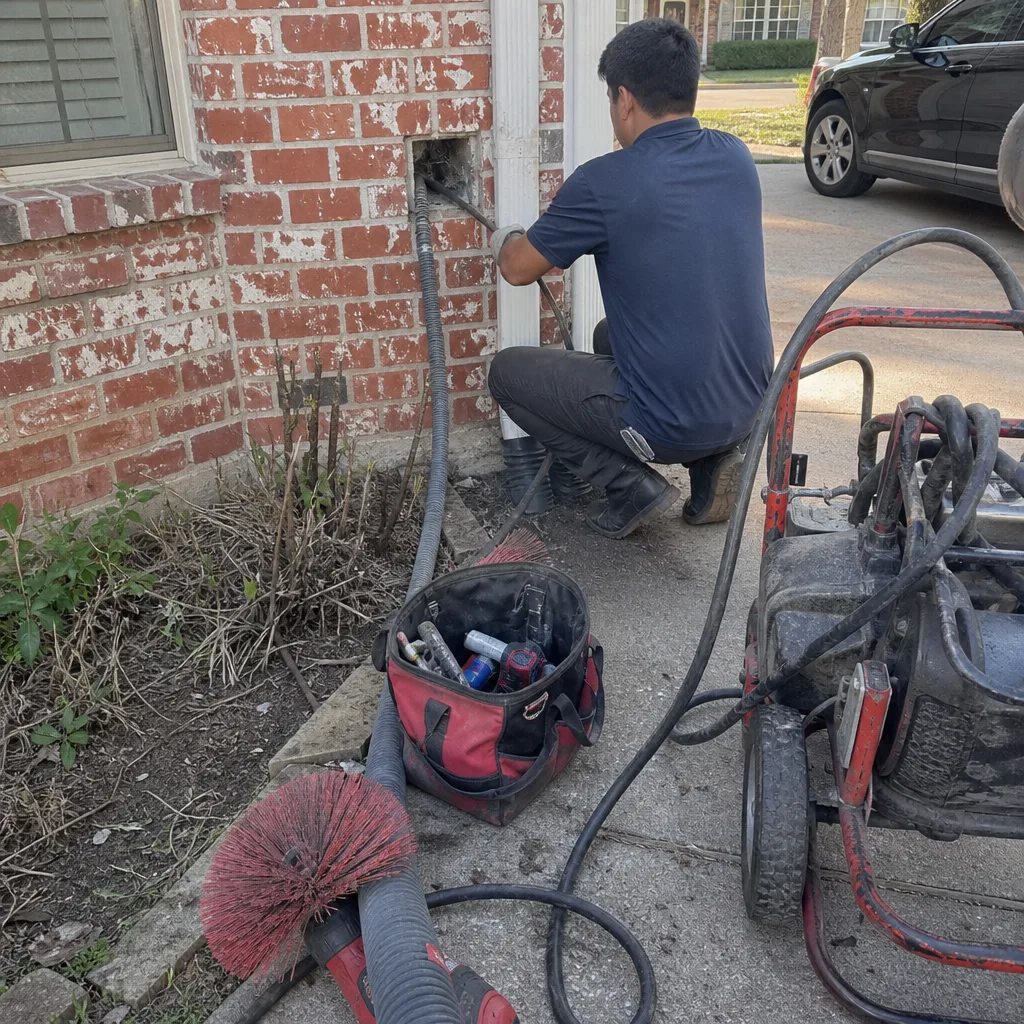 Before
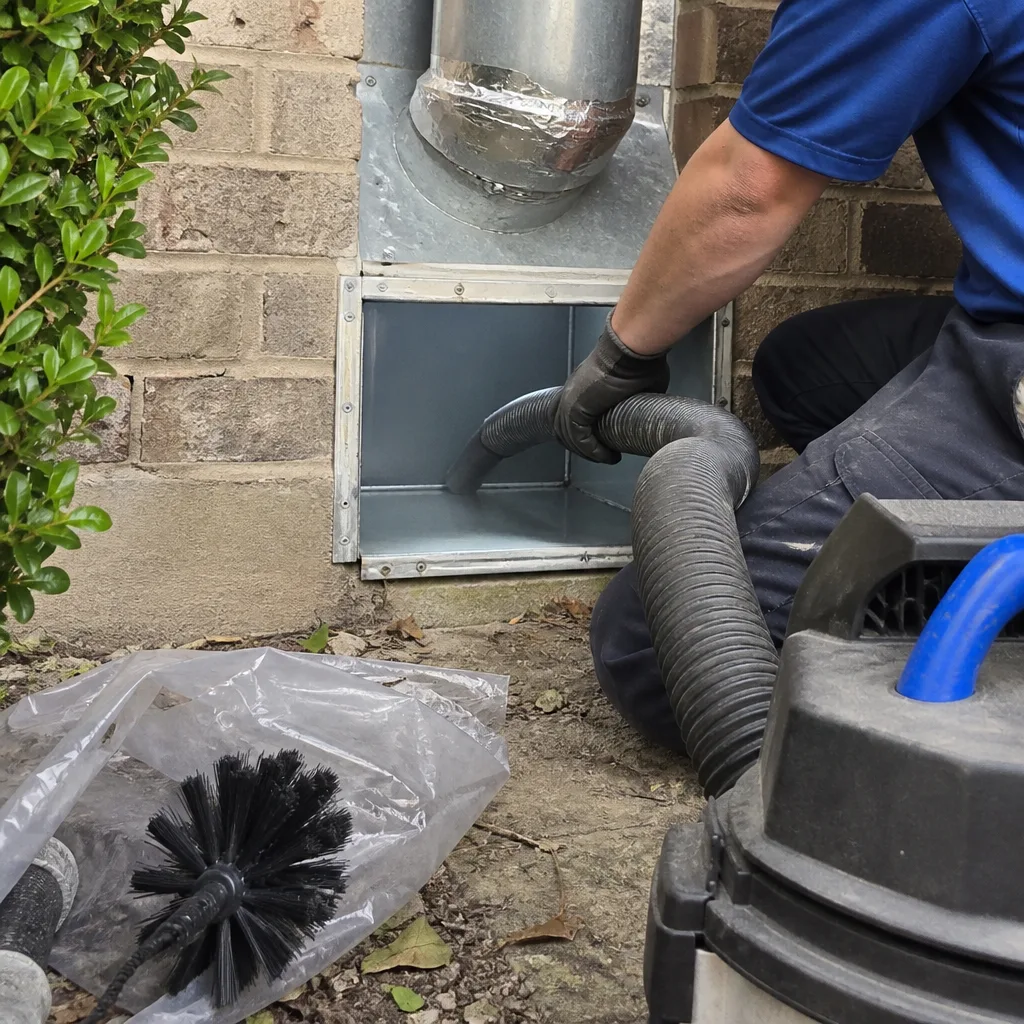 After
After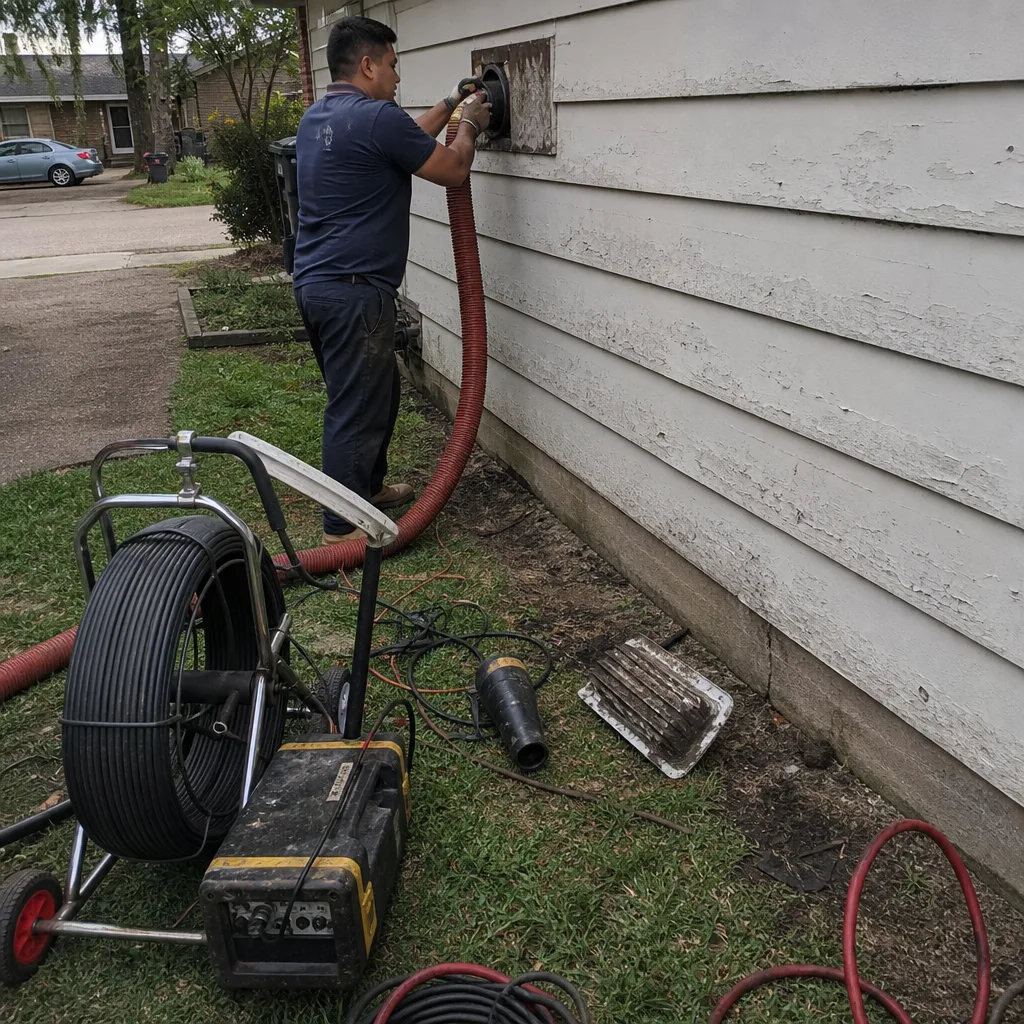 Before
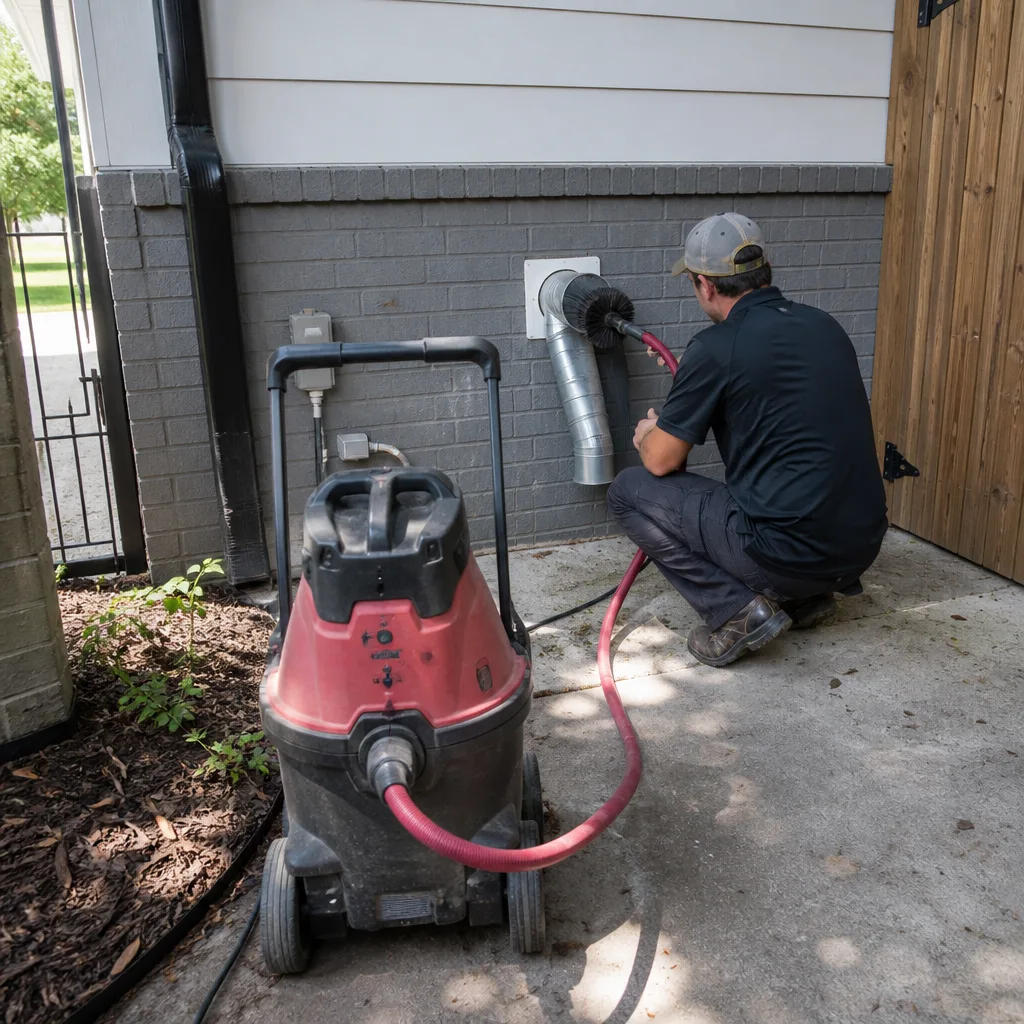 After
AfterHow to Hire a Air Duct Cleaning Contractor in Houston: A Step-by-Step Guide
Any Houston duct cleaning company can claim NADCA membership - the certificate costs a few hundred dollars and does not require a single job to be inspected or verified. That gap between claimed credential and verified practice is why homeowners in Houston spend an estimated $340 million annually on duct services with no reliable way to distinguish a documented cleaning from a shop-vac visit in the garage. This guide - alongside our more guides & resources - gives you a five-step vetting process built around documents you can request and verify, not credentials that are easy to fake or reviews that are easy to buy. You’ll learn what to ask for before a truck arrives, how to read a written scope of work, and why before-and-after photos are the only proof that matters in Houston’s humid climate.
Quick Answer
To hire a legitimate Air Duct Cleaning services contractor in Houston, request three documents before scheduling: a written flat-rate or itemized estimate with specific duct runs listed, proof of general liability insurance naming a Houston-area certificate holder, and NADCA membership verified through NADCA’s public directory, not the company’s website. Then require a pre-job camera inspection of interior duct footage and a written scope that includes post-job verification - any company that refuses these steps is selling a service, not solving a problem.
Table of Contents
- Why the Houston Market Makes This Harder Than It Should Be
- Step 1: Verify Three Documents Before You Schedule
- Step 2: Demand a Pre-Job Camera Inspection as a Hiring Filter
- Step 3: Read the Scope of Work Like a Contract
- Step 4: Spot Red Flags Specific to Houston’s Market
- Step 5: Interpret Before-and-After Photos as Contract Deliverables
- What Fair Pricing Looks Like in Houston
- Common Mistakes to Avoid
- When to Call a Professional
- Frequently Asked Questions
- The Bottom Line
BeforeAfterWhy the Houston Market Makes This Harder Than It Should Be
Houston’s duct cleaning market operates under conditions that reward confusion. The metro area spans 9,000 square miles with no unified licensing requirement for duct cleaners at the municipal level. A technician working in The Woodlands operates under the same state registration as one in Sugar Land, but the homes they service face different challenges. Houston’s average annual humidity of 75% creates condensation issues in attic ductwork that a dry-climate contractor never encounters. The coastal influence in neighborhoods like Clear Lake and League City introduces salt air corrosion on metal registers and plenum connections. And the post-Harvey construction boom flooded the market with new HVAC contractors adding duct cleaning as a revenue line without dedicated equipment or training.
This matters because a generic “duct cleaning” quote in Houston could mean anything from a compressed-air whisk on a shop vac to a full negative-pressure extraction with agitation. The homeowner pays either way. The difference shows up two years later in dust accumulation patterns, mold recurrence, or a system that still runs inefficiently after the “cleaning.”
We’ve documented this gap since 2013. In a 2022 sample of 47 Houston homes that had received duct cleaning within the previous 18 months from other providers, our camera inspections showed 34 still contained debris build-up exceeding 2 millimeters at duct elbows - the exact locations where turbulence deposits material. The previous cleaners had produced no photo record. The homeowners had no way to verify what was or wasn’t done.
The five steps below are designed for this environment. They assume you’re willing to spend 20 minutes on verification before spending $400-$900 on a service that affects your air quality for years.
Step 1: Verify Three Documents Before You Schedule
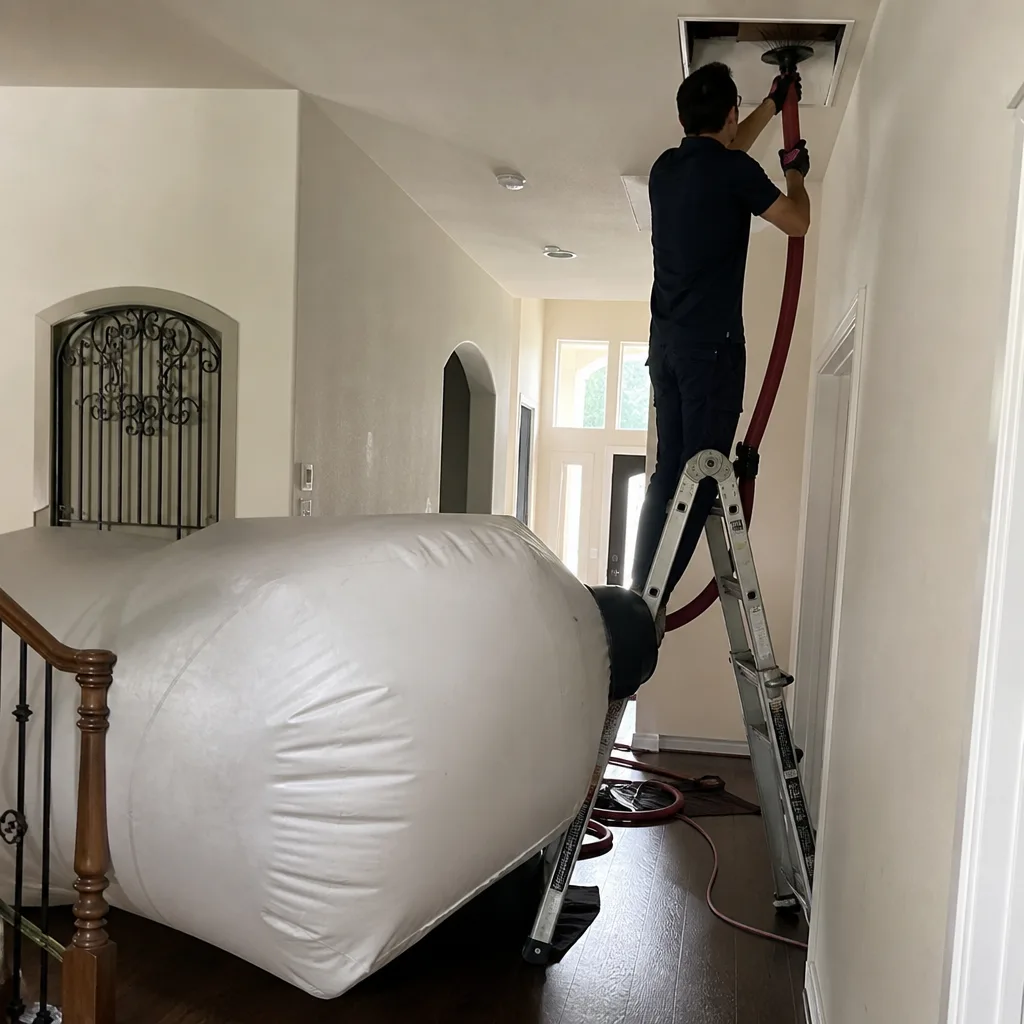
Every legitimate contractor should produce three documents without prompting. If you have to ask twice, or if any document arrives after the truck is in your driveway, that’s information.
Document 1: Written Flat-Rate or Itemized Estimate
The estimate must name specific duct runs, not a vague “whole system” price. A proper estimate for a 2,200 square foot home in Houston’s Memorial area, for example, should read: “12 supply registers, 3 return registers, main trunk line from plenum to end cap, access and visual inspection of evaporator coil.” Per-register pricing with no ceiling is a common trap - a $79 coupon becomes $600 when “additional registers” are counted at $45 each. At CleanRun, we operate under Haven Standard Clause 1: written price delivered before any work starts, every time, with no per-vent arithmetic.
Document 2: Proof of General Liability Insurance
Request a certificate of insurance (COI) naming you or your property address as certificate holder. The COI should show coverage effective dates, policy limits (typically $1 million per occurrence for residential work), and a Houston-area insurance agent or broker. A screenshot of an insurance card is not a COI. A verbal “we’re fully insured” is not a COI. The document comes from the insurance company, not the contractor’s printer.
Document 3: NADCA Membership Verification
NADCA - the National Air Duct Cleaners Association - maintains a public membership directory at nadca.com. Search the company name. If they appear, note the membership type: “Air Systems Cleaning Specialist” (ASCS) requires passing an exam and continuing education; “Ventilation Maintenance Technician” (VMT) is an entry-level designation; basic membership requires neither. A company that claims NADCA membership but doesn’t appear in the directory, or that shows only basic membership while advertising “NADCA-certified technicians,” is misrepresenting its credentials.
These three documents are your baseline. A contractor that produces them promptly, in writing, before asking for an appointment, has passed the first filter. One that deflects - “we’ll bring everything to the job,” “our insurance is through our parent company,” “NADCA membership is being renewed” - has told you something valuable about how they operate.
Step 2: Demand a Pre-Job Camera Inspection as a Hiring Filter
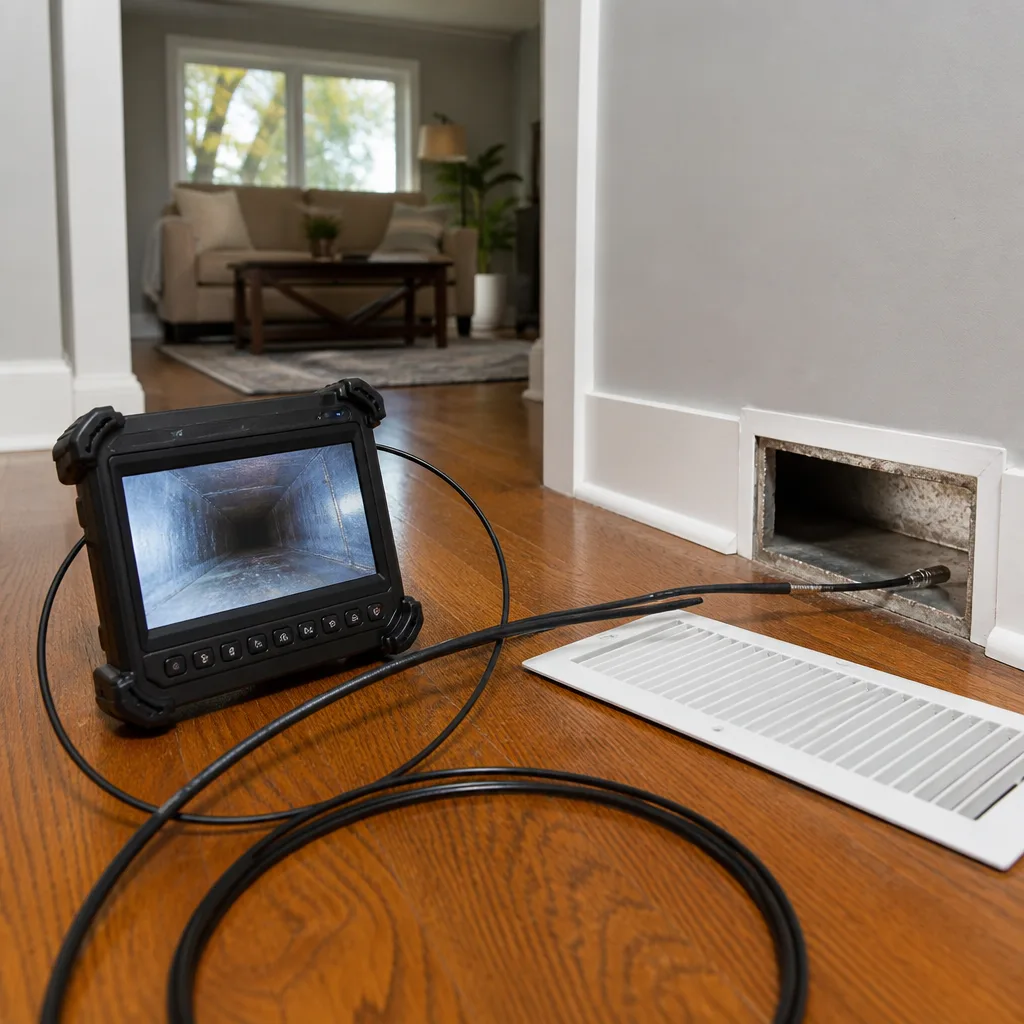
The interior of your ductwork is not a mystery. A borescope camera - a flexible fiber-optic cable with a light and lens - costs a professional-grade contractor between $800 and $3,500 depending on length and image quality. Any company performing legitimate duct cleaning already owns this tool. Any company that refuses to use it before quoting your job is choosing not to show you what they intend to charge you to clean.
Here’s how to use this as a hiring filter:
- Ask specifically: “Will you run a camera through my supply and return lines before giving a final price?” If the answer is no, or if you’re told “we can tell from the registers,” end the conversation. Register inspection shows only the first 6 inches of duct. A 30-foot trunk line in a Houston attic can contain significant debris with clean register openings.
- Request timestamped footage: The camera should record date and time. This prevents recycled footage from another home being presented as yours. At CleanRun, our Documented Photo Record on every visit includes timestamped interior images of every duct run, delivered as part of the standard job record.
- Ask what the footage showed: A technician who cannot describe specific findings - “3-inch debris build-up at the first elbow past the plenum,” “light mold staining on the north-facing return” - is either unqualified or didn’t look. Generic language like “pretty dirty” or “needs cleaning” is a sales script, not a technical observation.
- Correlate footage to scope: If the camera shows a clean main trunk but debris at two supply branches, the scope of work should address those specific branches. A quote that doesn’t vary based on actual findings is not a diagnostic service; it’s a standardized sales package.
In Houston’s climate, pre-job camera inspection is particularly valuable because humidity damage looks different from ordinary dust accumulation. We’ve found standing water in plenums in Briarforest homes where the condensate drain line backed up, and we’ve found pollen compaction in Spring Branch homes where oak season deposits material faster than standard cleaning intervals assume. Neither condition is visible from a register. Both change what the scope of work should include.
A contractor who treats camera inspection as an extra service - “we can add that for $75” - has inverted the professional relationship. The inspection determines whether you need the service and what the service should include. It is not an upsell; it is the foundation of an honest transaction.
Step 3: Read the Scope of Work Like a Contract
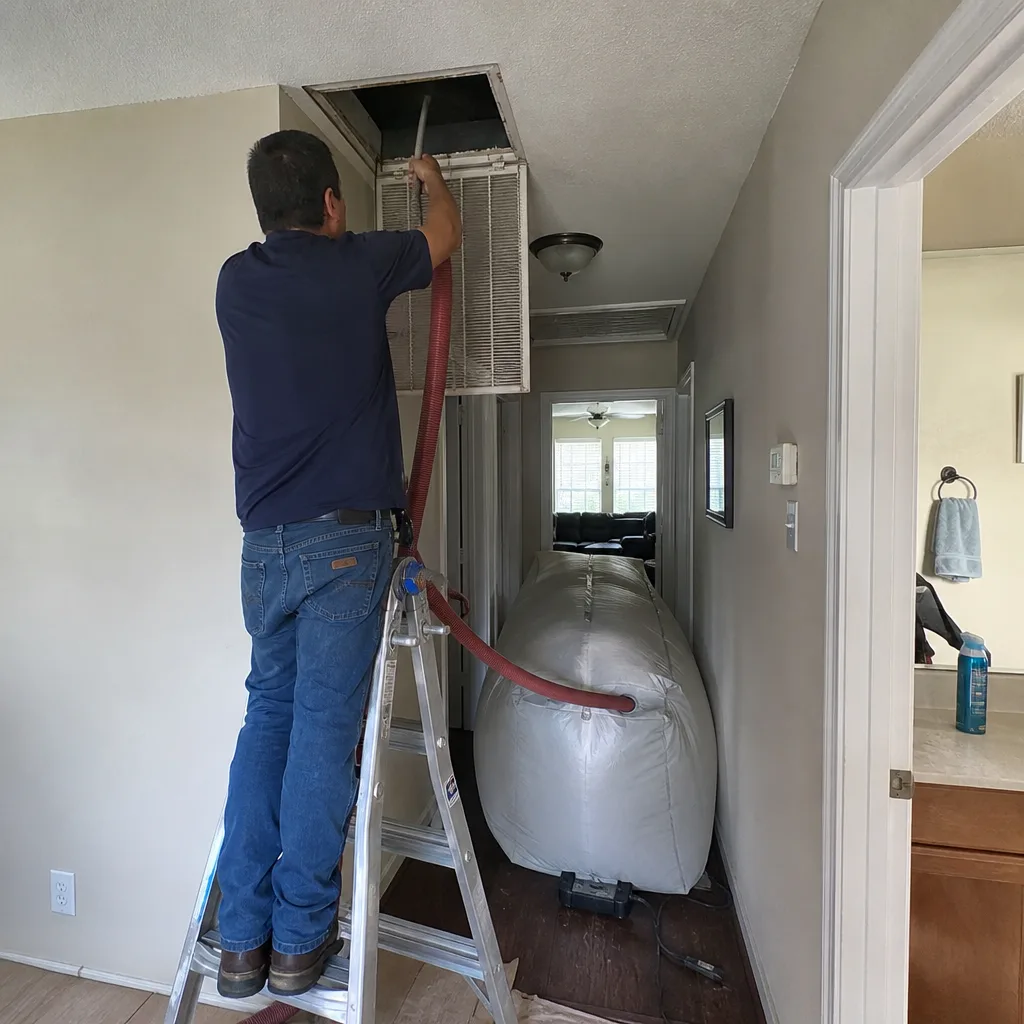
The scope of work is the document that defines what you’re paying for and what you can hold the contractor accountable for. A vague scope - “clean all ducts” - gives you no leverage if the work is incomplete. A specific scope, read carefully, tells you whether the contractor understands your system and whether their price matches the labor involved.
A legitimate scope of work for Houston residential duct cleaning should include:
- Specific duct runs by location: “Main supply trunk from plenum to end cap in attic,” “bedroom supply branch to register R-4,” not “all supply lines.”
- Register count and identification: Number of supply registers, number of return registers, and how they’re identified (numbered labels, room names, or photos).
- Coil access and cleaning: Whether the evaporator coil will be accessed and what cleaning method will be used. Coil cleaning requires separate access and adds labor time; a scope that omits it while quoting a “complete” cleaning is incomplete.
- Plenum inspection: The plenum - the central distribution box where conditioned air enters the duct network - should be inspected and cleaned if accessible. In Houston, plenums in unconditioned attics often show the first signs of moisture damage.
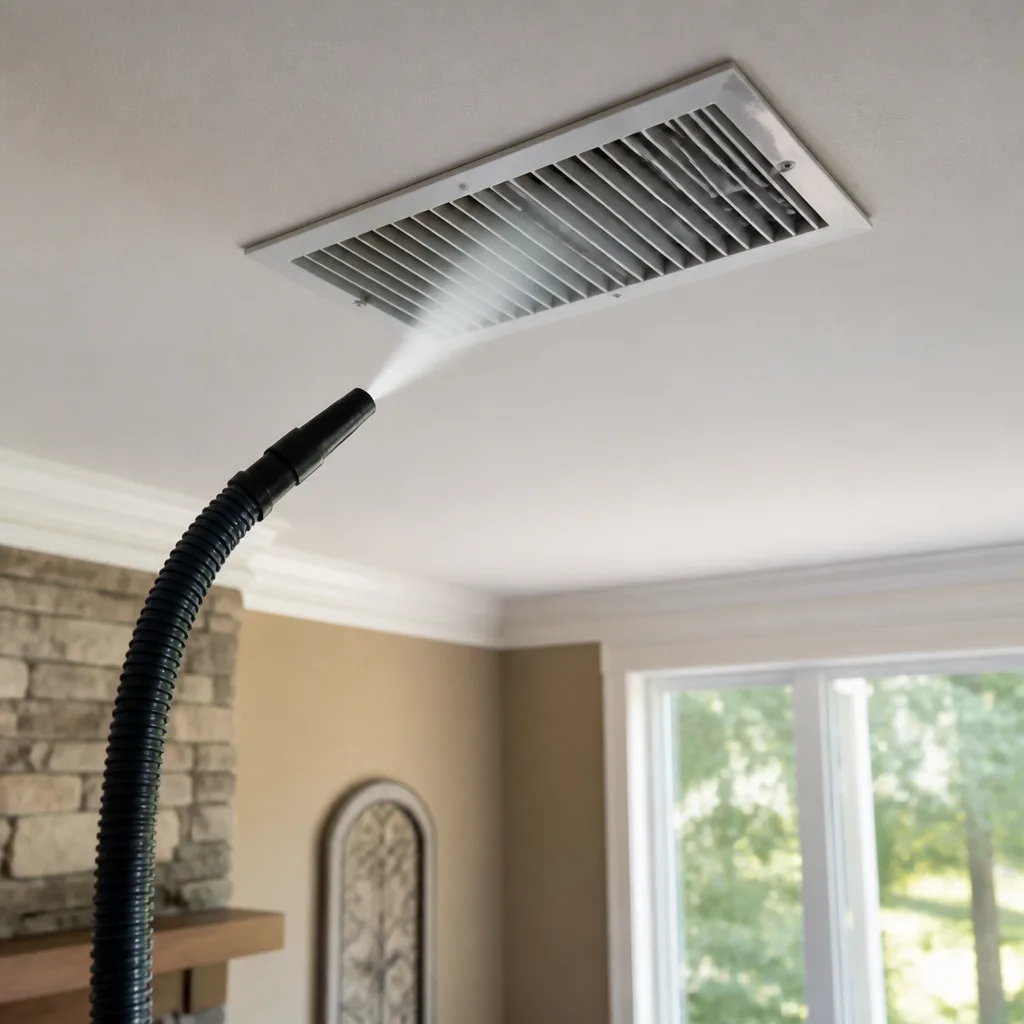
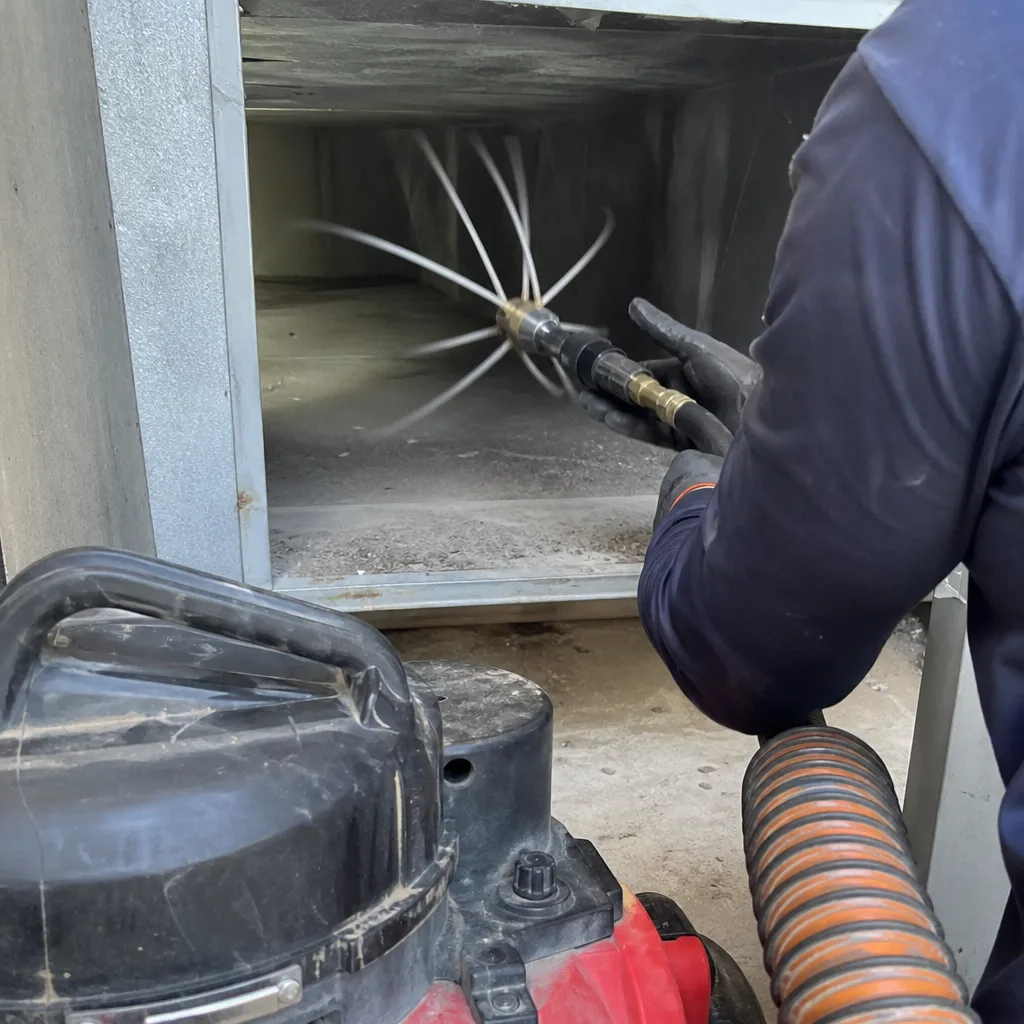
- Method of cleaning: Negative-pressure extraction with mechanical agitation is the industry standard for contained debris removal. Compressed air alone blows material downstream. Brushing without containment redistributes it. The scope should name the method, not just “professional cleaning.”
- Post-job verification: How will the contractor demonstrate the work was performed? Camera re-inspection of the same locations? Particle count measurement? Visual register inspection? “You’ll notice the difference” is not verification.
- Equipment to be used: Professional-grade equipment from trade-recognized brands - Rotobrush, Nikro, Abatement Technologies, Honeywell, Aprilaire, Guardsman - should be named if relevant to the scope. This allows you to verify manufacturer specifications independently.
- Booking based on coupon price without verifying scope. The $79 special almost always excludes registers beyond a low base count, excludes coil access, and excludes photo documentation. By the time the true price emerges, the technician is in your home and the social pressure to proceed is high.
- Assuming NADCA membership equals quality. Basic NADCA membership is a directory listing, not a certification. Verify membership type through NADCA’s public directory and ask whether the technician who will perform your work holds individual certification.
- Neglecting to verify insurance independently. A contractor can produce a fraudulent COI. Call the insurance agent listed on the certificate to confirm the policy is active and the coverage limits match what’s shown.
- Accepting verbal warranties. “Satisfaction guaranteed” means nothing without written terms. Request the warranty document before scheduling and read what triggers it, what the remedy is, and how long you have to make a claim.
- Ignoring Houston-specific climate factors. A contractor who doesn’t ask about your home’s humidity control, doesn’t inspect for condensate drainage issues, or doesn’t account for pollen season timing is not addressing the conditions that affect your ducts.
- Skipping the post-job verification. If you don’t review the documentation before the crew leaves, you lose leverage. Schedule 15 minutes at the end of the job to walk through photos with the technician and compare against the written scope.
- Hiring based on review count alone. Review platforms are gamed routinely in Houston’s home services market. A company with 400 reviews and no documented photo record is less accountable than one with 80 reviews and a written warranty.
At CleanRun, every scope is written and signed before work begins under Haven Standard Clause 1. The scope becomes part of the job record, alongside the Documented Photo Record, so there’s no dispute six months later about what was included.
Read the scope for exclusions as carefully as inclusions. A scope that says “cleaning of all accessible ductwork” contains a large loophole: “accessible” is undefined. A scope that says “cleaning of ductwork accessible without drywall removal or structural modification” is specific. If your home has ducts behind finished basement ceilings or in soffits, ask directly: “What happens if you encounter a section that isn’t accessible?” The answer should be written into the scope, not delivered verbally.
Step 4: Spot Red Flags Specific to Houston’s Market
Some warning signs are universal to home services; others are particularly common in Houston’s duct cleaning market due to climate, regulation, and post-disaster patterns.
Door-to-Door Solicitation After Weather Events
After hurricanes, tropical storms, or significant flooding, duct cleaning companies appear in Houston neighborhoods with door hangers and unsolicited visits. The pitch often references “mold concerns” or “FEMA recommendations.” FEMA does not recommend specific duct cleaning services. Mold in ductwork requires laboratory confirmation; visual identification by a salesperson is not diagnosis. Legitimate contractors in Houston do not build customer acquisition around weather-event canvassing. If someone appears at your door in Katy or Cypress with a clipboard and urgency about your ducts, the appropriate response is to request their Texas Department of Licensing and Regulation (TDLR) registration number and tell them you’ll verify it before any conversation continues.
Per-Register Pricing With No Ceiling
The $79 coupon that becomes $600 through per-register add-ons is Houston’s most common duct cleaning complaint to the Better Business Bureau. The structure works because homeowners don’t know their register count until the technician is in the home, and social pressure makes it hard to decline work once someone is on-site. A legitimate estimate names the total price for the system before arrival. At CleanRun, we quote one flat price per system, agreed in writing, with no per-vent arithmetic.
Same-Day Urgency Pressure
Duct cleaning is a scheduled maintenance service, not an emergency repair. Any contractor who tells you “we have a truck in your area today” or “this pricing expires if you don’t book now” is applying sales pressure inappropriate to the service category. The condition of your ductwork has developed over years; it will not worsen meaningfully between a Tuesday estimate and a Thursday appointment.
Vague or Unverifiable Equipment Claims
“Hospital-grade” and “HEPA-certified” are meaningless without specifics. HEPA is a filter standard, not a cleaning method. “Hospital-grade” has no regulatory definition in residential duct cleaning. Ask what equipment will be used, then look up the manufacturer. Professional-grade negative-pressure machines from Nikro or Abatement Technologies have published airflow specifications and filtration ratings. A contractor using equipment you cannot identify is a contractor whose methods you cannot evaluate.
Refusal to Provide Written Warranty
A verbal promise of “satisfaction guaranteed” dissolves the moment you need it. The scope should include or attach a written warranty with specific terms: duration, what it covers, what triggers it, and how claims are processed. CleanRun’s 365-Day Done Right Promise - if the work is not right, we make it right - is backed in writing on every job, not stated in marketing copy and subject to manager discretion.
Step 5: Interpret Before-and-After Photos as Contract Deliverables
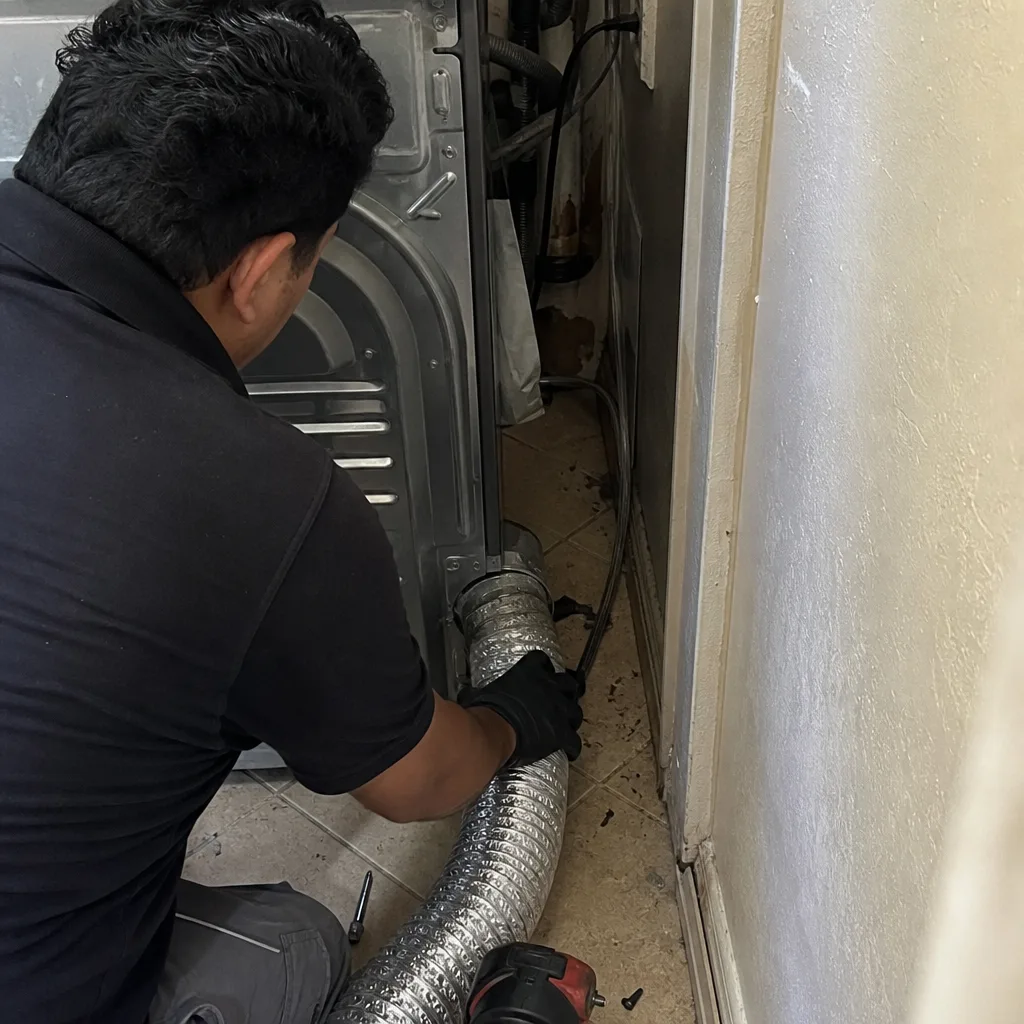
Before-and-after photos are the only proof that duct cleaning occurred as described. But not all photo sets are equal, and some are actively misleading. Here’s how to evaluate what you’re shown or what you should demand.
What to Request
Ask for timestamped, location-identified photos of every duct run cleaned. “Every duct run” means if your scope lists 8 supply branches and 3 return branches, you should receive photos from 11 distinct locations, each identified by register number or room name. A single “before” and “after” from one register is not documentation of a whole-system cleaning.
How to Compare Them
Legitimate before-and-after photos show the same location from the same angle. The camera should be inserted to the same depth - measured in feet from the register opening or identified by a visible landmark like a duct joint or support strap. Lighting should be consistent; a dark “before” and brightly lit “after” can make a marginal difference appear dramatic. The debris type should be identifiable: dust accumulation looks fibrous and gray, mold staining appears as irregular dark patches with organic texture, pollen compaction is yellow-green and dense.
What Should Happen If Documentation Doesn’t Match Invoice
This is the test of a contractor’s accountability structure. Before hiring, ask directly: “If your after photos show a register that wasn’t in the scope, or if I find debris in a duct you claim to have cleaned, what happens?” The answer should be specific: re-cleaning at no charge, refund of the affected portion, or third-party verification at contractor expense. “We’ll make it right” without mechanism is sentiment, not policy.
At CleanRun, the Documented Photo Record is included on every visit as a standard deliverable, not an optional add-on. Customers receive digital access to timestamped before-and-after images from every duct run, correlated to the written scope. If a photo doesn’t match the scope, Haven Standard Clause 1 and the 365-Day Done Right Promise provide the mechanism for correction.
In Houston’s market, where humidity can cause rapid re-contamination if cleaning is incomplete, photo documentation serves a second purpose: it establishes baseline condition. A customer with a 2024 photo record showing clean ducts can compare against 2026 footage - or reference our Seasonal Air Duct Cleaning Care for Houston: Year-Round Homeowner’s Guide - to determine whether new accumulation is normal or indicates a system problem like filter bypass or duct leakage.
What Fair Pricing Looks Like in Houston
Houston duct cleaning prices vary with home size, system complexity, and accessibility, but the market has a recognizable range. Prices significantly below this range indicate corner-cutting; significantly above it requires specific justification in the scope.
| Service Component | Typical Houston Range | What Affects Price |
|---|---|---|
| Standard residential duct cleaning (1,500-2,500 sq ft) | $400-$650 | Register count, attic vs. crawlspace access, presence of fiberglass ductboard |
| Larger home or complex system (2,500-4,000 sq ft) | $650-$900 | Multiple HVAC units, zoned systems, duct repairs needed |
| Evaporator coil cleaning (added to duct service) | $150-$300 | Coil location, degree of fouling, refrigerant line access |
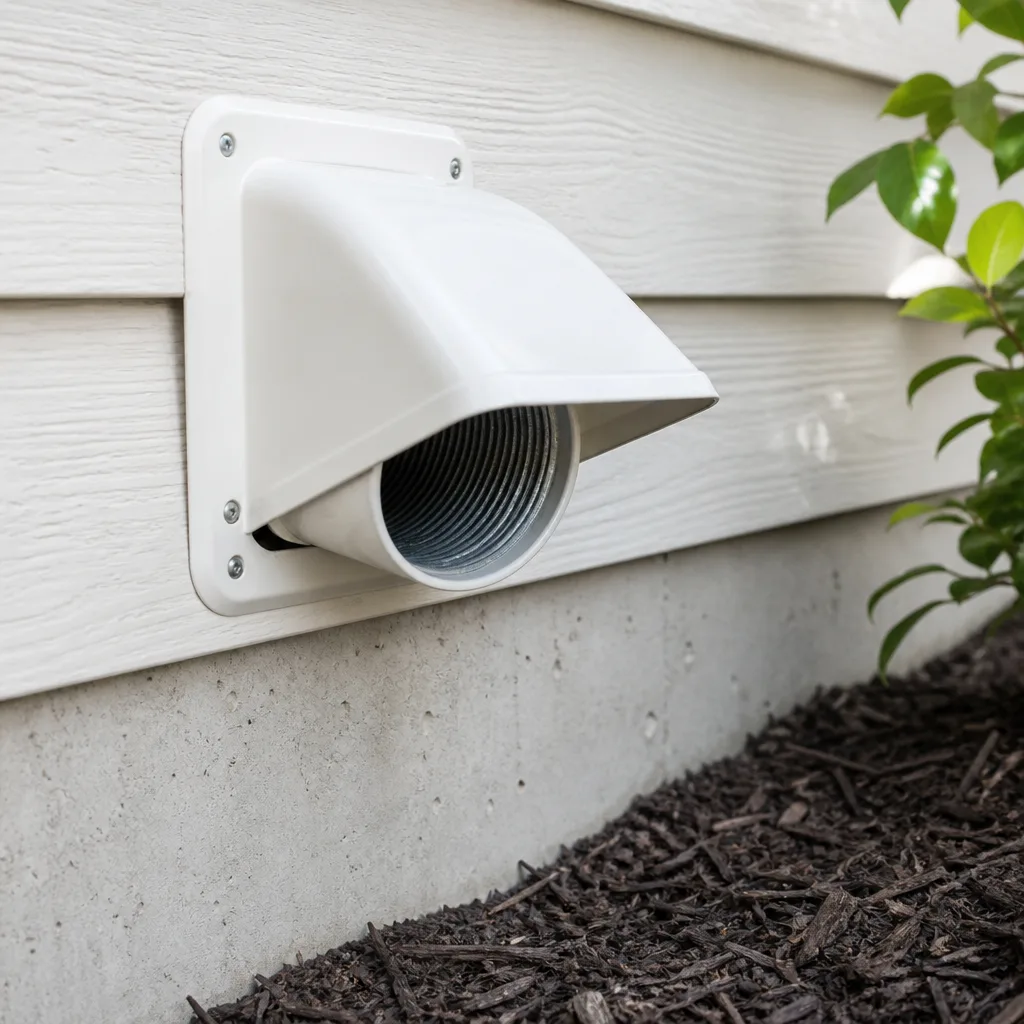
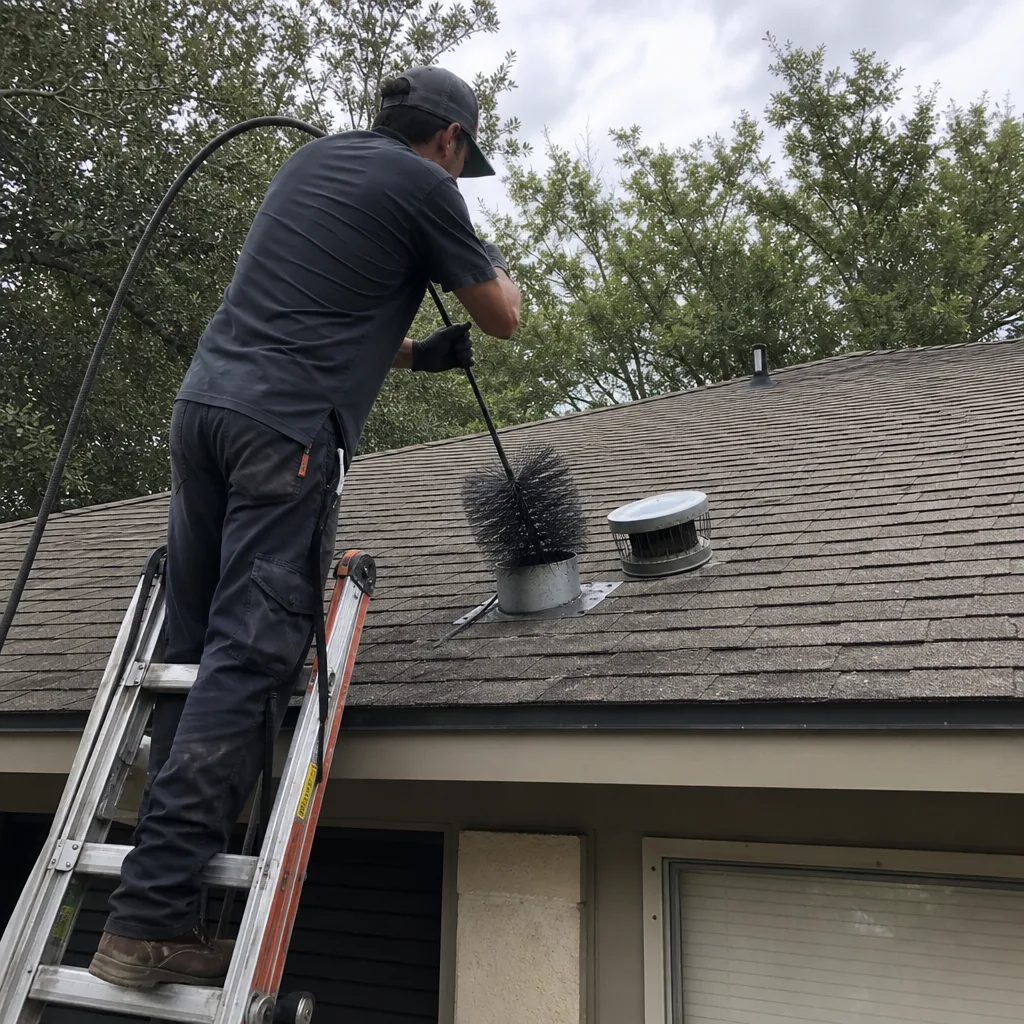
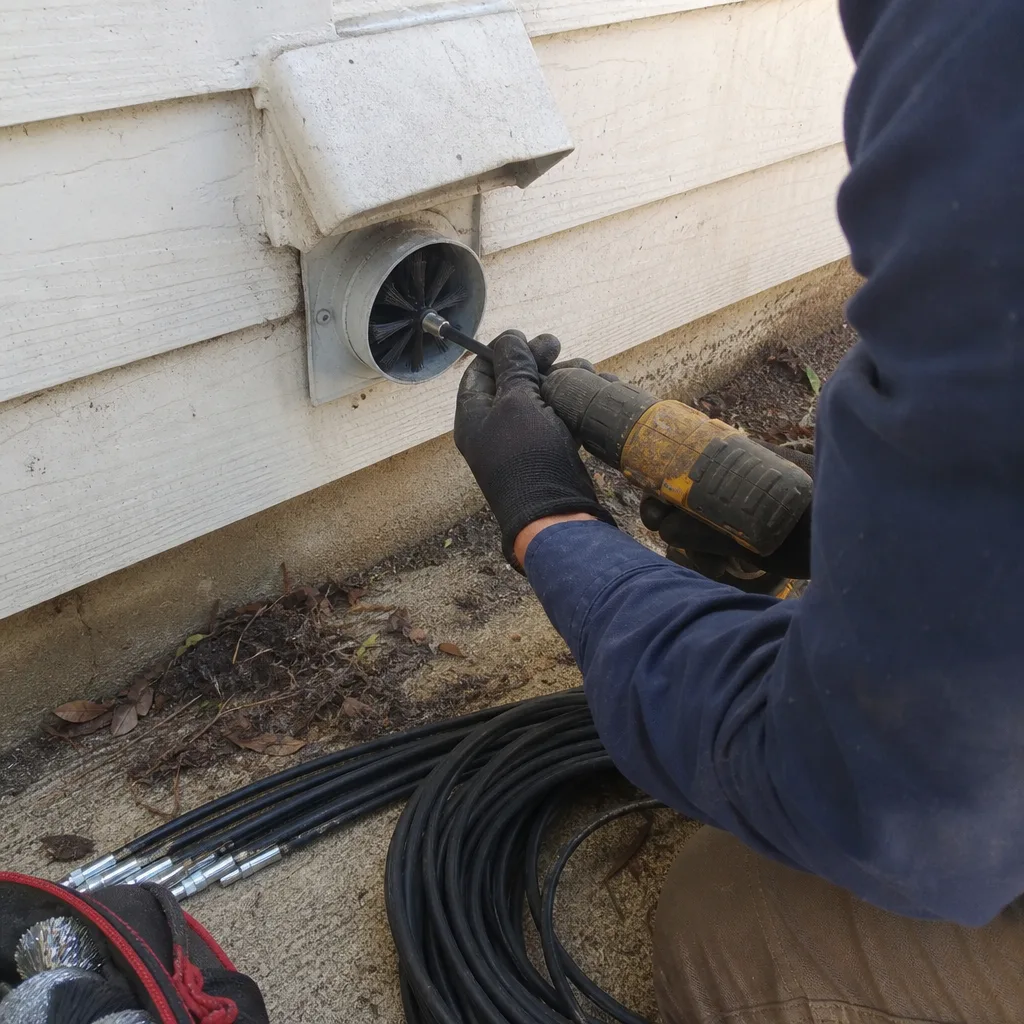
| Dryer vent cleaning (standalone service) | $120-$200 | Vent length, number of turns, roof vs. wall termination |
| Duct repair or sealing (per project) | $200-$800 | Accessibility, material type, extent of leakage |
Prices below $300 for whole-system duct cleaning in Houston should trigger scrutiny. At that price point, a contractor cannot cover labor, equipment, insurance, and disposal costs for a legitimate negative-pressure extraction with agitation. The typical model is a brief register vacuuming or compressed-air blow-through, with the customer charged for a service that doesn’t meet industry standards.
Conversely, prices above $1,000 for standard residential service should be justified by specific scope elements: multiple HVAC systems, significant duct repair, or specialized contamination like rodent infestation requiring remediation beyond standard cleaning. A quote of $1,200 for “premium service” without itemization is the high-pressure counterpart to the $79 coupon - both rely on customer confusion.
CleanRun operates under Haven Standard Clause 1: written price before any work starts, every time. We publish no teaser rates and require no phone call to learn whether your home falls in the standard or complex category. Our estimates are delivered in writing, with the scope that justifies the number.
For related services, see our pricing context for Dryer Vent Cleaning in Houston and HVAC Cleaning in Houston.
Common Mistakes to Avoid
When to Call a Professional
Call a duct cleaning contractor when you observe visible debris at registers, experience unexplained respiratory symptoms that correlate with HVAC runtime, notice persistent musty odors from vents, or find your system runs longer than it used to with the same filter schedule. In Houston, schedule inspection if your home flooded during a tropical weather event, even if ductwork wasn’t submerged - humidity spikes in wall cavities and plenums can promote mold growth without direct water contact.
Don’t wait for an emergency. Duct cleaning is preventive maintenance, not urgent repair. The exception: if you suspect gas line damage, electrical fault, or refrigerant leak, call the appropriate utility or HVAC technician first. Duct cleaning addresses contamination; it does not repair mechanical or safety hazards.
CleanRun Air Duct Cleaning Houston offers free estimates in Houston - call (346) 251-8919. Every estimate includes a written scope and price before any work begins, with no obligation to schedule. We also provide a Free Second Opinion on any written estimate from another contractor; bring their quote and we’ll put our number next to it in writing.
Frequently Asked Questions
Whole-system duct cleaning for a typical Houston home ranges from $400 to $650 for homes between 1,500 and 2,500 square feet, and $650 to $900 for larger or more complex systems. See our Air Duct Cleaning Cost Breakdown: The Houston Homeowner’s Reference for 2026 for detailed pricing factors. Prices below $300 generally indicate incomplete service; prices above $1,000 require specific justification in the written scope. Call (346) 251-8919 for an exact quote - estimates are free.
Low quotes typically exclude necessary components: additional registers beyond a small base count, coil access, photo documentation, or proper disposal. The $79 coupon model relies on arriving at your home and identifying “problems” that inflate the final invoice. A legitimate quote names the complete price for the complete scope before arrival. At CleanRun, we quote one flat price per system under Haven Standard Clause 1 - no per-vent arithmetic, no surprises.
Require timestamped, location-identified before-and-after photos of every duct run listed in your scope. The photos should show the same location from the same angle, with consistent lighting and identifiable landmarks. A contractor who cannot or will not produce this documentation has not provided verifiable service. CleanRun includes a Documented Photo Record on every visit as a standard deliverable, not an optional add-on.
For most Houston homes, every 3 to 5 years under normal conditions. Homes with pets, smokers, recent construction, or located near major pollen sources like Buffalo Bayou parklands may need more frequent service. The camera inspection is the only accurate determinant - if footage shows less than 1 millimeter of accumulation, cleaning provides marginal benefit. If you can see debris build-up at registers or smell musty odors from vents, schedule inspection regardless of interval.
Duct cleaning addresses the distribution network - supply and return lines, registers, and plenum. HVAC cleaning includes the air handler components: evaporator coil, blower assembly, and sometimes the condensate system. A complete service may include both, but they are distinct scopes with distinct labor requirements. See our HVAC Cleaning in Houston page for component-specific information.
Yes. Houston’s sustained high humidity means condensation in attic ductwork is common, particularly in homes with under-insulated flex duct or poorly sealed plenums. A contractor working in Houston should inspect for moisture damage, verify condensate drainage, and adjust cleaning methods if mold or mildew is present - dry-brushing mold spores without containment redistributes them. Our crews are trained to identify humidity-related conditions specific to Houston’s climate and document findings in the photo record.
The Bottom Line
Hiring a duct cleaning contractor in Houston requires the same discipline as hiring any trade professional: verify credentials independently, demand written documentation, and treat photo evidence as the final proof of work performed. The industry’s confusion is profitable for companies that rely on it. Your defense is a five-step process - three documents before scheduling, camera inspection as a hiring filter, scope reading as contract review, red flag awareness for Houston’s market, and photo interpretation as quality verification - that turns an opaque purchase into an accountable transaction.
The contractors who resist this process are telling you something. The ones who welcome it, who produce documentation without prompting and explain their findings with specificity, are the ones worth hiring. At CleanRun, we’ve built our operation around this transparency since 2013: written price before work, photo record after work, and the 365-Day Done Right Promise backing both. It’s not a marketing position. It’s the only way to prove what was done.
Ready to schedule? Call CleanRun Air Duct Cleaning Houston at (346) 251-8919 for a free written estimate, or bring us a competitor’s quote for a Free Second Opinion under the H.A.V.E.N. Standard.
Written by Tomas Reyes, Owner at CleanRun Air Duct Cleaning Houston, serving Houston since 2013.