
Whole-system duct and dryer vent check with before-and-after photos - you see exactly what came out of your vents
That "$99 whole-house special" is a bait ad - the real number appears once they are in your hallway, or the "clean" is a shop-vac at the register. We photograph the inside of your ducts before and after instead.
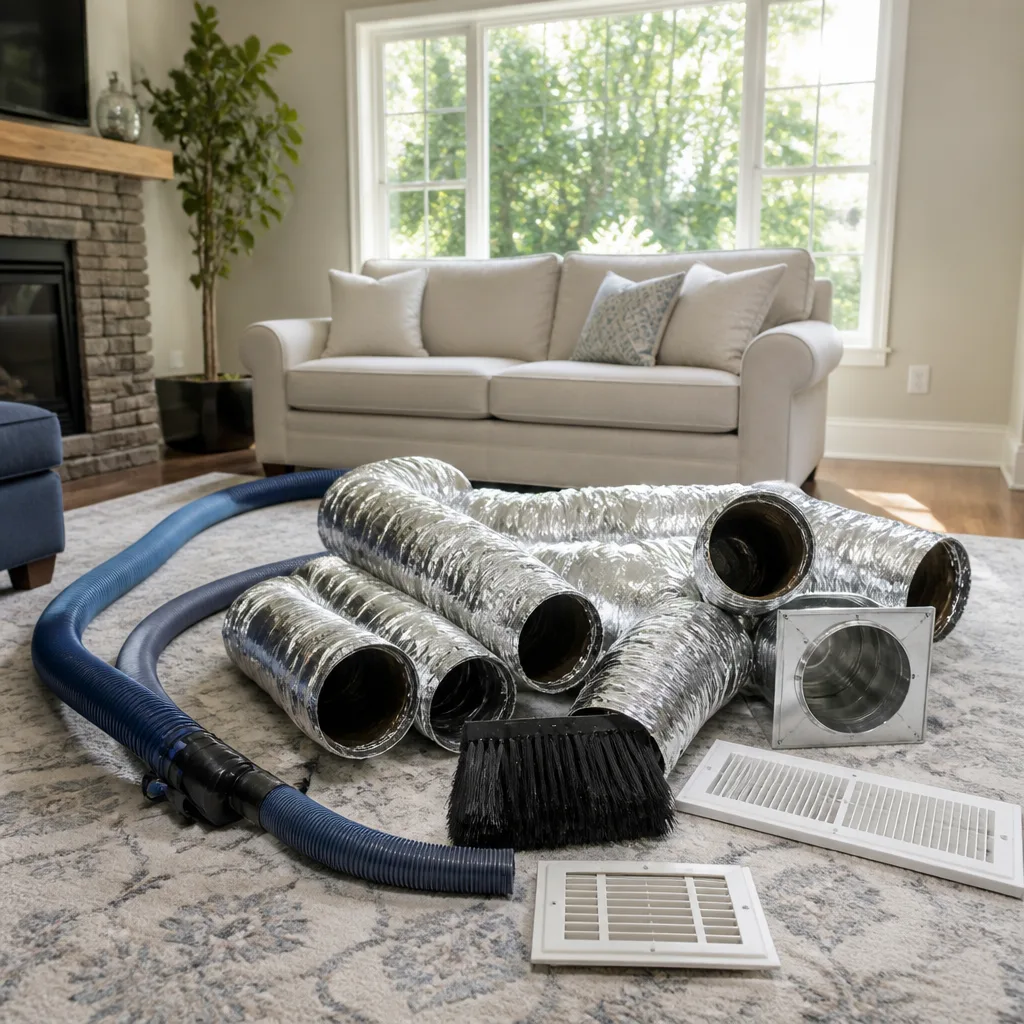
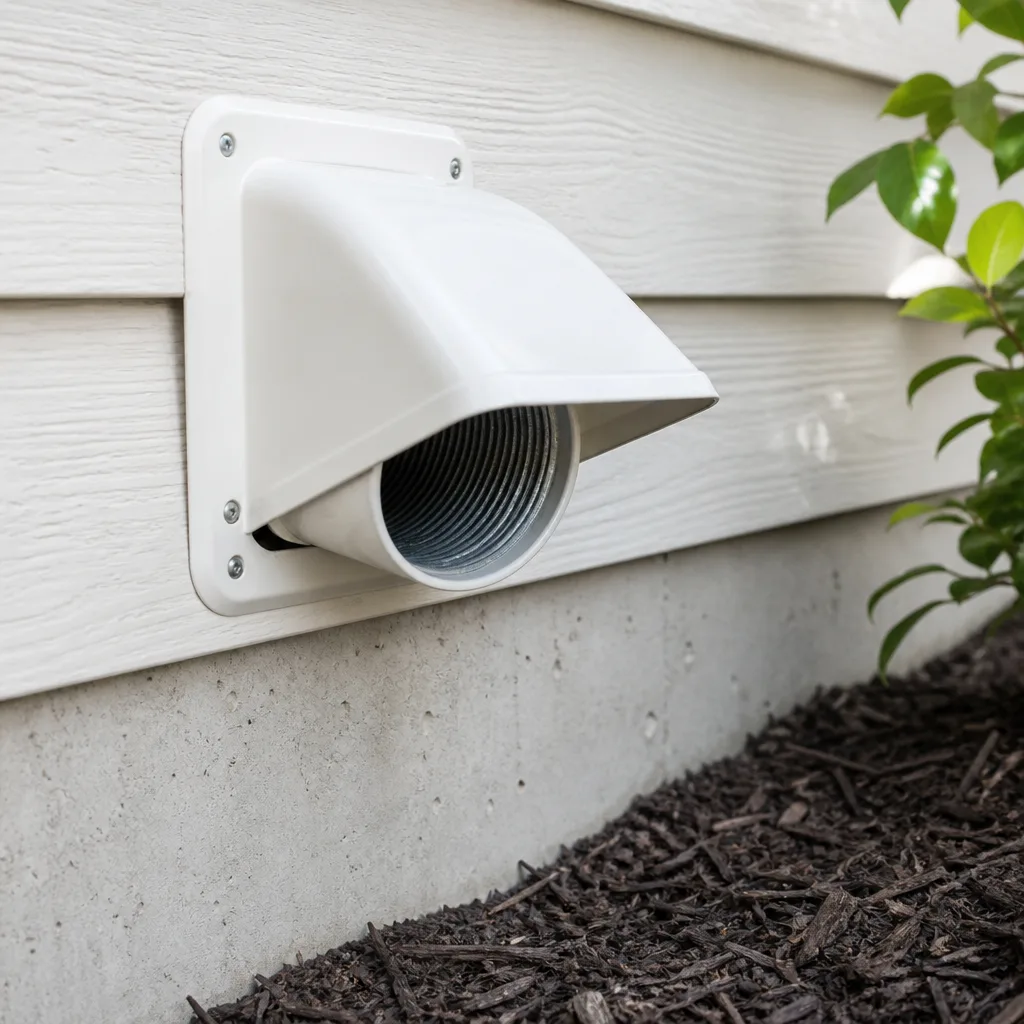
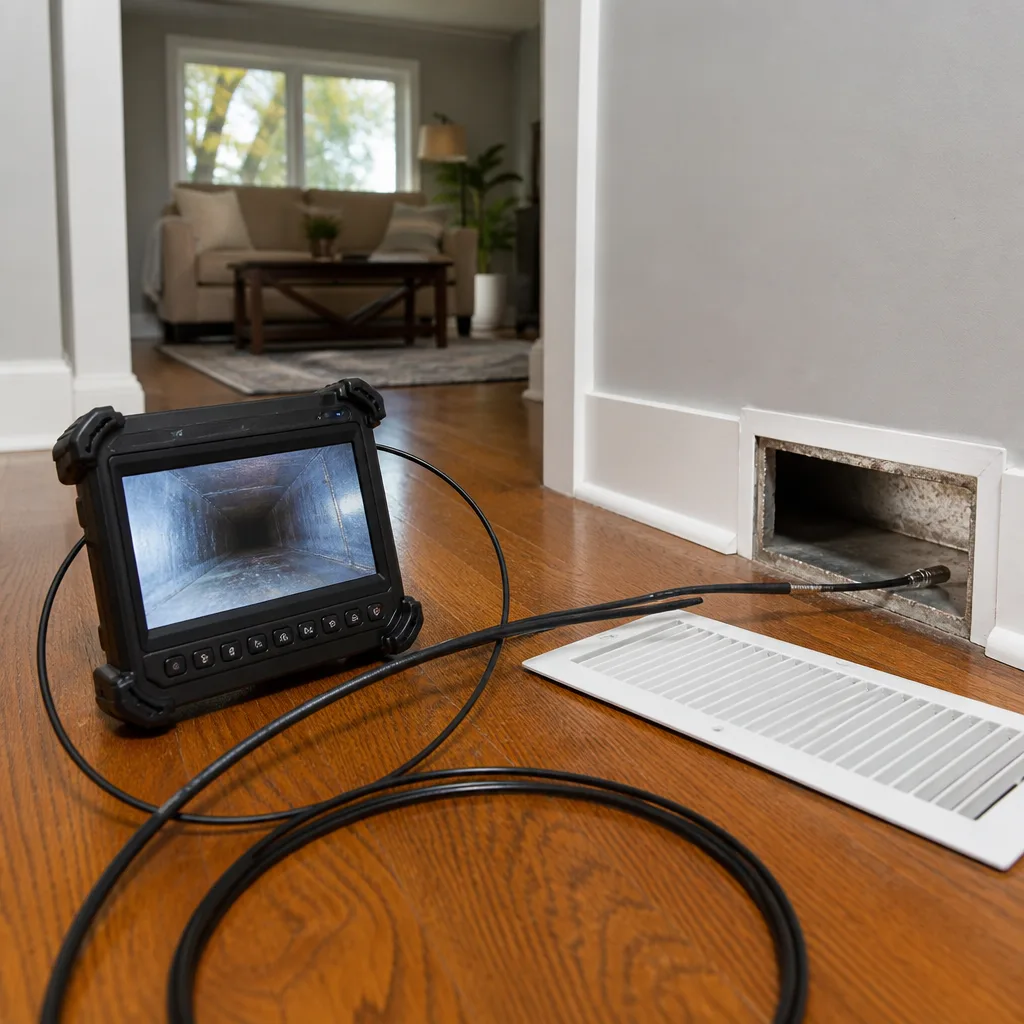
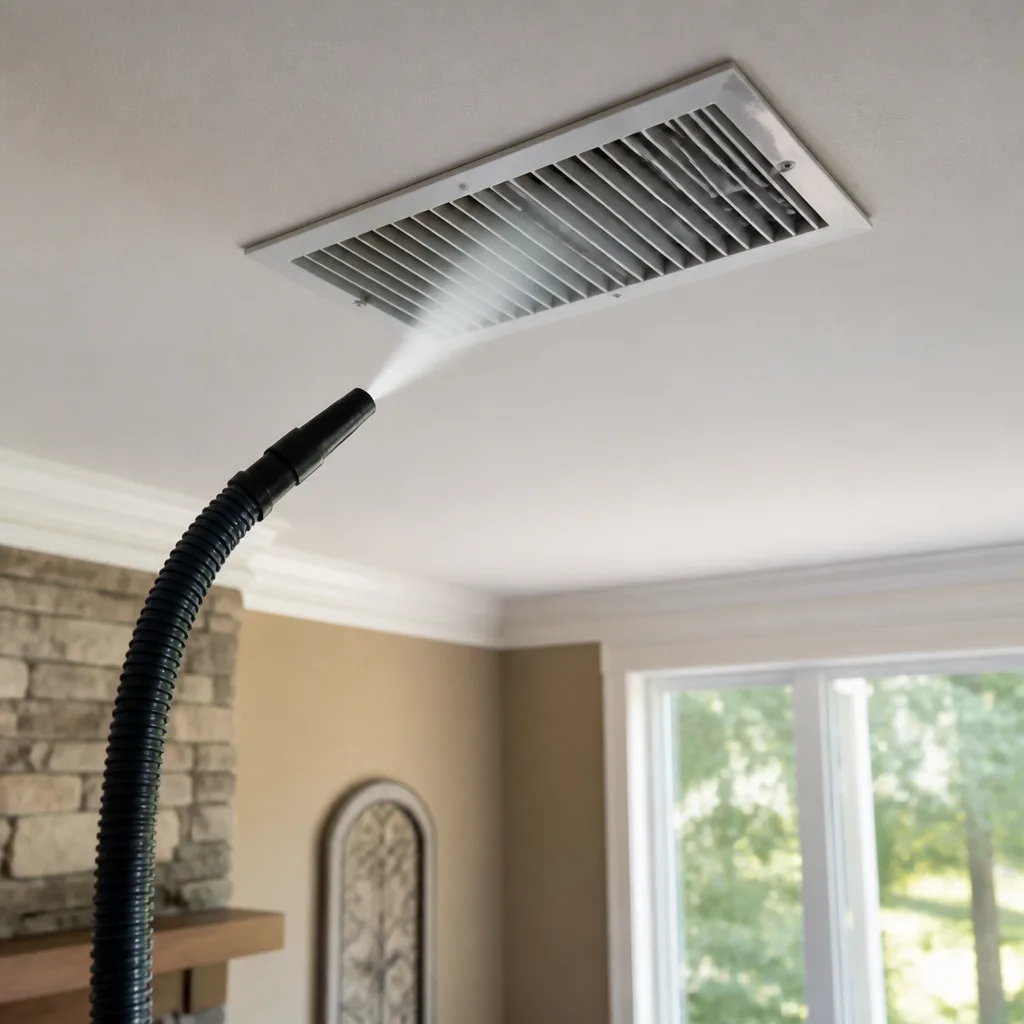
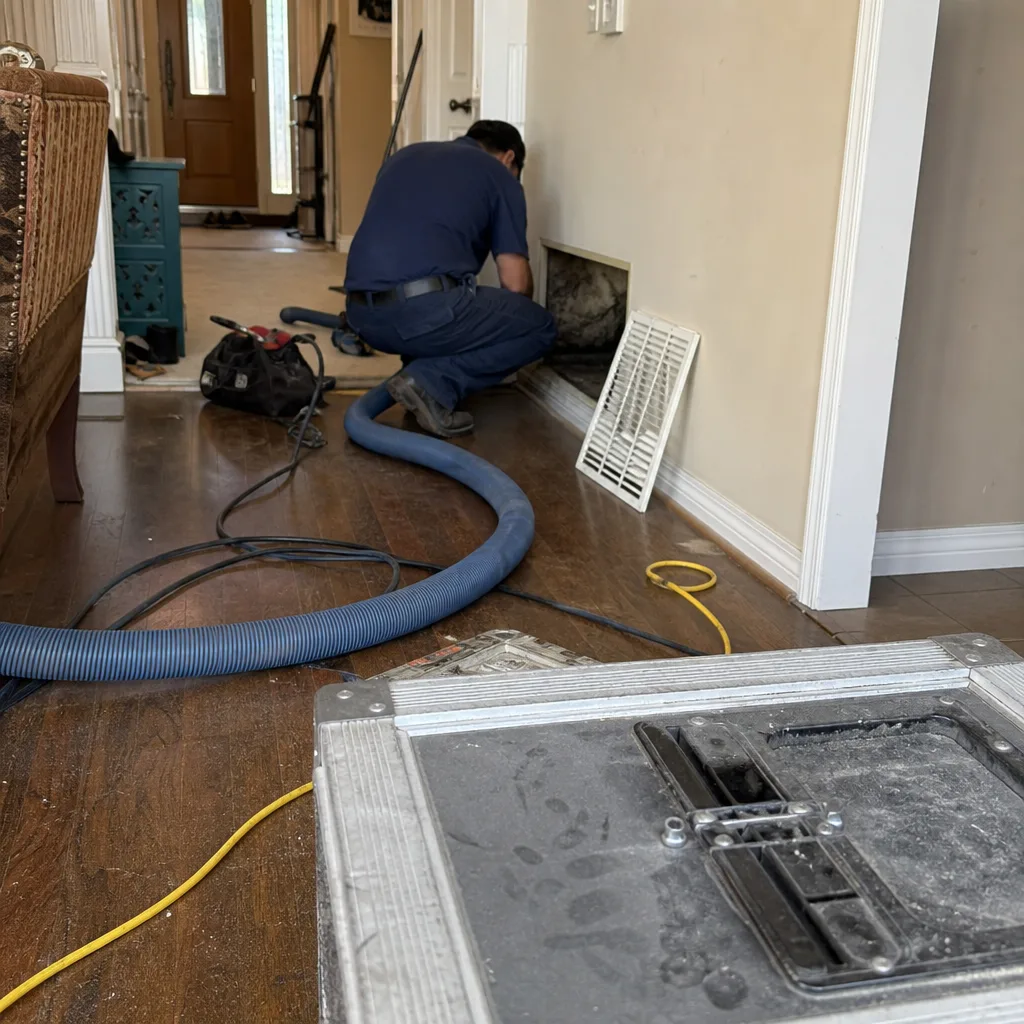 Before
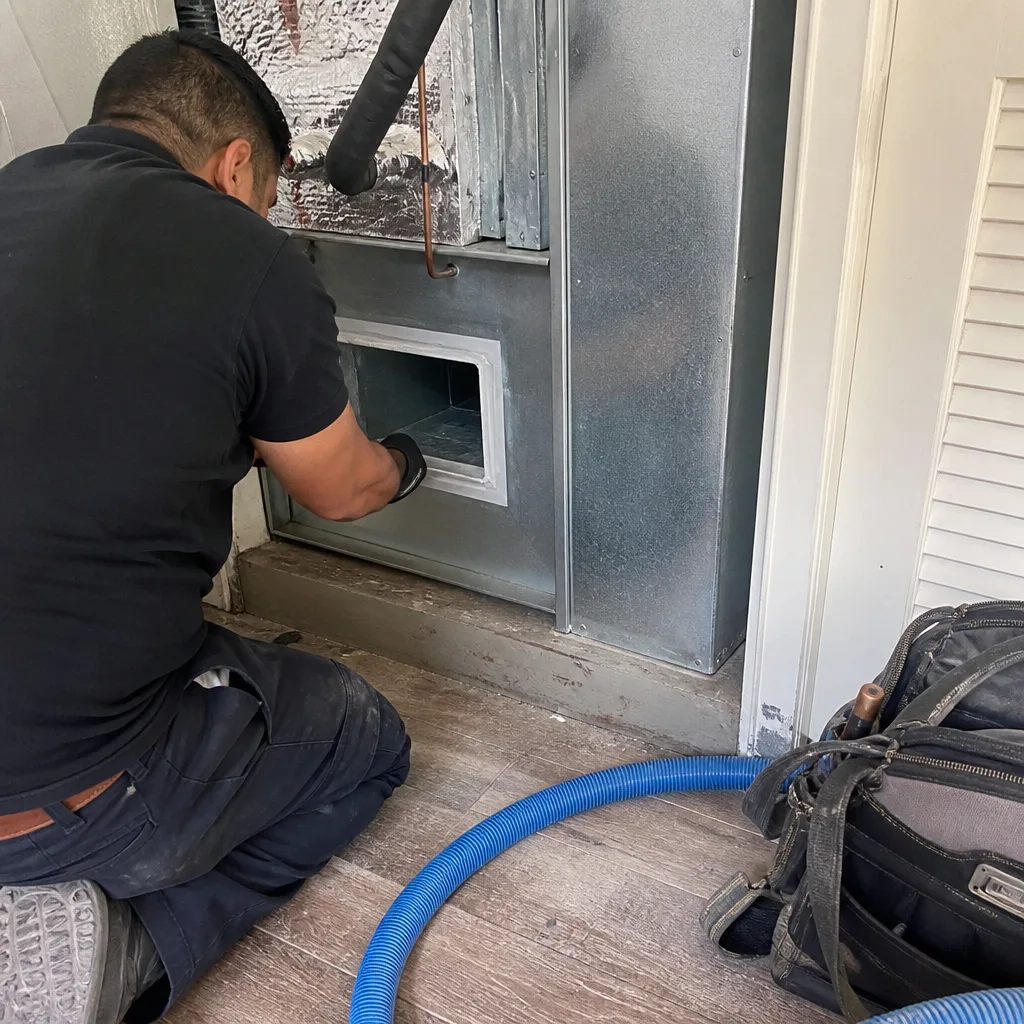 After
After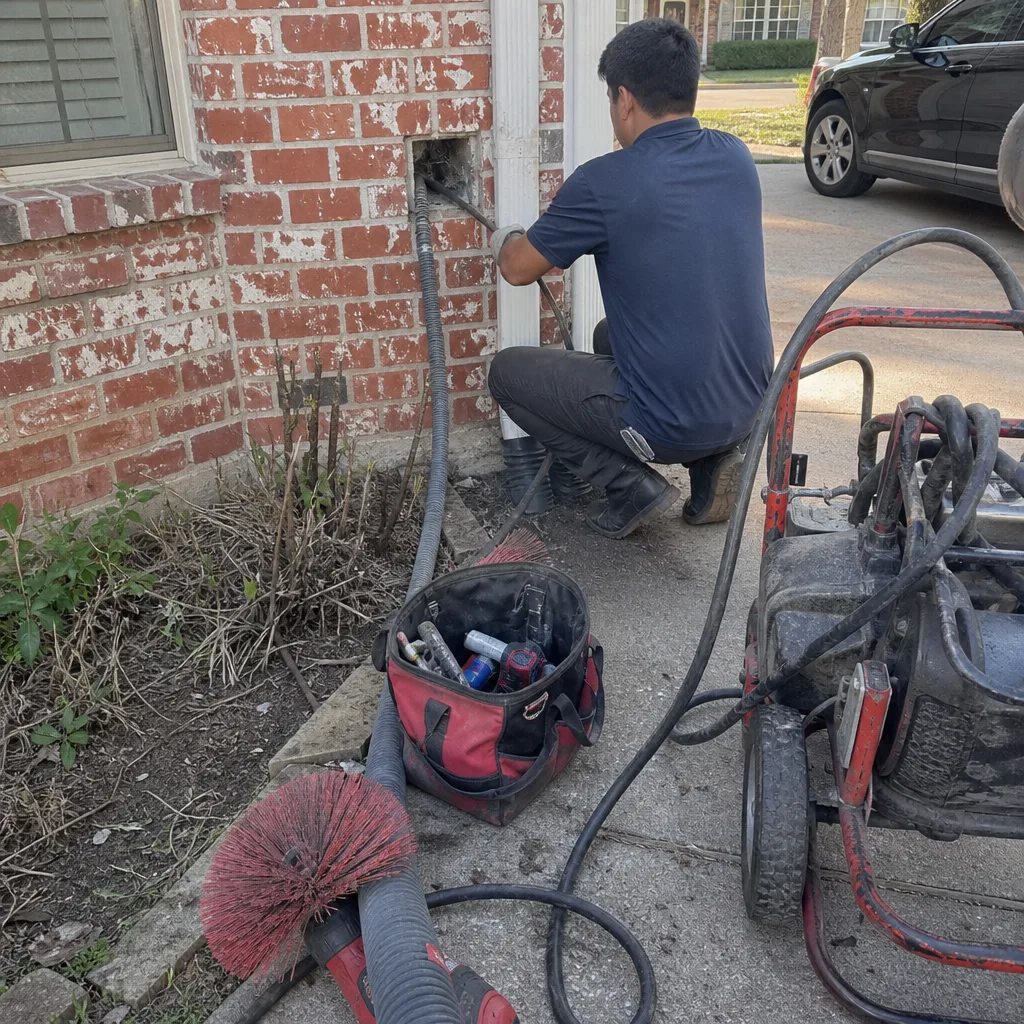 Before
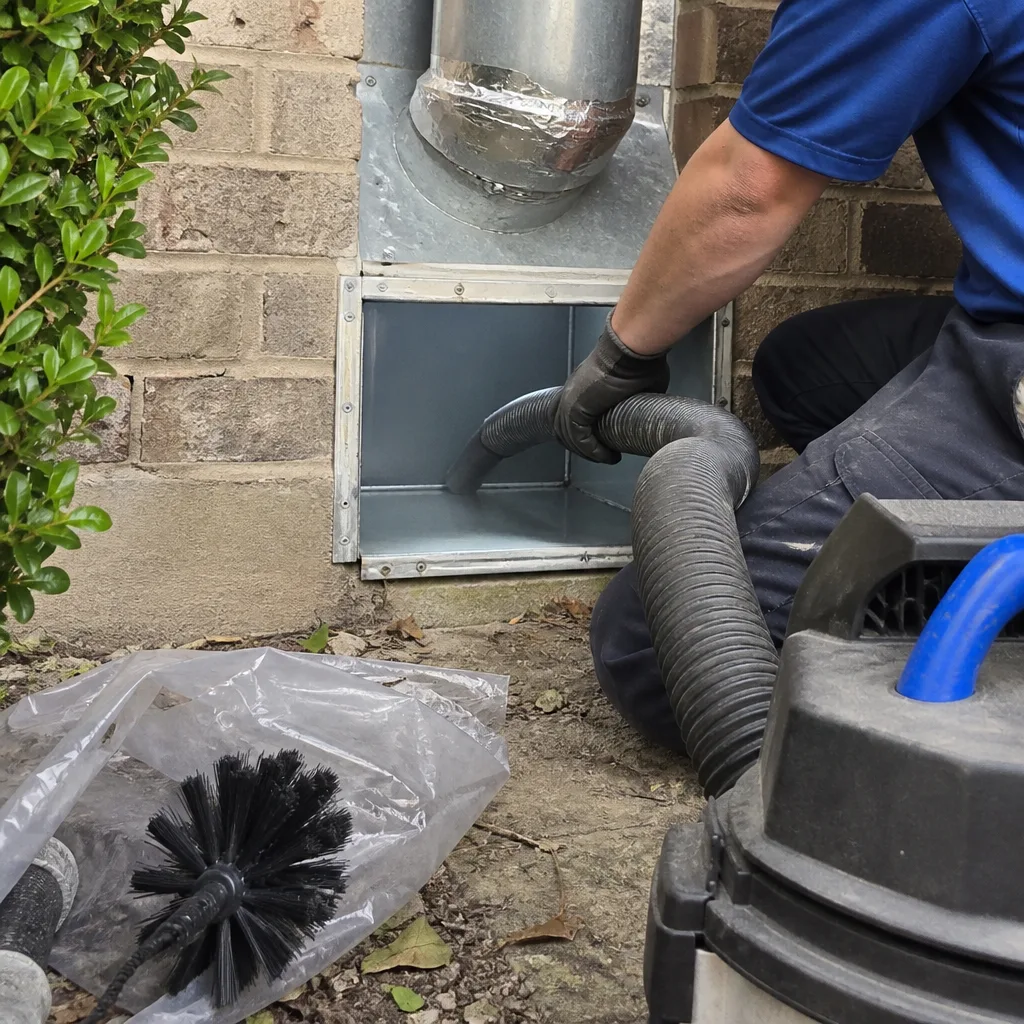 After
After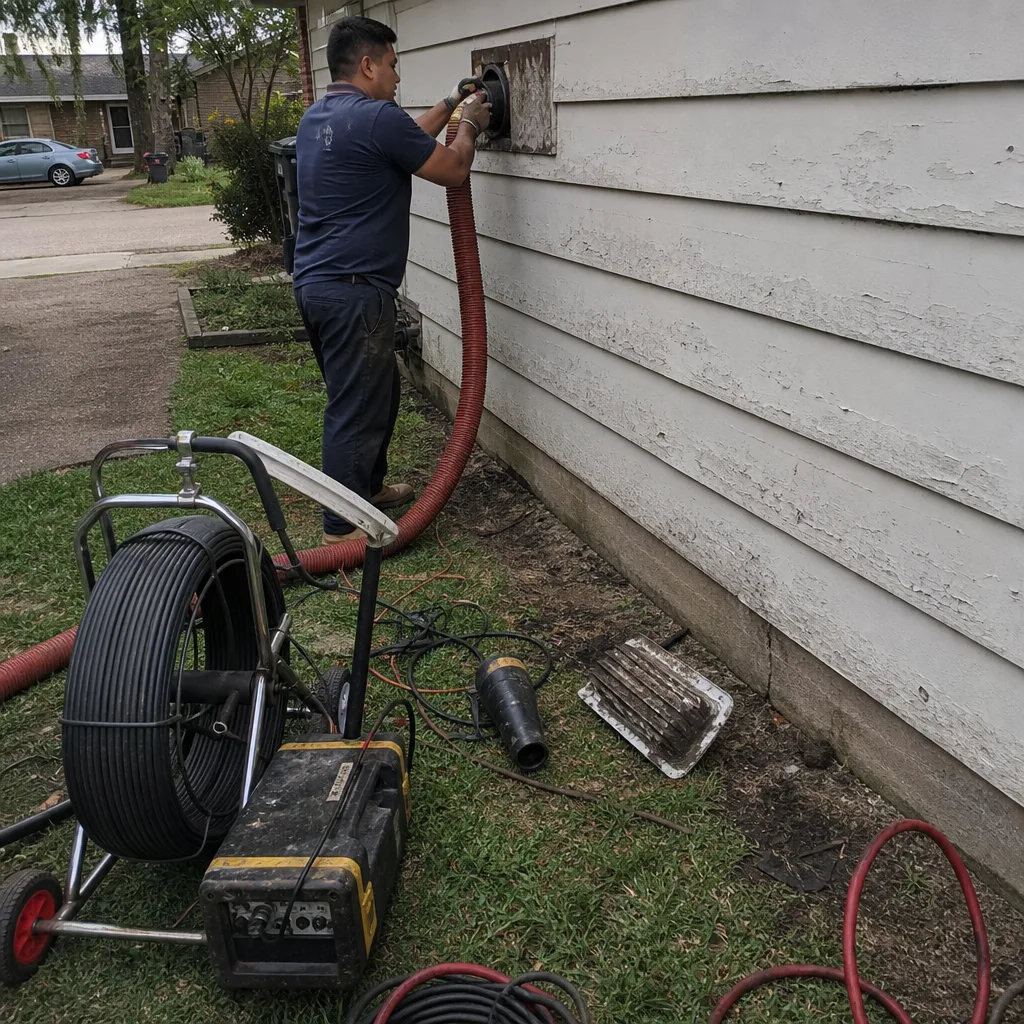 Before
 After
AfterVent Cleaning in Houston, TX
Dryer vent cleaning in Houston typically costs between $89 and $199 for a standard residential run, and most jobs are completed the same visit – with a written price delivered before any work starts. CleanRun Air Duct Cleaning Houston photographs the inside of every vent run before and after the job, so you can see exactly what was removed, not just take our word for it.
Vent cleaning is the focused process of clearing lint, debris, and blockage from the duct that runs between your dryer and the exterior termination point on your home’s wall or roof. It’s a narrower scope than a full Dryer Vent Cleaning in Houston inspection, but it’s often exactly what a Houston homeowner needs – especially in older Meyerland, Heights, or Montrose homes where vent runs can stretch 20 feet or more through tight wall cavities before reaching an exterior cap. Those longer runs collect lint faster, and Houston’s humidity keeps it sticky enough that a shop vac pushed in from the outside won’t clear it.
Tomas Reyes established CleanRun in 2013, and since that first job, every vent cleaning has followed the same protocol: written scope, documented photos, and a 365-Day Done Right Promise backing the work after the truck leaves. If you want to know what’s in your vent before agreeing to anything, call (346) 251-8919 – a live person picks up, not a voicemail.
When You Need Vent Cleaning
- Your dryer takes two or more cycles to dry a normal load. A partially blocked vent traps moisture inside the drum. In Houston’s climate, where ambient humidity runs high from April through October, a restricted vent compounds the problem – the dryer is fighting both its own exhaust restriction and exterior air that’s already close to saturation.
- The exterior vent cap has visible lint around the flap or the flap won’t open fully. That buildup is the tail end of a longer blockage. The camera usually finds a denser mass at the first 90-degree elbow inside the wall.
- The dryer’s outer cabinet feels hot to the touch after a normal cycle. Heat that can’t exhaust properly backs up into the unit. That’s a mechanical stress signal, not just an inconvenience.
- You smell something musty or scorched when the dryer runs. Scorched lint in a partially blocked vent produces a distinctive smell. Musty odors usually point to moisture trapped in a horizontal vent section – common in slab-foundation homes in areas like Clear Lake and Pearland where the vent has to travel a long horizontal distance before finding an exterior exit.
- It has been more than 12 months since the last cleaning, and you do multiple loads per week. The NFPA guidelines suggest annual cleaning for average households. A Houston home with teenagers or a large family can reach that threshold faster.
- You recently had a new dryer installed and the installer did not inspect or clean the existing vent. Appliance delivery crews typically connect the new unit to whatever is already there. If the previous dryer had been running for years through a partially built-up vent, the new one inherits that restriction on day one.
Our Vent Cleaning Process
- Written scope and price before anything is moved. Under Haven Standard Clause 1, the written price is delivered before any panel comes off or any equipment is unplugged. You’ll see the exact dollar amount, what it covers, and what would change it – in writing, not verbally.
- Pre-cleaning camera inspection and photo documentation. A flexible camera goes into the vent run from the dryer connection end. The footage is reviewed with you so you can see the actual condition – the lint depth, any crush points in the duct, and the state of the exterior cap flap. This is the “before” portion of the Documented Photo Record included with every CleanRun job.
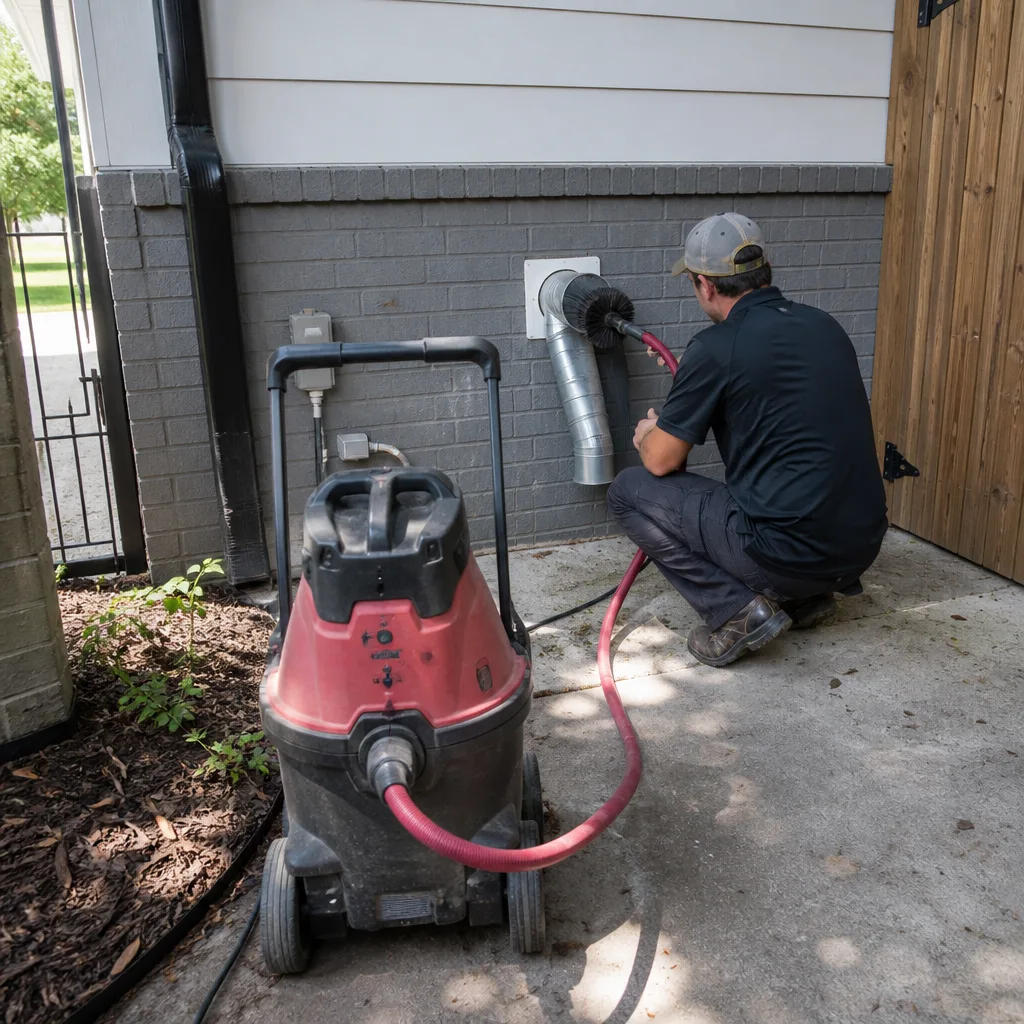
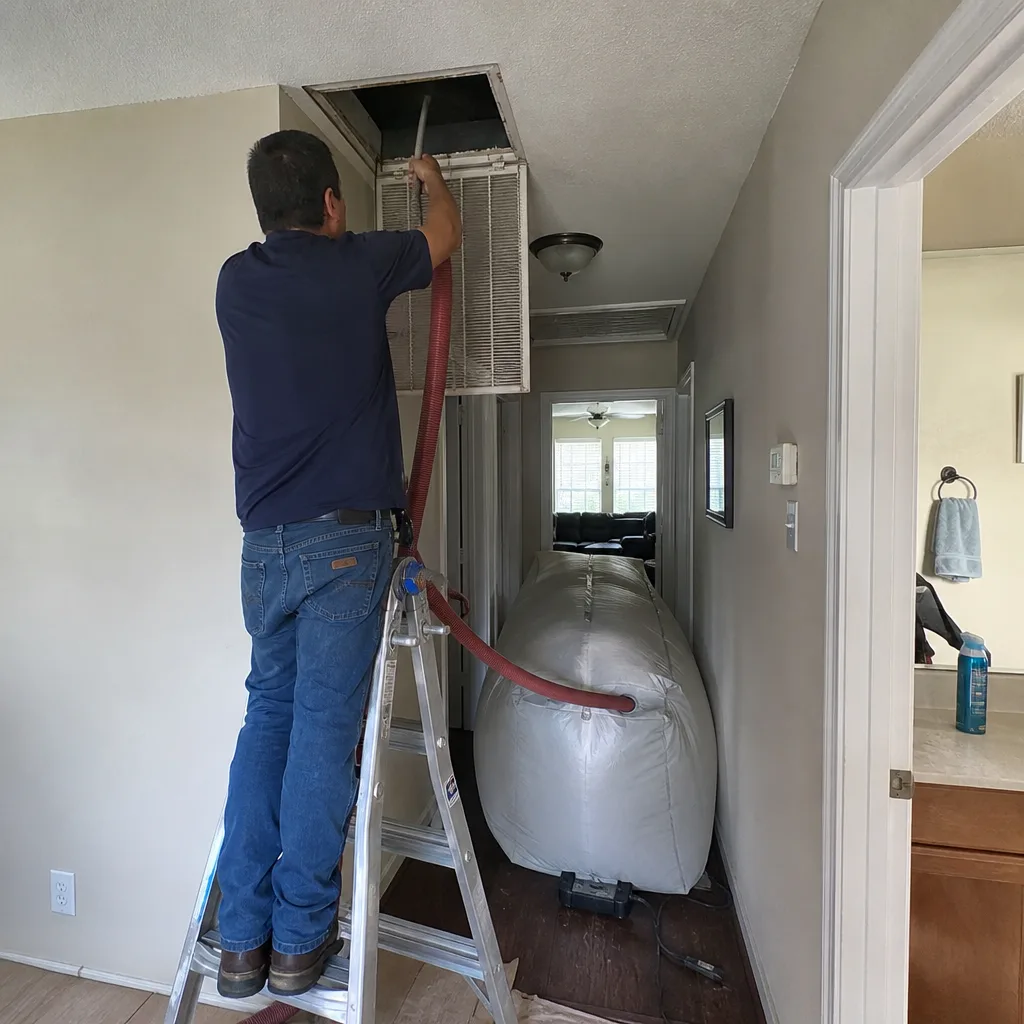
- Negative-pressure extraction from the exterior termination point. Negative-pressure extraction means we create suction at the outside cap while agitating lint from the interior end. Nikro equipment is used for this stage on most Houston jobs. This approach pulls debris toward the exit rather than compressing it deeper into the run – which is exactly what a forward-pushed shop vac does when used incorrectly.
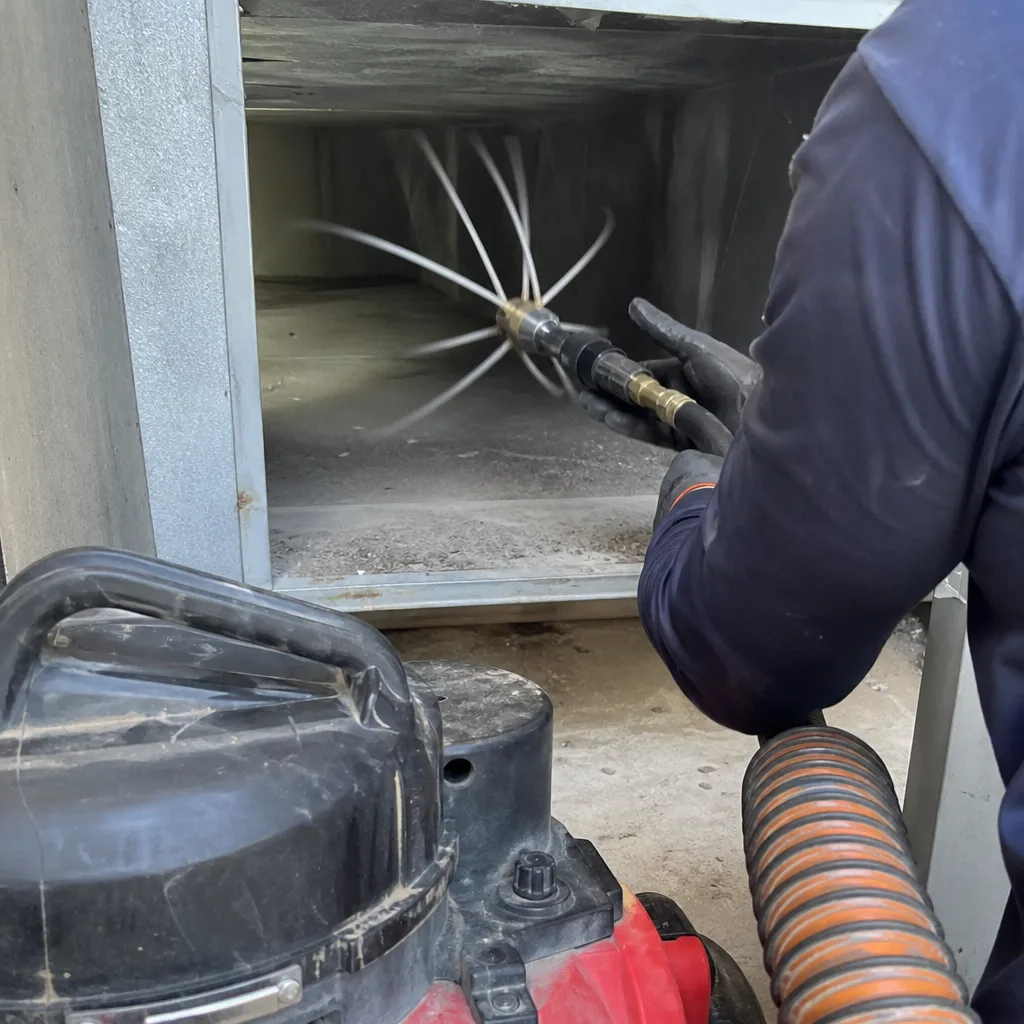
- Rotary brush agitation through the full duct run. A Rotobrush system spins flexible bristles through the duct length, breaking up compacted lint from the inner wall surface. The bristles reach the corners of the duct that straight suction misses. On Houston homes with older flexible duct (the foil accordion type common in pre-2000 builds in Garden Oaks and Oak Forest), we check for compression or kinking during this step.
- Exterior cap cleaning and flap function check. The termination cap is cleaned by hand, the damper flap is checked for free movement, and any visible screen is removed if it’s the type that accumulates lint (screened caps are a known restriction problem and are not recommended for dryer vents by current fire code in Texas).
- Post-cleaning camera pass and photo record delivery. The camera goes back through the run. The after images are set beside the before images and delivered to you as part of the standard job record. You can verify the work without taking our word for anything – that practice has been in place at CleanRun since 2013.
BeforeAfterVent Cleaning Pricing in Houston
Vent cleaning in Houston runs between $89 and $199 for most single-family homes with a standard vent run. Here’s what moves the price within that range:
- Vent run length: A 6-foot laundry closet run in a newer Midtown townhouse costs less to clean than a 25-foot run that travels through two walls in a Heights bungalow. Longer runs take more time and more brush passes.
- Access points: Roof-exit terminations – more common on older Houston homes in areas like Afton Oaks and Braeswood – require ladder work and add to the job time. That cost is in the written quote before work starts.
- Duct material and condition: Rigid metal duct cleans faster and holds its shape through the rotary brush passes. Older accordion foil duct sometimes has kinks or partial collapses that add time. If the duct needs repair rather than just cleaning, that’s a separate written line item – never bundled in without your sign-off.
- Number of bends: Each 90-degree elbow is a lint collection point. A run with four elbows is a different job than a two-elbow run, and the quote reflects that.
If a competitor has given you a written estimate, bring it. CleanRun’s Free Second Opinion puts our number next to theirs in writing. There is no charge for that comparison, and you’re not obligated to book with us afterward.
Call (346) 251-8919 and a live person will walk through your situation, give you an honest sense of where your job likely falls in that range, and schedule a visit at your convenience. The exact written price comes before any work starts – every time.
FAQs – Vent Cleaning
How often should I have my dryer vent cleaned in Houston?
Most Houston households need Dryer Vent Cleaning services once a year, but the actual interval depends on how much laundry you run and how long your vent run is. A single person doing three loads a week through a short, straight run might stretch to 18 months without issue. A household running 10 or more loads per week through a 20-foot run with multiple elbows – which we see regularly in two-story homes in Kingwood and the Energy Corridor – may need cleaning every six to eight months. The clearest indicator isn’t a calendar date; it’s drying time. When it takes noticeably longer than it used to, the vent is worth checking. Call (346) 251-8919 and we’ll help you figure out where your situation sits before you commit to a visit.
Is dryer vent cleaning actually necessary, or is it just an upsell?
Dryer vent cleaning is necessary, and the reason is straightforward: lint is combustible, and a restricted vent creates the heat and fuel combination that precedes a dryer fire. The U.S. Fire Administration attributes roughly 2,900 residential dryer fires per year to failure to clean vents. That’s not a scare statistic invented to sell services – it’s documented data from a federal agency. Beyond fire risk, a clogged vent forces your dryer to run longer and hotter, which shortens the life of the heating element and drum seals. A cleaning that costs $89 to $199 is a straightforward comparison to an appliance repair or replacement. Call (346) 251-8919 if you’d rather talk through what we found on a specific job before deciding.
What’s the difference between vent cleaning and duct cleaning?
Vent cleaning refers specifically to the dryer exhaust vent – the single duct that carries hot, lint-laden air from the dryer to the outside of the house. Duct cleaning refers to the HVAC supply and return duct system that distributes conditioned air through every room of your home. They’re different systems, different equipment, and different jobs. A dryer vent is a single run; an HVAC duct system in a Houston home can have 20 or more individual runs plus a plenum (the central distribution box) and return trunk lines. CleanRun handles both, but they’re quoted and documented separately. You can read more about the full scope of what we do on the home page.
Can I clean my dryer vent myself?
You can remove surface lint from the first few inches of the vent connection behind the dryer with a brush kit from a hardware store, and that’s a reasonable thing to do between professional cleanings. What a DIY kit won’t reach is the compacted lint sitting at the first elbow inside the wall or the debris coating the inner duct wall through the full run length. A forward-inserted brush without suction at the far end also risks pushing a compacted mass further into the run rather than removing it. The pre- and post-cleaning camera images we deliver with every job show exactly where the DIY tools stop doing meaningful work. If you want to see what the camera finds in your specific vent before deciding how to proceed, call (346) 251-8919 – the written price comes before anything else.
Why Houston Homes Have Specific Vent Cleaning Needs
Houston’s building stock is unusually varied. A home in West University Place built in 1965 might have a dryer vent that exits through the roof – a design that was common before modern fire codes pushed builders toward shorter, wall-exit runs. A 2019 townhouse in EaDo might have a vent that turns four corners inside a shared wall before it exits at grade level. Neither of those is necessarily a problem, but both behave differently when lint accumulates, and both require the camera-first approach to understand what’s actually happening inside the run.
The humidity factor is real. Lint that forms in dry climates tends to stay loose and moves easily. Lint that forms in Houston’s coastal air environment – especially from May through September, when outdoor humidity regularly sits above 70 percent – binds tighter against the duct wall. It takes more agitation to break free, and it’s more likely to form a partial plug that creates its own moisture trap. That’s why the rotary brush step isn’t optional on Houston jobs: suction alone doesn’t clear it.
We’ve also seen an uptick in crushed or kinked flex duct in newer construction across the Katy and Sugar Land corridors, where laundry rooms were sometimes designed with the vent path as an afterthought. A vent that’s 70 percent collapsed by a tight bend looks open from the outside but flows at a fraction of its rated capacity. The Dryer Vent Inspection shows it; the written quote includes a repair line item if the duct itself is the problem. That’s a documented finding, not a sales add-on.
The 365-Day Done Right Promise on Every Vent Cleaning Job
Every vent cleaning CleanRun performs in Houston is backed by the 365-Day Done Right Promise. If something is not right with the work – if the vent is still partially restricted, if the cap flap isn’t functioning correctly, if the post-cleaning photo record doesn’t show a clean duct run – we come back and make it right. That’s in writing on every job, not a verbal assurance subject to interpretation later.
Tomas Reyes has held that standard since CleanRun’s first job in 2013. Across 52,000 homes served, the written price and the documented photo record have been consistent. The 365-Day Promise exists because the work has to hold up after the truck leaves, and the documentation exists because “trust us” is not a verifiable claim.
Background-checked, uniformed technicians operate under Haven Standard Clause 3 (Verified Crews) – you’ll know the technician’s name before they arrive. Equipment on Houston vent cleaning jobs includes Rotobrush for rotary agitation and Nikro for negative-pressure extraction. Those are trade-recognized names you can look up independently before agreeing to a price.
Ready to find out what’s in your dryer vent? Call (346) 251-8919. A live person will pick up, walk through your situation, and get a written quote scheduled at your convenience. No range-only estimates, no “call for pricing” – a specific number in writing, before any work starts.
Written by Tomas Reyes, Owner at CleanRun Air Duct Cleaning Houston, serving Houston.