
Whole-system duct and dryer vent check with before-and-after photos - you see exactly what came out of your vents
That "$99 whole-house special" is a bait ad - the real number appears once they are in your hallway, or the "clean" is a shop-vac at the register. We photograph the inside of your ducts before and after instead.
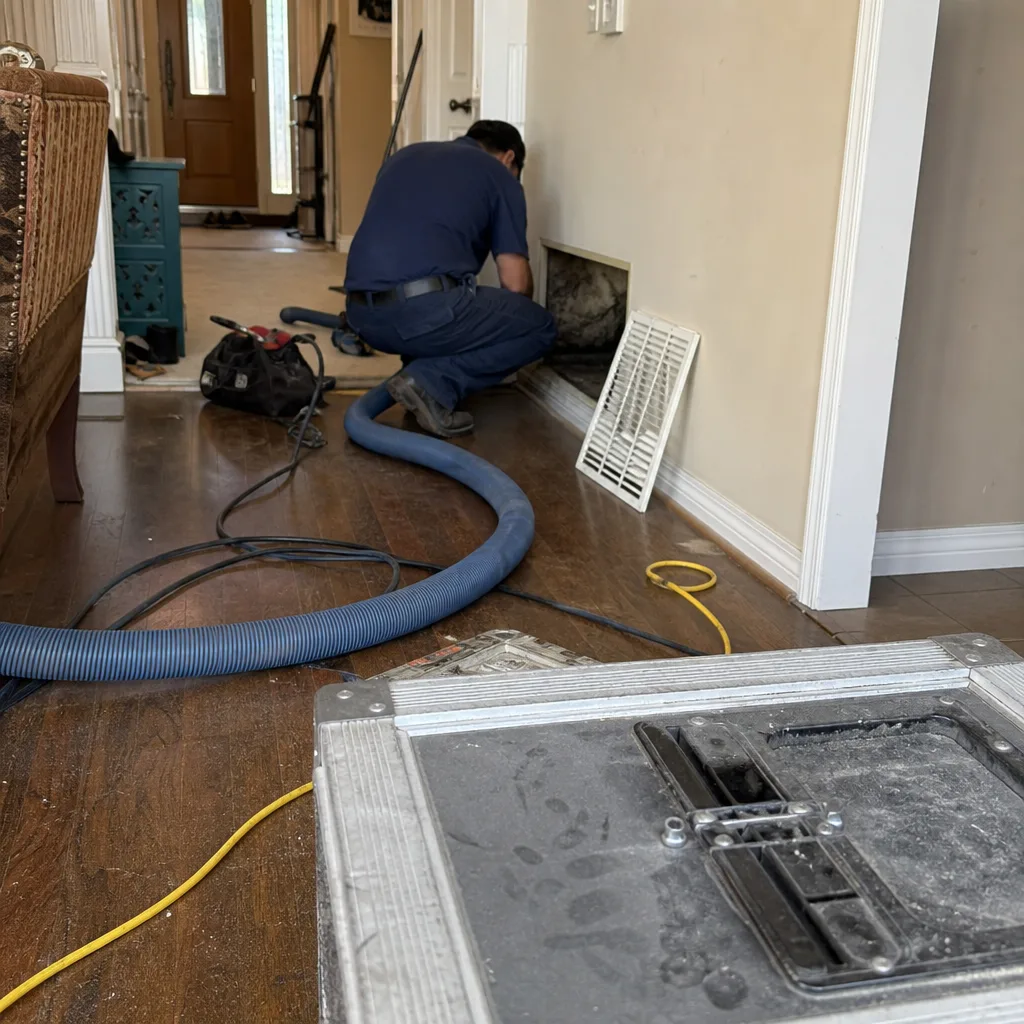 Before
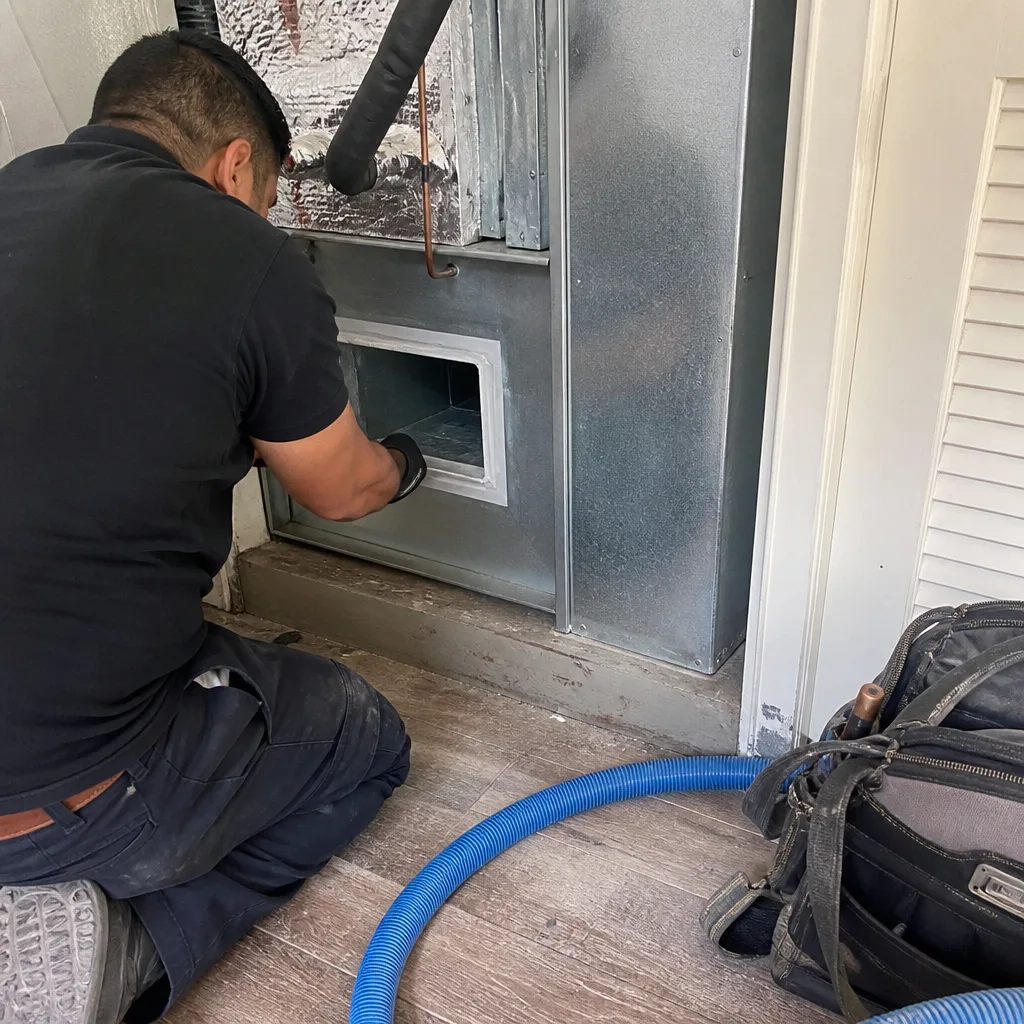 After
After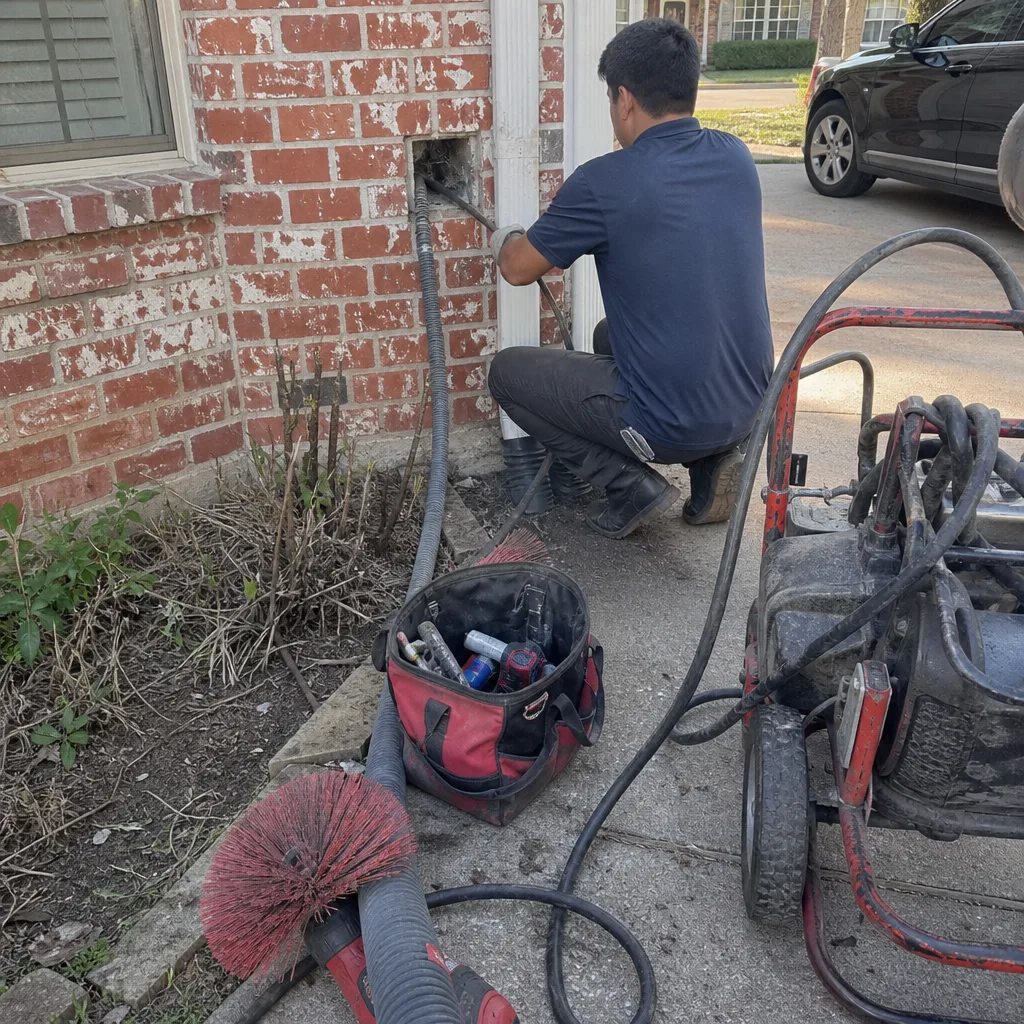 Before
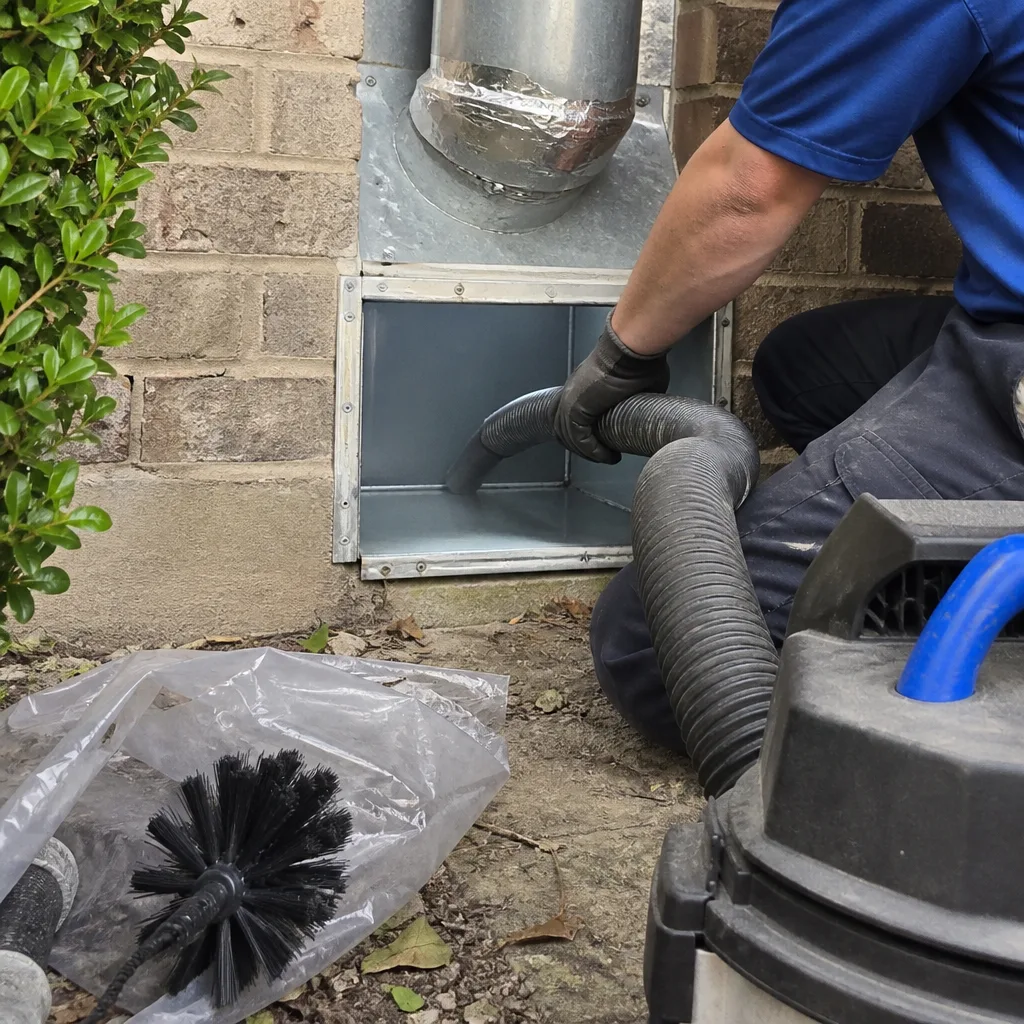 After
After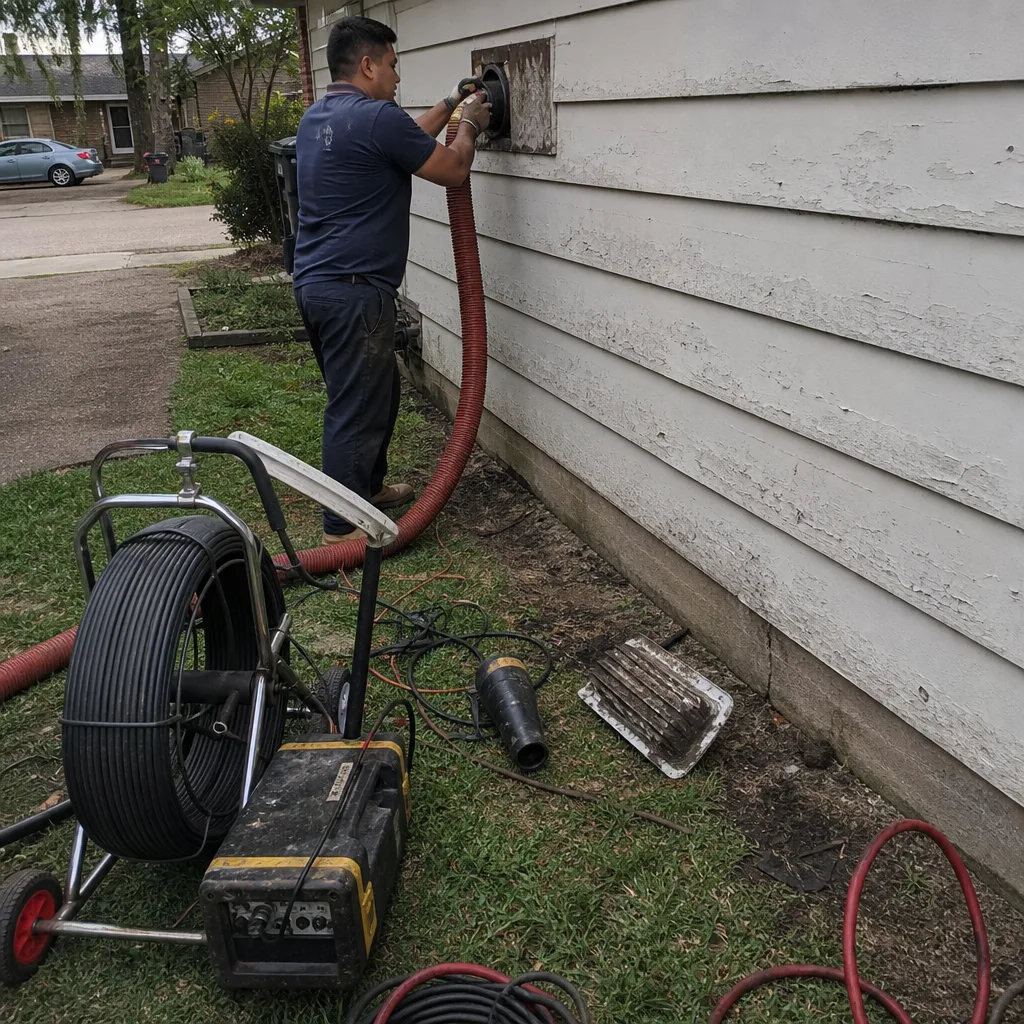 Before
 After
AfterSupply Duct Cleaning in Houston, TX
Supply duct cleaning is the process of removing accumulated debris, dust, and biological growth from the ducts that carry conditioned air from your HVAC system to each room in your home. In Houston, where attic temperatures regularly exceed 140°F from May through September and indoor humidity rarely drops below 60%, supply ducts are under conditions that accelerate contamination faster than in almost any other U.S. market. If your HVAC is blowing air through dirty supply ducts, that air picks up whatever is sitting in those ducts before it reaches your registers.
CleanRun Duct Repair & Cleaning has been photographing the inside of supply duct runs since 2013. Every job starts with a written price, ends with a documented photo record of every run, and is backed by the 365-Day Done Right Promise in writing. If you want to talk through what’s in your ducts before committing to anything, call us at (346) 251-8919 – a live person picks up. This page is part of our broader Air Duct Cleaning in Houston service, and the supply duct work described here is the piece that most directly affects the air entering your living spaces.
Tomas Reyes has led CleanRun’s field operations since the beginning. The protocol described on this page is the same one his crews follow on every job, in every zip code.
What Supply Ducts Actually Are – and Why They Get Dirty Differently
Your HVAC system moves air in two directions. Return ducts pull air from your rooms back to the air handler for conditioning. Supply ducts push that conditioned air back out through the registers you see on your floors, walls, or ceilings. Those supply ducts are under positive pressure during every cooling or heating cycle, which means any gap, loose joint, or unsealed elbow is pushing air outward rather than drawing it in.
That positive pressure matters because debris doesn’t just fall in from outside – it migrates through the duct system over years of operation. Fine particulate settles inside the duct walls during the seconds the system isn’t running, and then gets swept toward your registers when the fan kicks back on. In Houston’s Meyerland, Montrose, and Heights neighborhoods, we regularly find homes where original flex duct installed in the late 1990s has developed micro-tears at the elbow connections, allowing attic insulation fibers and biological material from humid attic air to enter the supply stream. That’s not a cleaning problem alone – it’s a sealing problem – but you can’t see it without the Video Inspection that precedes a proper cleaning.
A plenum (the central distribution box that connects your air handler to all the individual supply duct runs) tends to collect the densest debris because it’s where air velocity drops before branching out. That’s typically the first place our camera goes.
When You Need Supply Duct Cleaning
- Visible dust discharge at registers during the first few minutes of each cycle. If you can see a fine grey puff when the system starts, you’re seeing what’s been sitting in the supply duct between runs. This is one of the clearest indicators that cleaning is overdue, particularly in Houston homes with high daily cycle counts during summer.
- Musty or stale odor from specific vents, not the whole house. A smell isolated to one or two registers usually points to biological growth – mold or mildew – in that particular duct run rather than the air handler itself. Houston’s humidity gives mold a viable environment inside flex duct where condensation cycles repeatedly on the interior liner.
- Recent renovation work in the home. Drywall dust is among the finest particulate produced by any interior trade, and it travels. Even with registers covered during the work, renovation in adjacent rooms forces particulate into the supply path during HVAC operation. Homes in the Museum District and Midtown that have had kitchen or bathroom renovations in the last five years routinely show significant silica-based buildup in the first elbow of each supply run.
- The home hasn’t had documented duct cleaning in more than five years. NADCA guidance puts seven to ten years as a general interval for cleaned homes in moderate climates. Houston’s climate compresses that interval. Homes we service in Bellaire and West University regularly show debris levels at five years that we’d expect at eight years in a drier market.
- Increased utility bills without a change in usage habits. Debris buildup on the interior walls of supply ducts reduces effective duct diameter. A 3-inch layer of compacted dust and fiber on the inside of a 6-inch round supply duct measurably reduces airflow, which makes your system run longer to meet thermostat setpoints.
- You’ve recently discovered a rodent or pest intrusion in the attic. Supply ducts in Houston attics are accessible to rodents that enter through roofline gaps. If your pest control company found evidence of activity in the attic, there is a meaningful probability that debris has entered the duct runs. The camera tells the story before we commit to any scope of work.
BeforeAfterOur Supply Duct Cleaning Process
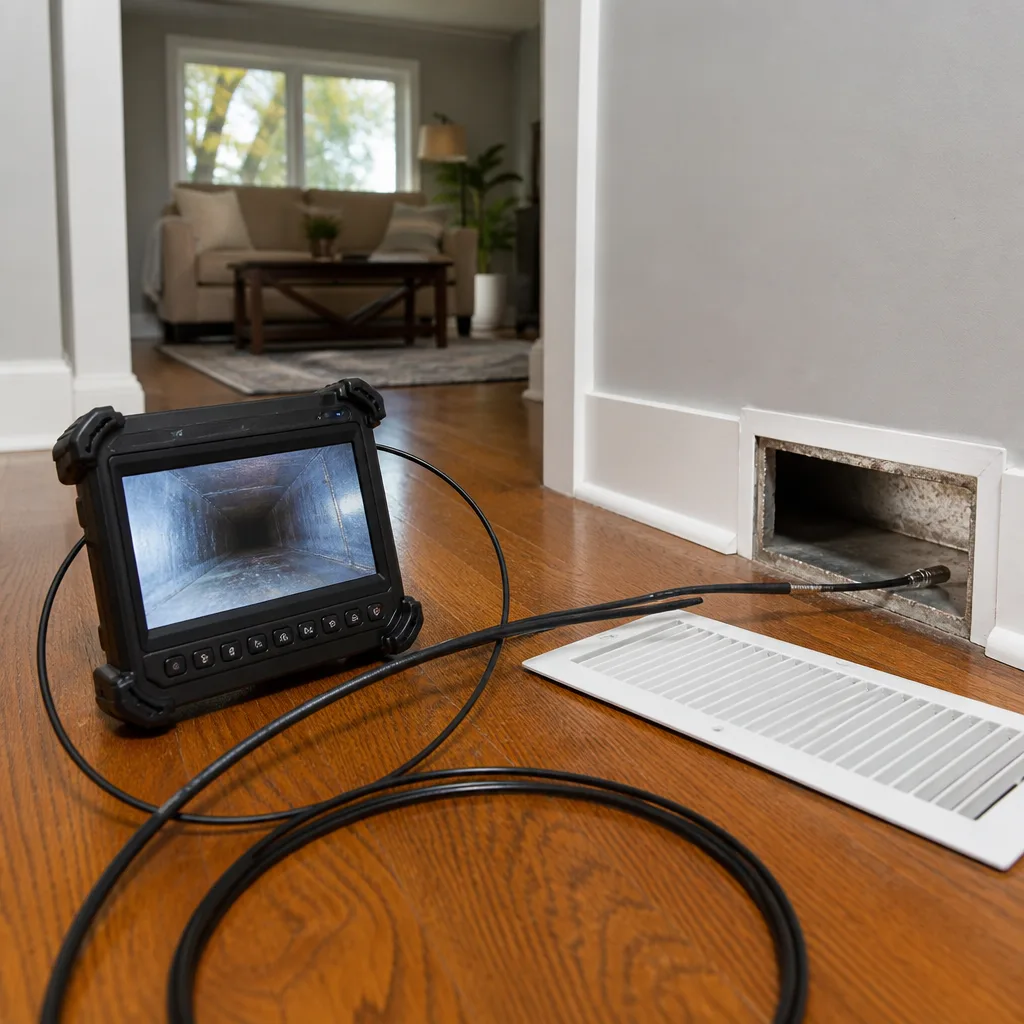
- Pre-job camera inspection and written price delivery. Before anything is unbolted or covered, a technician runs a duct camera through the plenum and the first several feet of each major supply run. The footage is saved and a still image is taken of each run. You see what we see. Based on that inspection, we hand you a written price – before any work starts, no exceptions. This is Haven Standard Clause 1, and it applies to every CleanRun job.
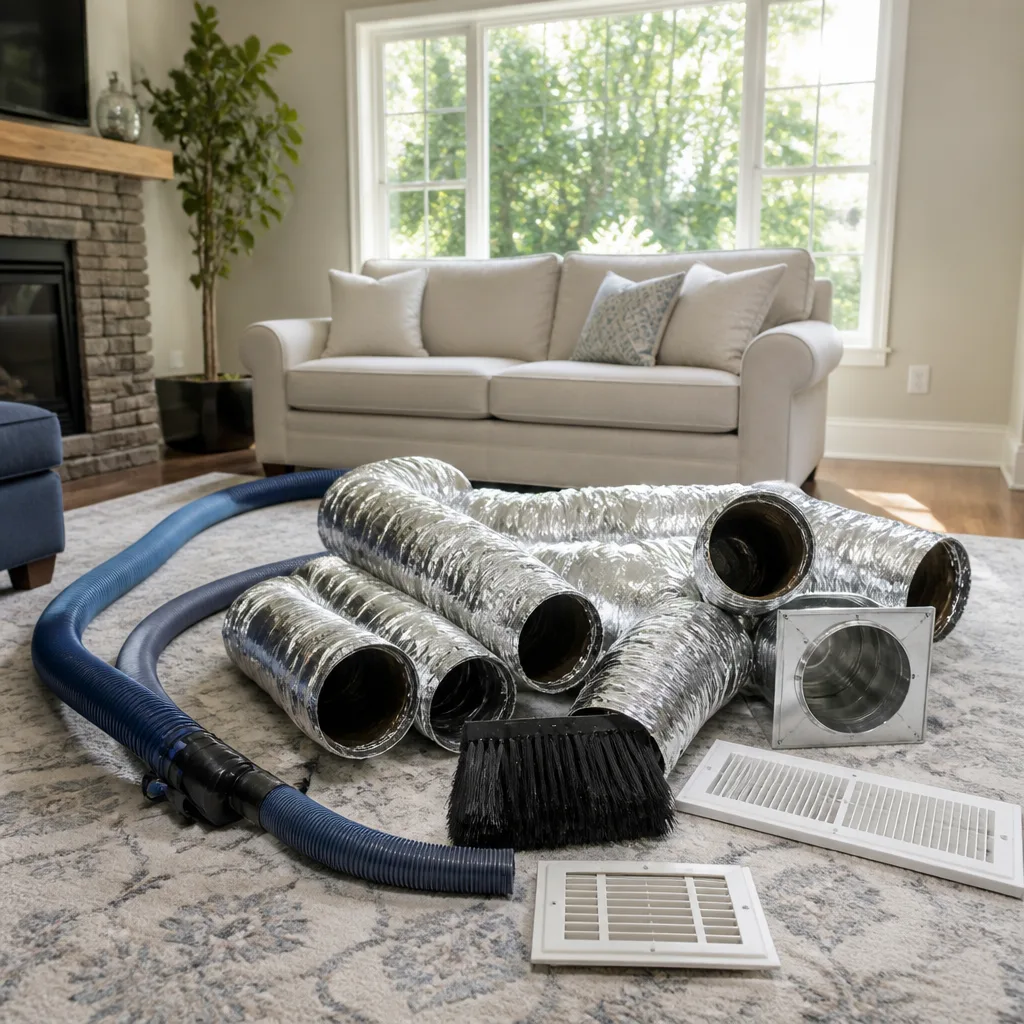
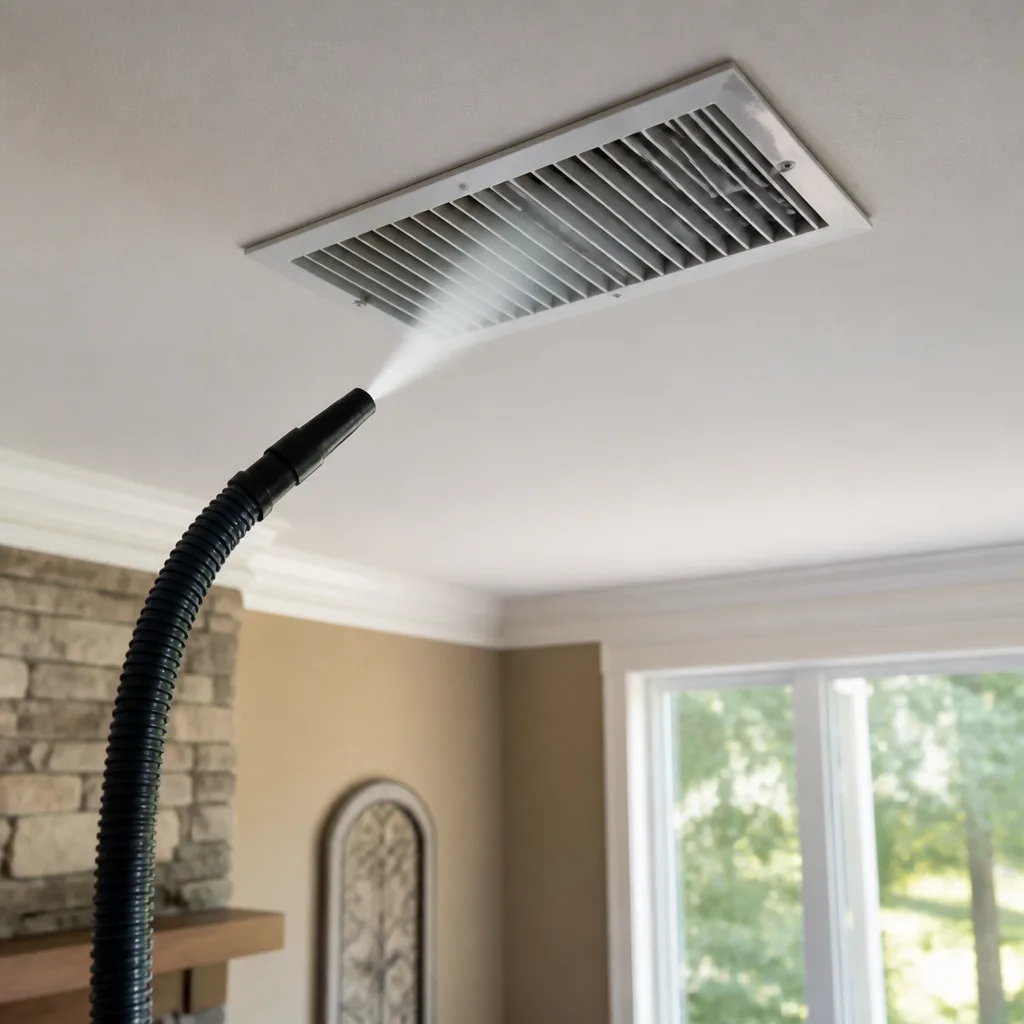
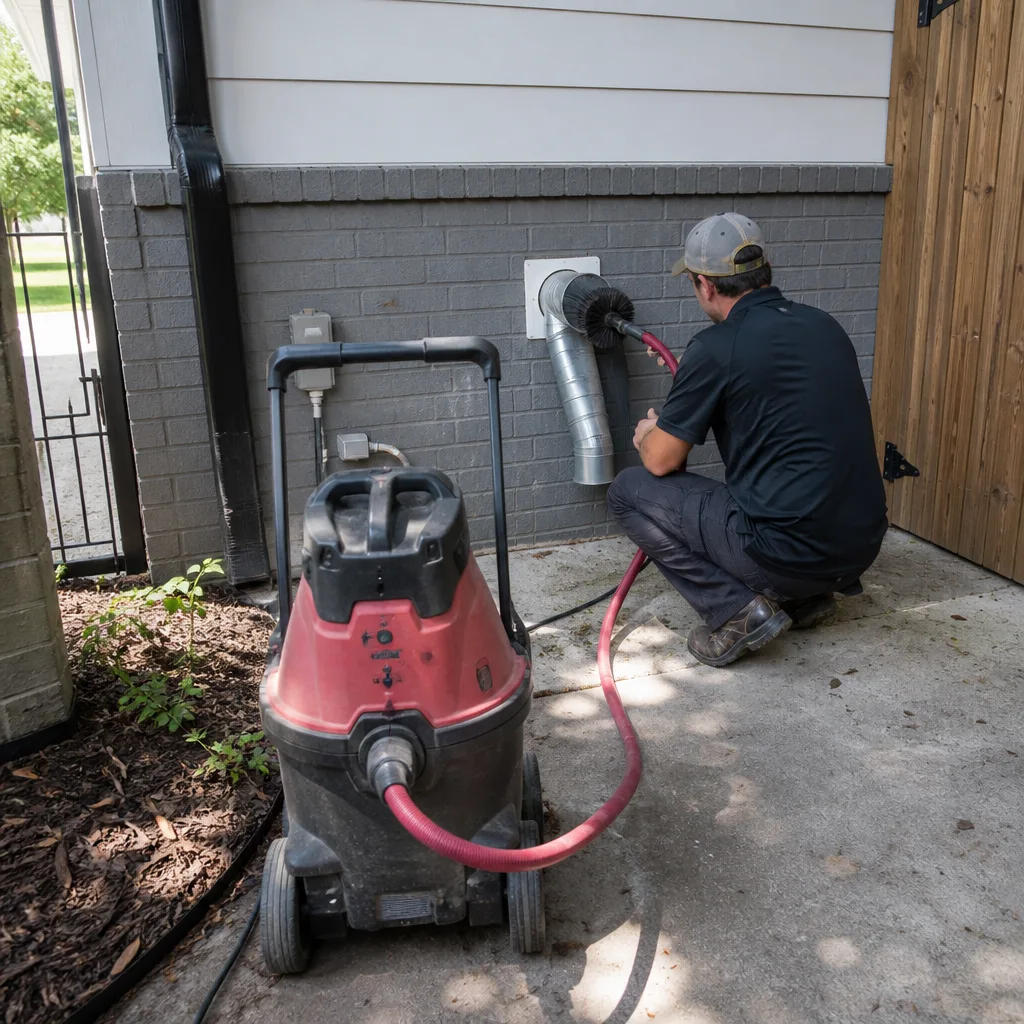
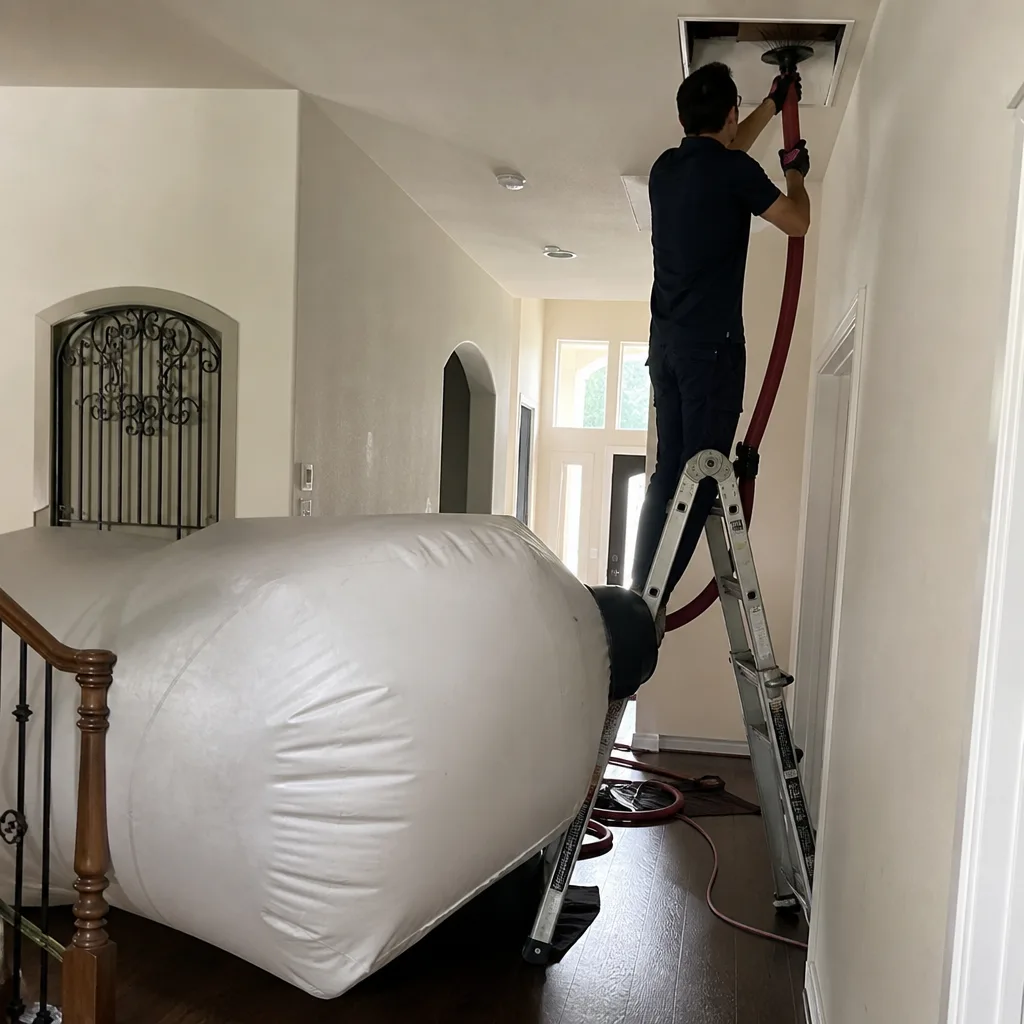
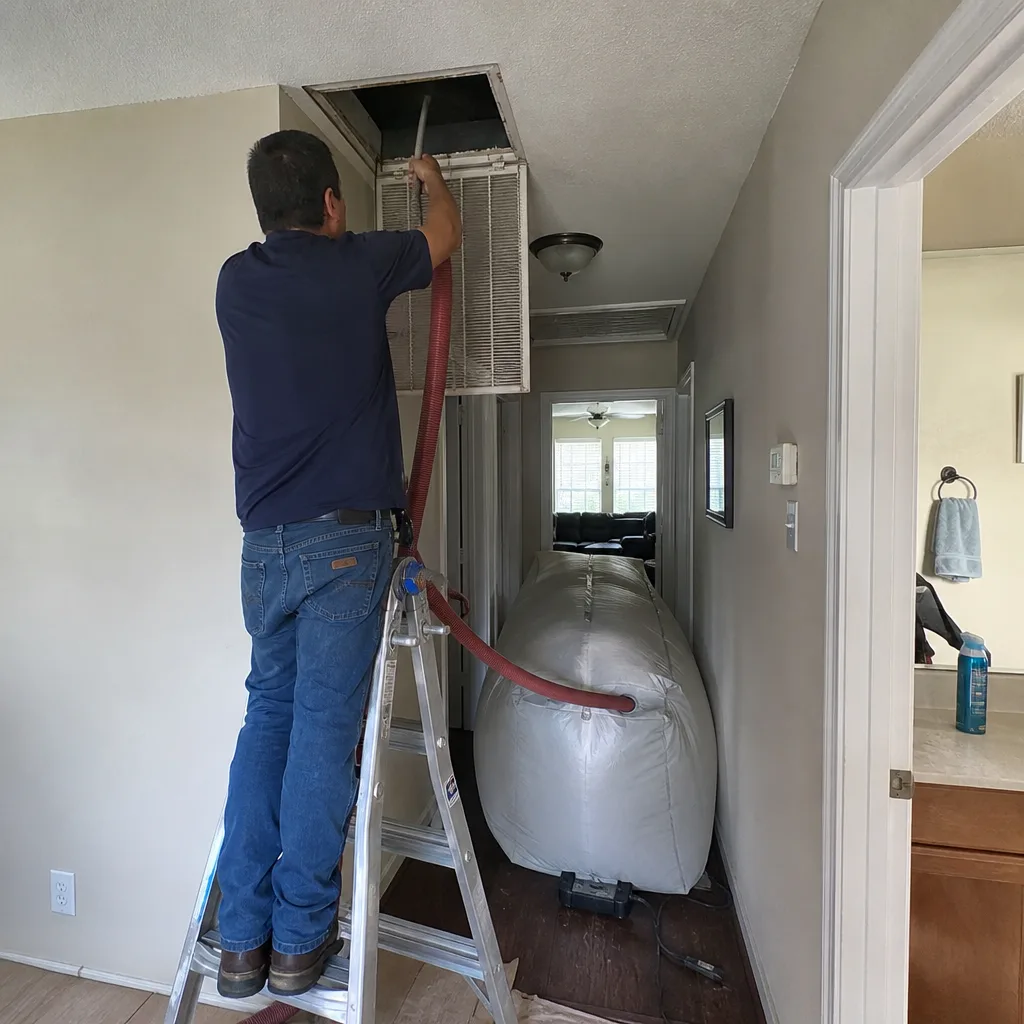
- System isolation and negative-pressure setup. We connect a truck-mount or portable negative-pressure extraction unit (Nikro equipment on most Houston jobs) to the main supply plenum. Negative-pressure extraction means the interior of the duct system is held at a lower pressure than the surrounding space, so when we dislodge debris it moves toward the collection point rather than into your living area. All registers in the supply system are covered except the one being actively cleaned.
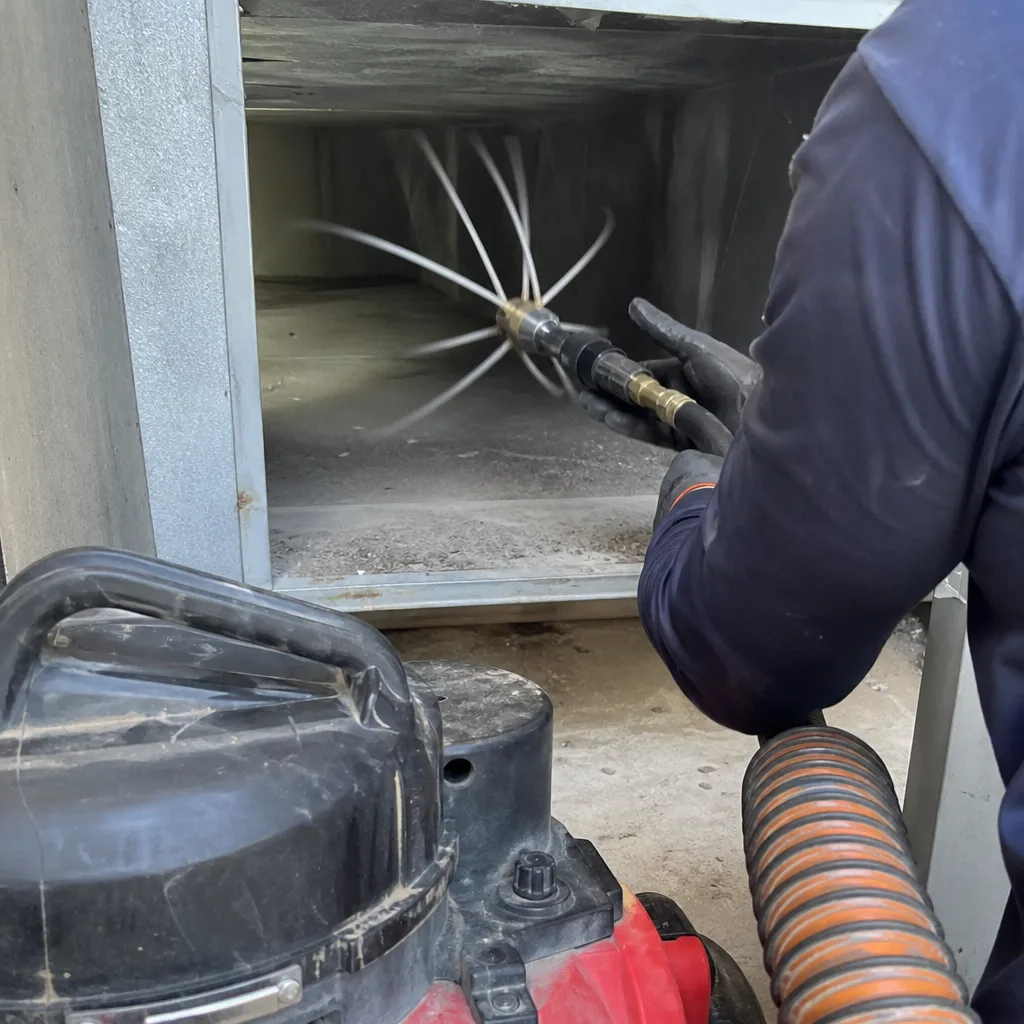
- Mechanical agitation of each supply run. A Rotobrush rotary cleaning system is introduced into each supply duct run from the register end. The counter-rotating brush head breaks up compacted debris on the duct walls while the negative-pressure system draws it toward the collection unit at the plenum. We work run by run, methodically, not room by room based on convenience. The sequence follows the duct layout, not the floor plan.
- Plenum cleaning and debris removal. Once the individual runs are cleared, the plenum itself is accessed, brushed, and vacuumed. This is often the highest-debris point in the supply system and it’s where most shop-vac-only operators stop. We don’t stop there – we start there on the camera pass, and we finish there on the cleaning pass.
- Post-cleaning inspection and documented photo record. After cleaning, the camera goes back through every run that was worked. A post-cleaning still is captured and catalogued alongside the pre-cleaning still from step one. You receive both sets of images as part of the standard job record – not on request, not as an add-on. Every customer gets the before-and-after documentation. That’s been CleanRun’s practice since the first job in 2013.
- Register and access panel reinstallation and final walkthrough. Every register is reseated and checked for proper fit. Access panels are reinstalled and the system is cycled to verify airflow at each register. If the technician finds a duct issue during the job – a disconnected elbow, a tear in flex duct, a loose plenum connection – it’s photographed and brought to your attention with a written repair estimate before we leave. That’s not an upsell; it’s what documentation-first service looks like.
Supply Duct Cleaning Pricing in Houston
Supply duct cleaning in Houston typically runs between $280 and $620 for a standard single-story home with 10 to 18 supply registers. For full details, see our guide on How Much Does Air Duct Cleaning Cost in Houston, TX? (2026 Price Guide). That range reflects the variation we see across the Houston market – not a teaser rate and not a ceiling. Here’s what moves the number:
- Number of supply runs: Pricing is largely driven by run count. A 1,400 sq ft bungalow in the Heights with 10 supply registers is a different job than a 3,200 sq ft two-story in Katy with 22 runs. We quote by the actual system layout after the camera inspection, not by square footage alone.
- Duct material and condition: Rigid sheet metal duct cleans faster than older flex duct with degraded liners. Flex duct in poor condition may need to be cleaned more carefully to avoid further liner damage, which adds time. We’ll tell you what we find.
- Degree of contamination: A home that had documented cleaning four years ago and a system with a well-maintained Honeywell or Aprilaire filtration setup will have less buildup than a home that has never been cleaned with a basic 1-inch filter. The camera determines the scope, not assumptions.
- Access difficulty: Supply runs that branch through finished walls or beneath pier-and-beam foundations in older Houston neighborhoods take more time than runs in an open attic. Access difficulty is noted during the camera walk and factored into the written price.
- Combination work: Supply duct cleaning is often combined with return duct cleaning, plenum sanitizing, or dryer vent cleaning. Combined scopes are priced together and are generally more efficient than separate visits.
The written price you receive before work starts reflects the actual scope – no add-ons discovered after the panels come off, no “we found something else” charges that weren’t in the original written quote. If we find something during the job that changes the scope, we stop, show you the camera footage, and hand you a revised written number. You decide. That’s Haven Standard Clause 1 in practice.
Bring a competitor’s written estimate and we’ll put our number next to it in writing, at no charge. That’s a standing offer.
To get your written price, call (346) 251-8919. The number on the page, to the address on the job, before a panel comes off.
What Houston’s Climate Does to Supply Ducts
This matters enough to say plainly: Houston is among the most demanding HVAC markets in the country for supply duct condition. The combination of high humidity (annual average above 75%), long cooling seasons running eight to nine months, and attic temperatures that routinely exceed 130°F creates conditions that accelerate every contamination mechanism simultaneously.
Humidity means biological growth – mold and mildew – is a realistic finding in supply ducts, not a scare tactic. We document it when we find it. In Pearland and Missouri City, where slab-on-grade construction is standard and attic ductwork runs through unconditioned attic space for the full length of the home, we see consistent condensation staining on flex duct liners in homes that lack adequate attic ventilation. That staining creates a surface that organic debris adheres to far more readily than a dry duct wall.
The long cooling season also means the HVAC system cycles more frequently and for longer periods than in most other U.S. markets. More cycles mean more particulate movement through the duct system over the course of a year. A Houston home running its system nine months per year accumulates debris at roughly twice the rate of a comparable home in a climate where the system runs five months per year.
None of this means every supply duct in Houston is a health emergency. It means the camera-first, documentation-based approach we use isn’t just a marketing differentiator – it’s the only honest way to service ducts in this climate without either over-scoping or under-scoping the job.
FAQs – Supply Duct Cleaning
How much does supply duct cleaning cost in Houston?
Supply duct cleaning in Houston costs between $280 and $620 for most single-story homes with 10 to 18 supply registers. Two-story homes or systems with more than 20 supply runs typically fall between $480 and $850. The final number depends on run count, duct material, contamination level, and access difficulty – all of which are assessed during the camera inspection before you receive a written price. Call (346) 251-8919 and we can give you a written quote after the camera walk, not before we’ve seen the actual system.
Is supply duct cleaning different from return duct cleaning?
Yes, and the difference matters. Supply ducts carry conditioned air from your air handler to your rooms – they’re under positive pressure during operation. Return ducts carry room air back to the air handler – they’re under negative pressure. The contamination profiles are different: supply ducts tend to accumulate particulate that migrated through the system over time, while return ducts often show higher levels of household dust pulled directly from room air. A complete air duct cleaning addresses both, and most CleanRun jobs in Houston cover the full system. If you’re only quoting one side, ask why – and ask to see the camera footage from the other.
How often should supply ducts be cleaned in Houston specifically?
In Houston’s climate, every four to six years is a reasonable interval for most homes, compared to the seven-to-ten-year guidance NADCA publishes for moderate climates. Homes with pets, recent renovations, evidence of attic pest intrusion, or older flex duct should lean toward the shorter end of that range. Homes with quality filtration – a well-maintained Aprilaire or Honeywell media filter, for example – can reasonably stretch to the longer end. The camera inspection answers the question more accurately than any interval estimate: if the footage shows clean duct walls, the system doesn’t need cleaning regardless of how many years have passed.
Can I just clean the registers myself instead of having the ducts cleaned?
Wiping register covers removes surface dust, but it doesn’t reach the debris sitting two to six feet inside the duct run – which is where the bulk of accumulated material typically sits. The registers themselves are the last inch of a duct that may run 20 to 40 feet from the plenum. Cleaning the cover without addressing the duct interior is similar to dusting the face of a dryer vent without clearing the line behind the wall. If visible dust discharge is the symptom, the register cover isn’t the source. The camera shows where the material actually is before any work starts.
Supply Duct Cleaning as Part of a Full System Record
On its own, supply duct cleaning addresses the most direct path between your HVAC system and your living space. But the supply side doesn’t operate in isolation. The air handler, the return duct network, the plenum, and the filtration equipment all contribute to what ends up in the supply stream. CleanRun’s approach – documented on every visit, written price before every job, 365-Day Done Right Promise in writing – means the record we leave with you covers the work we actually did, not a general description of services.
If you’ve been quoted a supply duct cleaning elsewhere and want a second written number, bring the estimate. We put our price next to it in writing, at no charge. That offer exists because we’re confident in what the camera will show and what our price reflects.
Background-checked technicians, uniform identification, name provided before arrival – that’s Haven Standard Clause 3. The equipment – Rotobrush agitation systems, Nikro negative-pressure extraction – is trade-recognized and verifiable. The documentation is included, not optional.
To see what’s inside your supply ducts and get a written price before any work starts, call CleanRun at (346) 251-8919. You can also learn more about the full scope of what we do through our home page. A live person answers every call.
Written by Tomas Reyes, Owner at CleanRun Air Duct Cleaning Houston, serving Houston.