
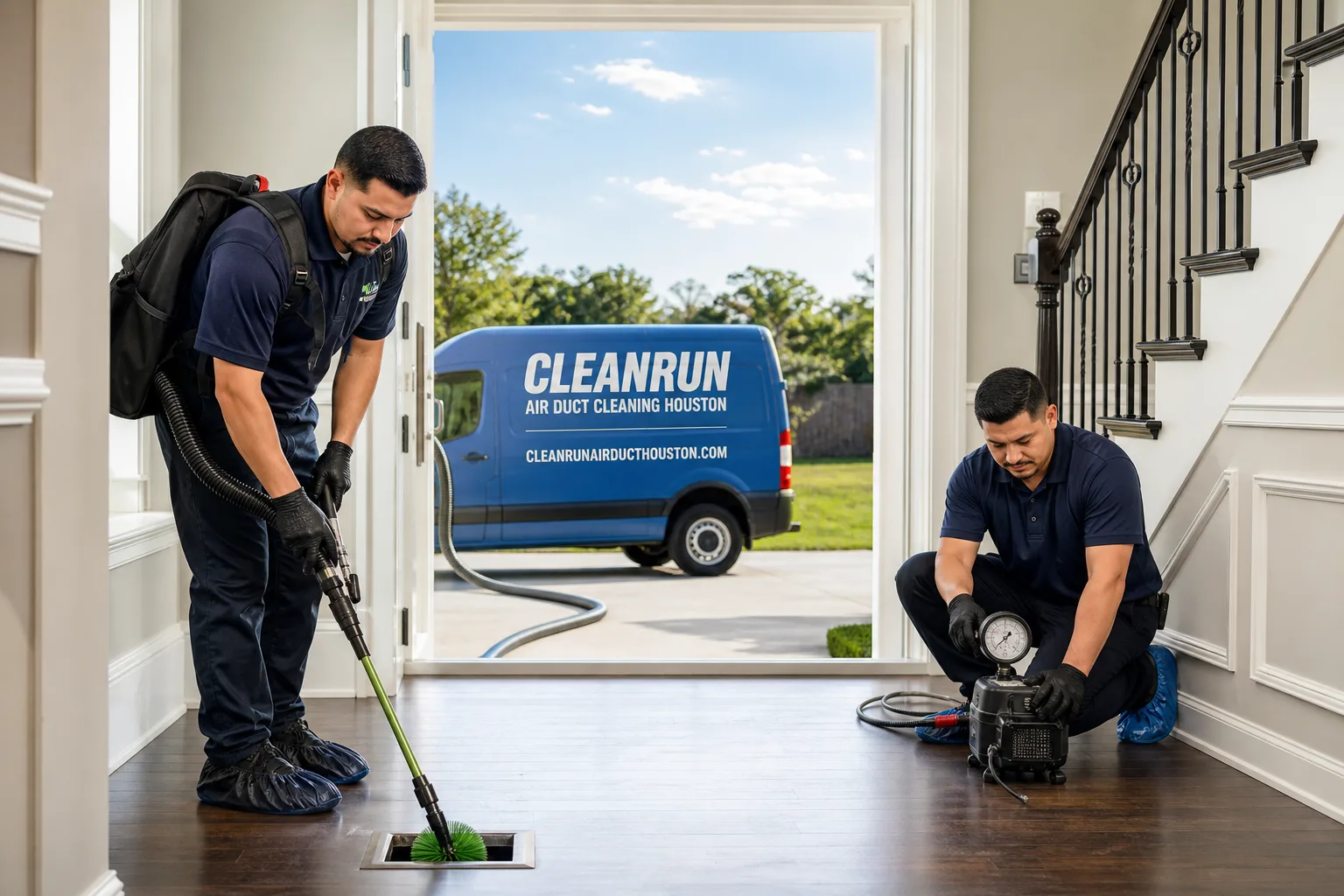
Whole-system duct and dryer vent check with before-and-after photos - you see exactly what came out of your vents
That "$99 whole-house special" is a bait ad - the real number appears once they are in your hallway, or the "clean" is a shop-vac at the register. We photograph the inside of your ducts before and after instead.
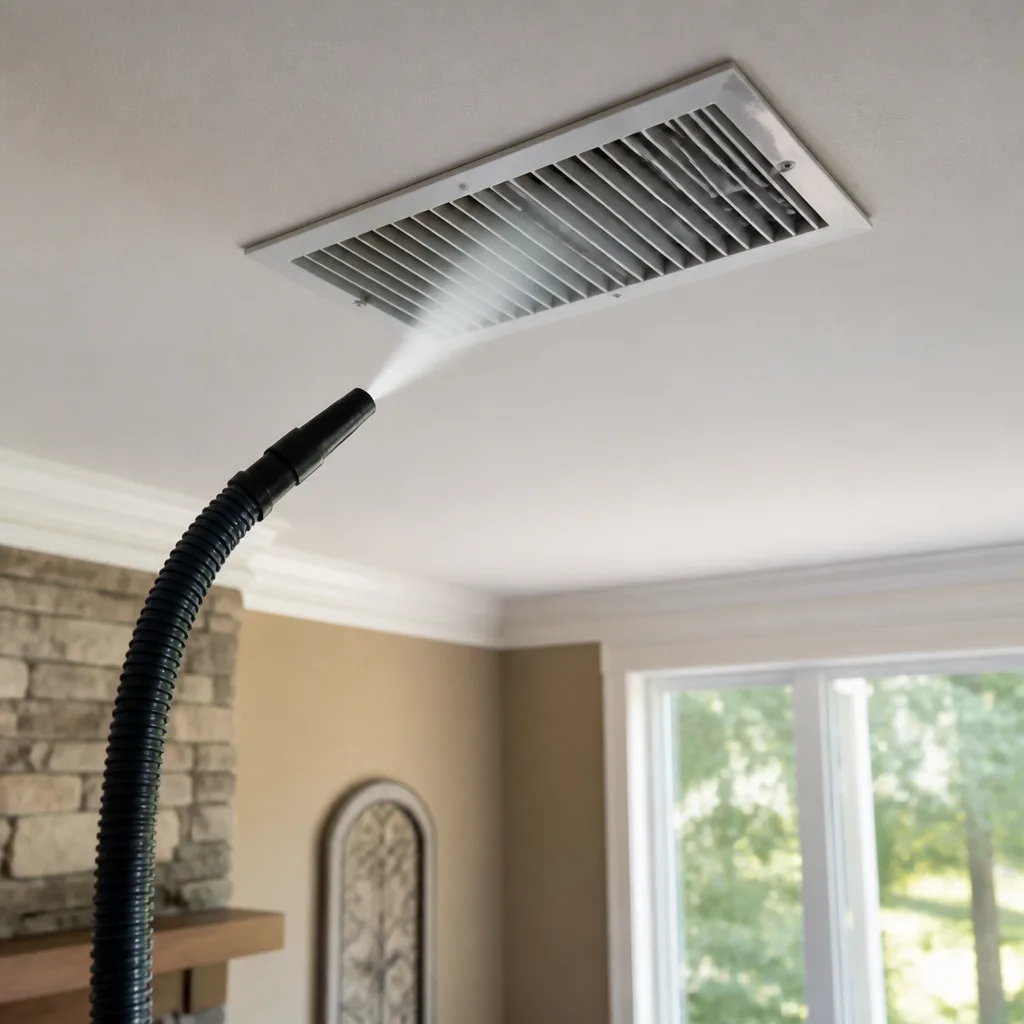
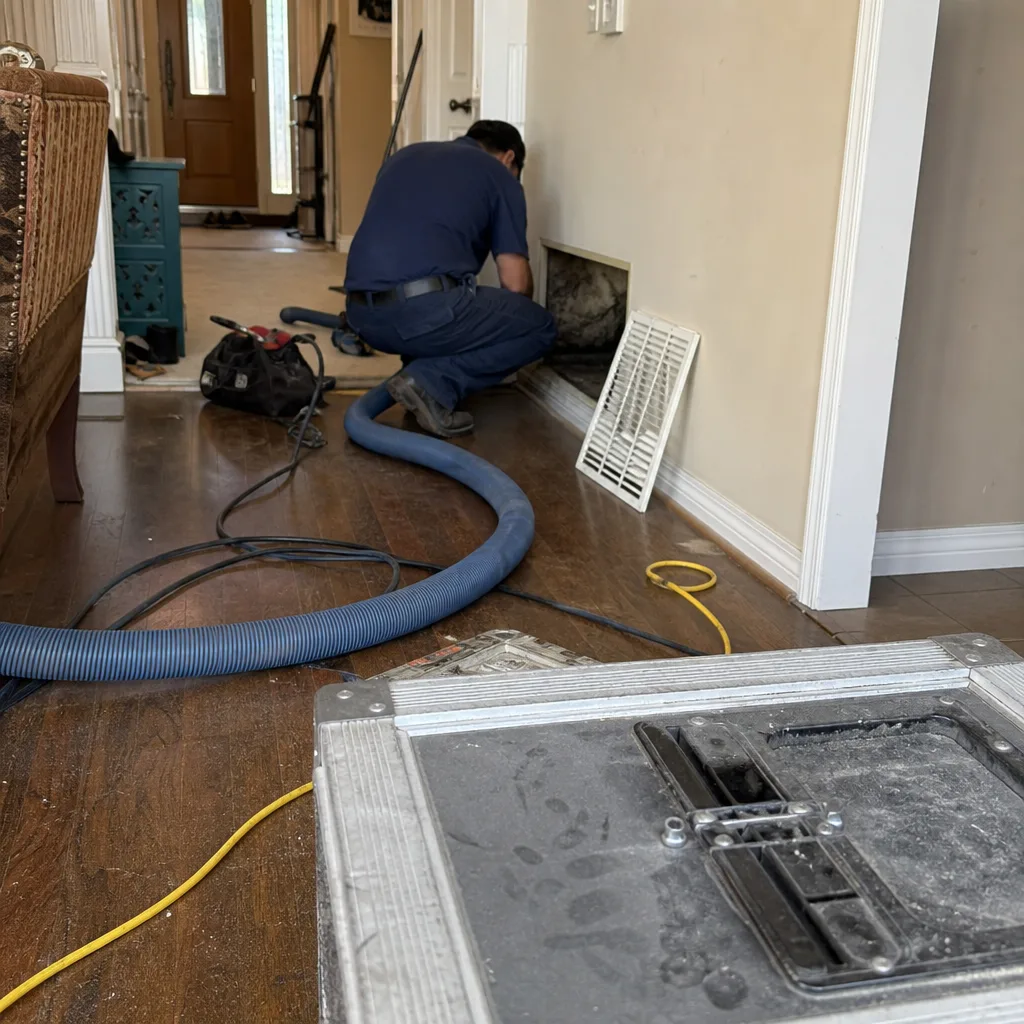 Before
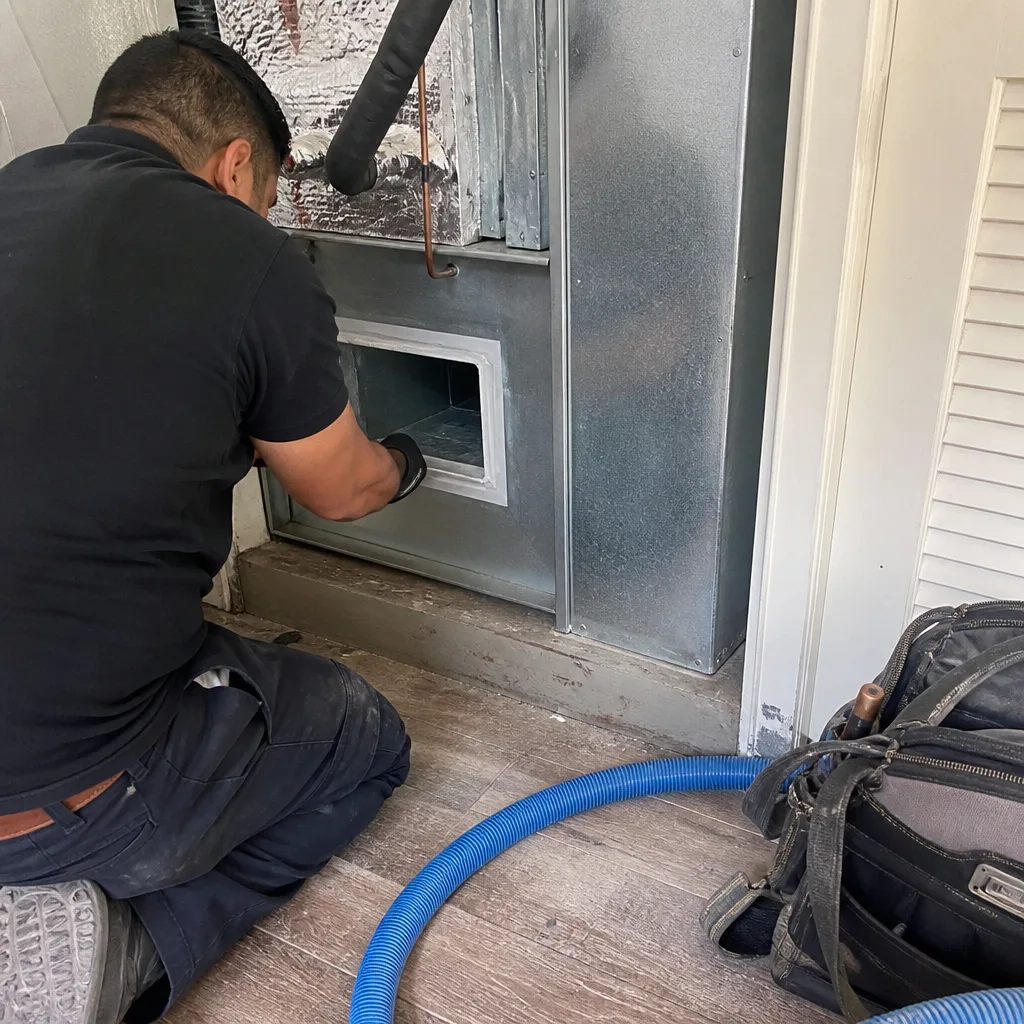 After
After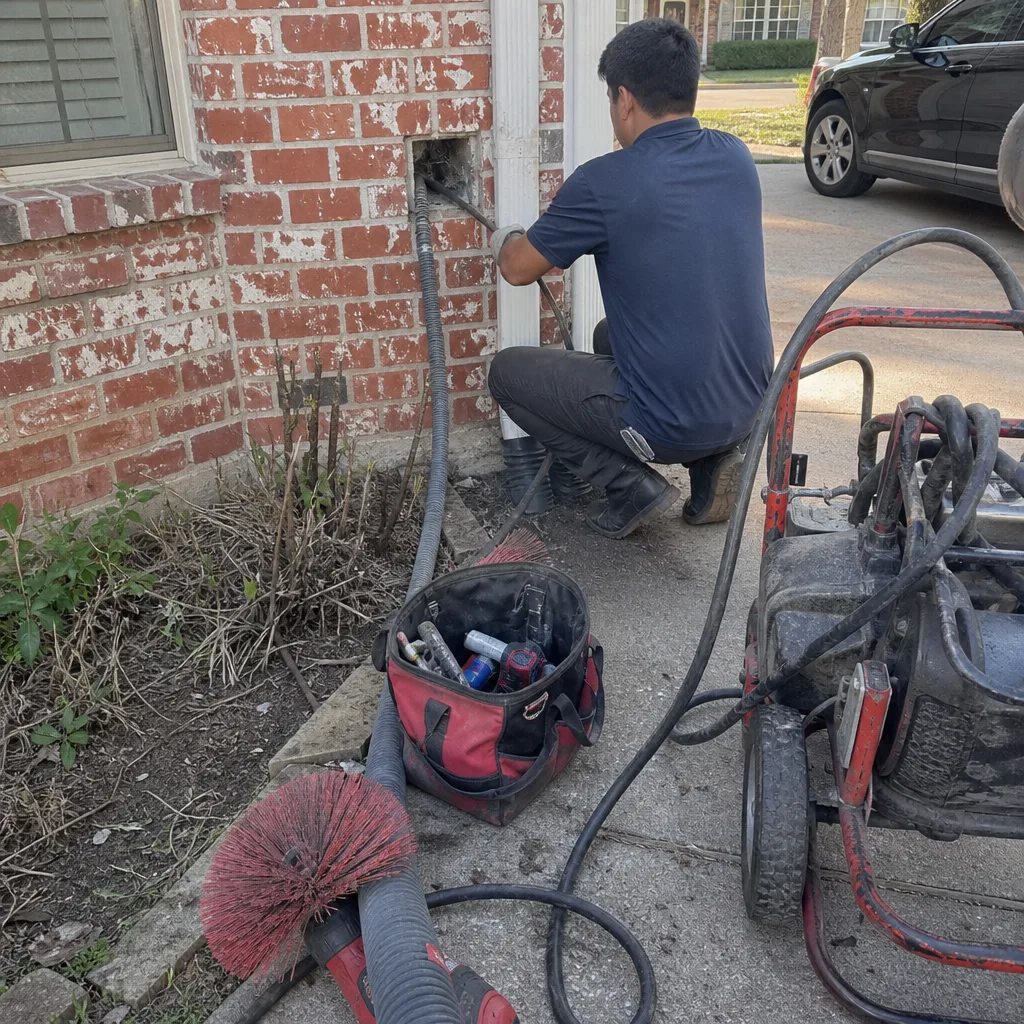 Before
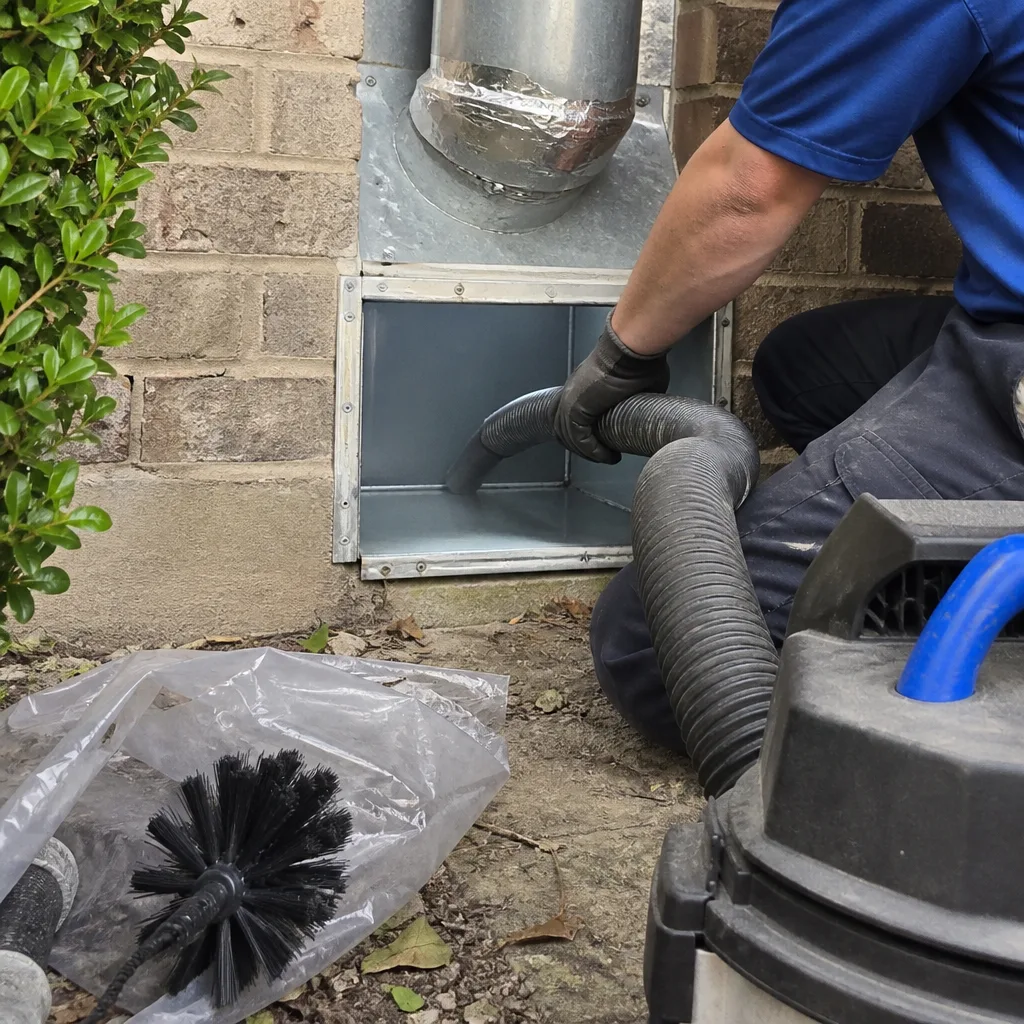 After
After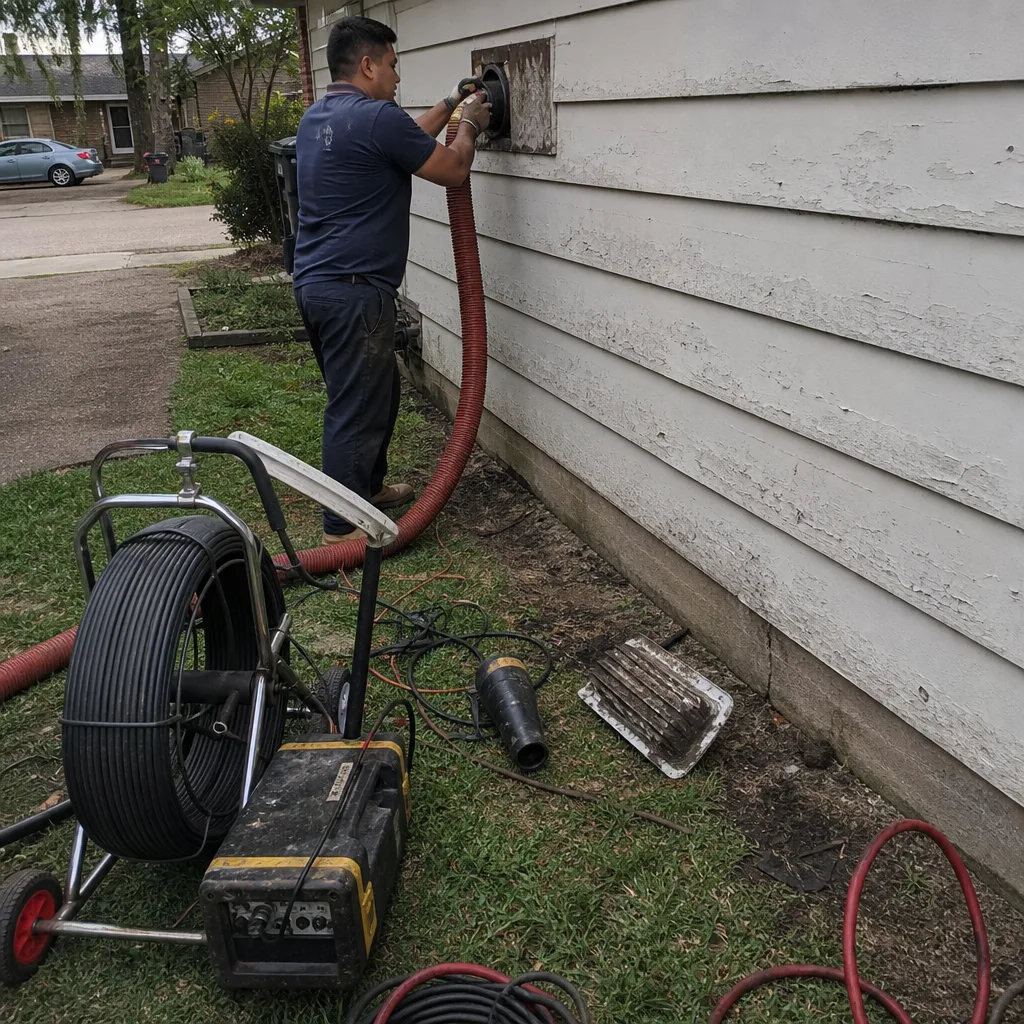 Before
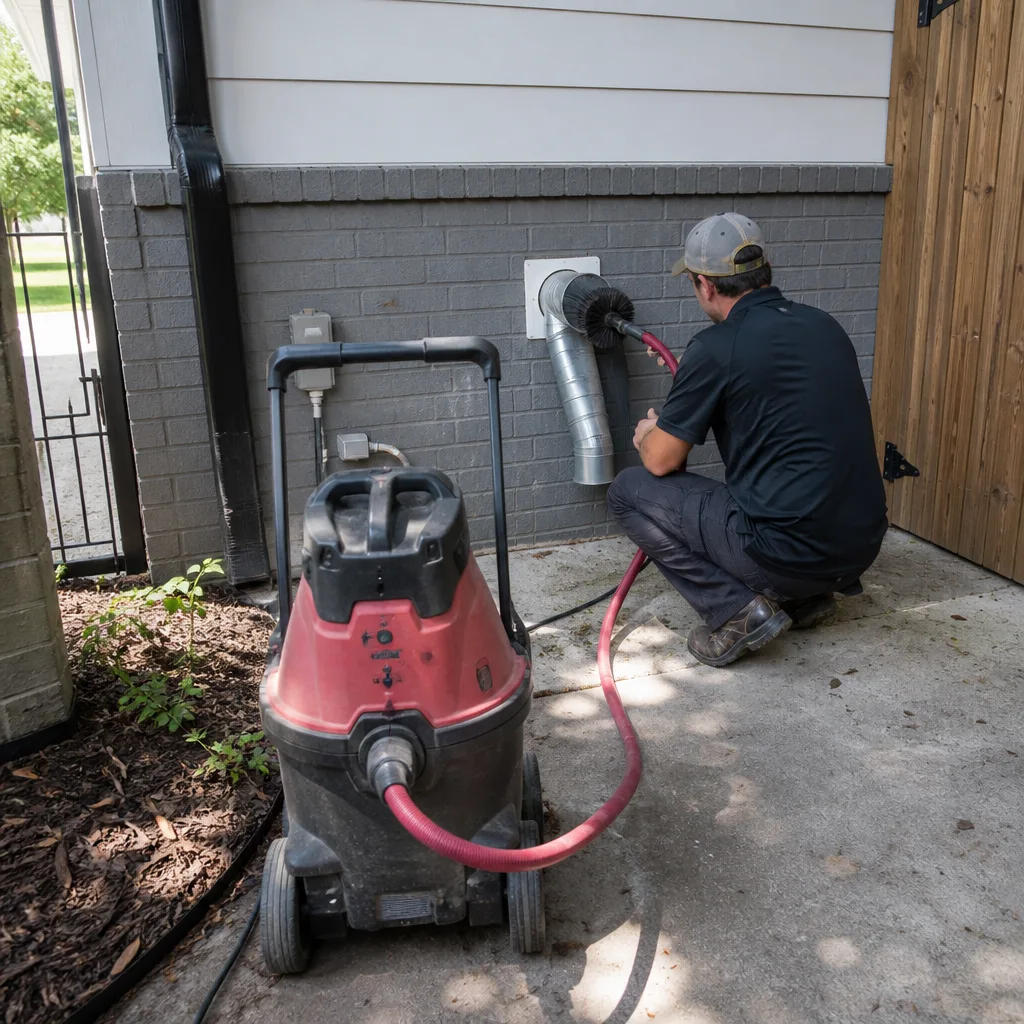 After
AfterHow Much Does Duct Repair & Sealing Cost in Houston?
Duct repair and sealing in Houston typically costs between $350 and $1,200 for a standard single-family home, with most jobs landing around $550-$750 when the work involves sealing leaky joints and replacing a damaged flex duct run or two. Homes built before 2000 in neighborhoods like Meyerland, Oak Forest, or the Heights often run higher because original ductwork is rigid galvanized steel with deteriorating mastic – a sealant that hardens and cracks over Houston’s decades of high-humidity cycling. At CleanRun, every price is written down before any panel comes off, so the number you see here is the same kind of number you’ll get from us in writing on the day of the job.
Duct Repair & Sealing Cost Breakdown (2026)
The table below reflects real prices in the Houston metro market as of 2026. These are not national averages ported in from a pricing database – they are ranges drawn from actual jobs we’ve completed across Harris, Fort Bend, and Montgomery counties, where attic heat loads, pier-and-beam crawl spaces, and slab construction each affect how long a duct job takes and what materials it requires.
| Service | Typical Houston Price Range | Notes |
|---|---|---|
| Mastic sealant application (per joint, per duct run) | $8-$18 per joint | Hands-down the most cost-effective fix for slow leaks at collars and elbows |
| Aeroseal duct sealing (whole-system) | $900-$1,800 | Pressurized polymer mist seals interior leaks without cutting into walls; worth it on slab homes where runs are buried |
| Flex duct replacement (per run, 8-12 ft) | $120-$280 per run | Common in Houston attics after 15-20 years of heat degradation; inner liner tears and collapses |
| Rigid (sheet metal) duct section repair | $200-$550 per section | Meyerland, Garden Oaks, and Bellaire ranch-style homes frequently have original galvanized runs that need re-crimping or patch panels |
| Supply plenum repair or reseal | $350-$700 | Plenum is the central distribution box off the air handler; leaks here waste conditioned air at the source |
| Return plenum resealing | $250-$500 | Return plenums that draw unconditioned attic air can raise indoor humidity noticeably during Houston summers |
| Disconnected duct reattachment | $95-$175 per connection | Most often found in attic installations after pest activity or a previous HVAC swap that wasn’t fully reconnected |
| Full duct system replacement (whole home) | $2,800-$6,500+ | Warranted when more than 40% of runs are compromised; we document that threshold with photos before recommending it |
| Duct pressure test (pre- and post-repair diagnostics) | $150-$300 | Quantifies leakage rate in CFM25 – cubic feet per minute at 25 pascals of pressure – before and after, so you have evidence the repair worked |
What Makes a Houston Job Run Higher or Lower
Access is the biggest single variable. A 2,400-square-foot home in Sugar Land built on a slab with all ductwork in the attic is straightforward – a technician can walk the runs with a flashlight and a camera. The same square footage in a two-story home in Montrose with some runs buried in interior wall cavities takes significantly more time to diagnose and reach. Expect the higher end of any range above when access requires cutting into drywall or navigating a cramped attic with standing water damage from a prior roof leak.
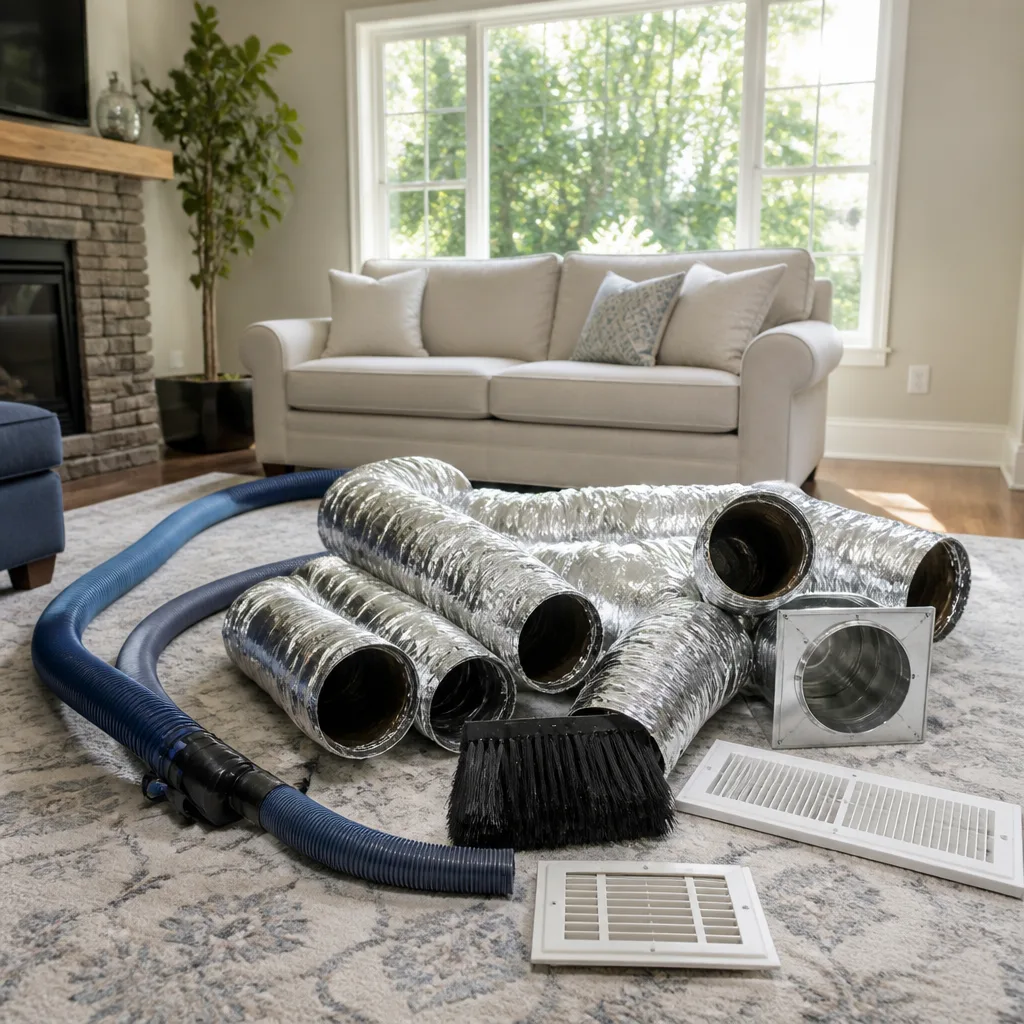
Material costs in Houston are also affected by our climate in a direct way. Flex duct – the silver-wrapped insulated tubing that feeds most of the registers in homes built after 1990 – degrades faster here than in drier Texas cities like El Paso or Amarillo. The combination of sustained attic temperatures above 130°F in July and August and high ambient humidity causes the inner plastic liner to become brittle in as little as 12-15 years. When we photograph those runs and you see a liner that looks like crinkled cellophane, that’s not cosmetic – it’s a constriction that cuts airflow and forces your system to run longer to hit setpoint.
Labor rates in Houston proper (77007, 77008, 77019 zip codes) run about 10-15% higher than outer suburbs like Katy, Pearland, or Conroe, primarily because of drive time factored into scheduling and the density of two-story townhome construction in inner-loop neighborhoods that’s harder to work in than a single-story ranch.
What Affects Duct Repair & Sealing Pricing in Houston
- System age and construction era: Homes built in Houston between 1960 and 1985 often have rigid galvanized ductwork sealed with mastic compounds that have long since cracked. Those systems need mechanical repair – new sheet metal sections, re-crimped connections, fresh mastic – not just sealant. Homes built from the early 1990s onward predominantly used flex duct, which is cheaper to replace but fails faster in our attic heat.
- Number of duct runs and system size: A 1,400-square-foot bungalow in the Heights might have 8-10 supply runs. A newer 3,500-square-foot home in The Woodlands or Cinco Ranch could have 18-24. Every additional run that needs sealing or replacement adds material and labor time proportionally. We photograph all of them – before and after – regardless of count.
- Attic conditions specific to Houston: Houston attics present three problems that don’t show up in national pricing guides: radiant heat from low-pitch rooflines, residual moisture from Harvey-era roof penetrations that were repaired but never fully dried out, and blown-in cellulose insulation that buries flex duct runs and has to be moved carefully to avoid disturbing it. Each adds time.
- Leakage severity and location: A few unsealed joints near the air handler plenum can be addressed with mastic in an afternoon. Distributed small leaks across every collar in a large system – which a pressure test quantifies as a percentage of total airflow – may make Aeroseal sealing more cost-effective than hand-sealing dozens of individual joints. We put both options in writing so you can compare them.
- Whether an HVAC permit is required: The City of Houston does not require a permit for duct sealing or minor duct repairs that don’t alter the system’s rated capacity. Harris County Engineered Areas and some inner-ring municipalities like Bellaire and West University Place have their own inspection requirements for duct work tied to an HVAC replacement. If a permit applies, we tell you before the job starts – it affects cost and timeline.
- Access and obstructions: Two-story townhomes in Midtown and EaDo, pier-and-beam homes in Montrose and Eastwood, and split-level construction in Meyerland all have duct configurations that take longer to reach safely. Jobs where runs pass through finished soffit enclosures or behind custom cabinetry cost more because access has to be created carefully and patched afterward.
BeforeAfterDuct Repair vs. Duct Replacement: Which Makes More Sense in Houston?
This is the question that comes up most often when a homeowner in Pearland or Kingwood gets a second opinion on a quote they didn’t feel confident about. The short answer: repair makes sense when less than 30-40% of the duct system is compromised and the remaining runs are structurally intact. Replacement makes sense when the inner liner of flex duct is collapsed or torn across multiple zones, when galvanized steel has corroded through rather than just lost its mastic seal, or when the system layout itself is the problem – undersized trunk lines, dead-end branches, or return-to-supply imbalances that no amount of sealing will fix.
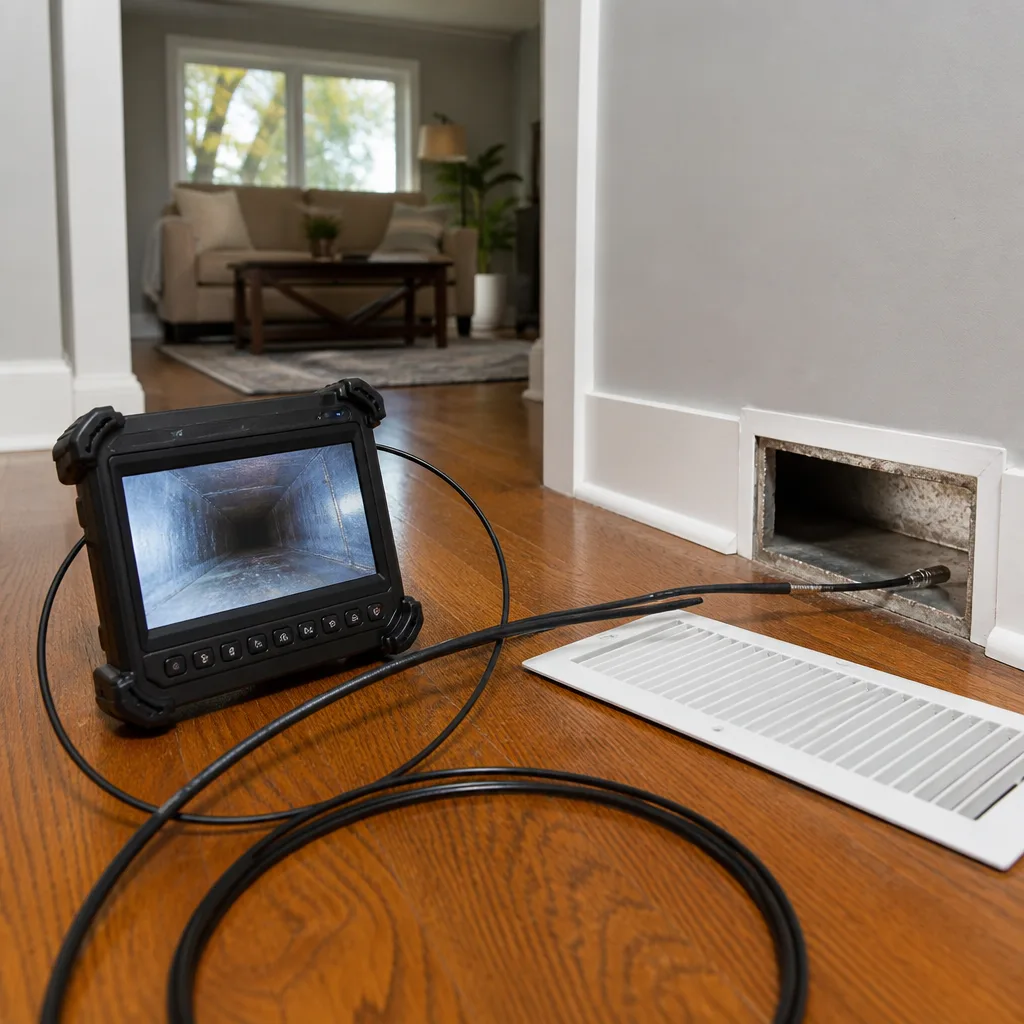
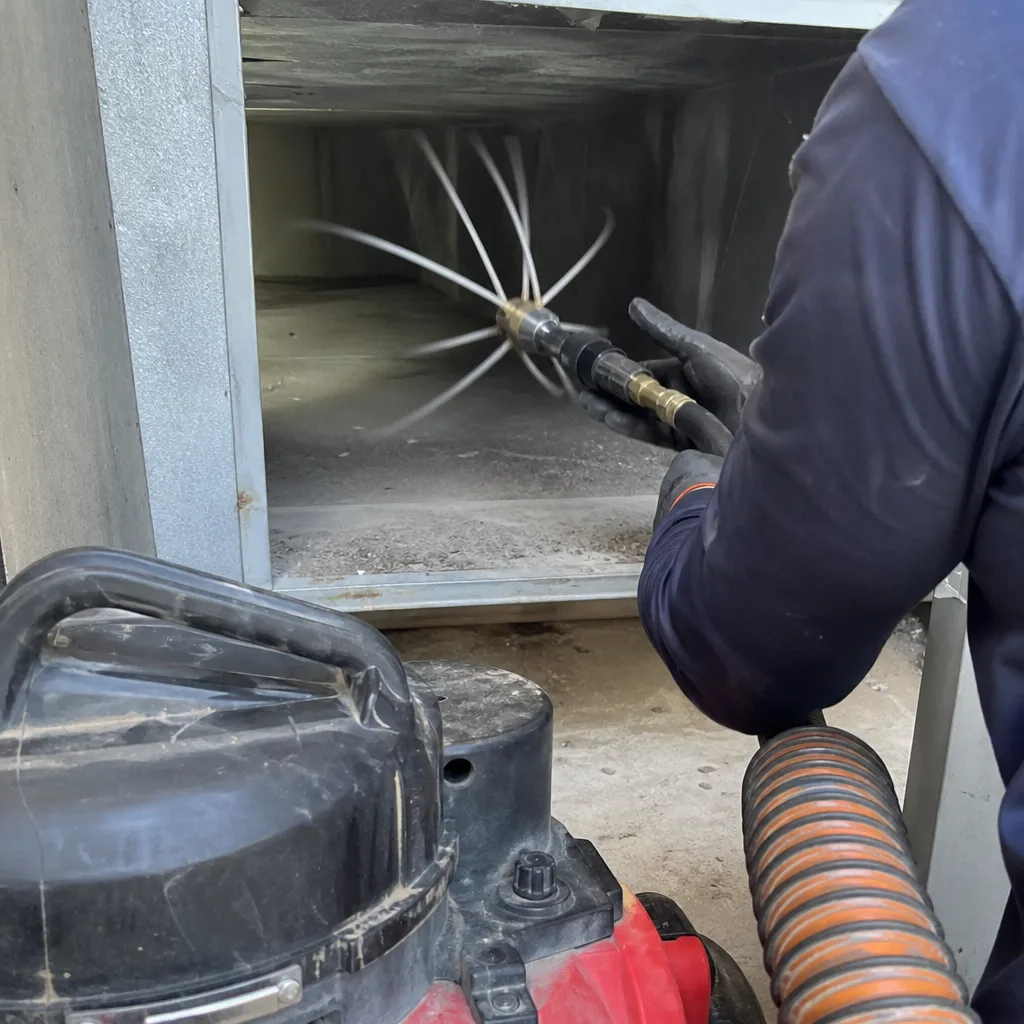
The only way to know which category your system falls into is a pressure test combined with a visual inspection of every run. At CleanRun, that inspection is documented with photos – every run, before and after – so you’re not taking a technician’s word for it. You can see the 3-inch debris build-up at the first elbow. You can see the collapsed inner liner on run 7. That’s the difference between a quote and a documented recommendation.
If you’ve already received a written estimate from another company, bring it in. We offer a Free Second Opinion on any written estimate – we put our own number next to theirs in writing, so you can compare them line by line. No phone-call version of this exists. It’s a written document you take home.
How to Save on Duct Repair & Sealing in Houston
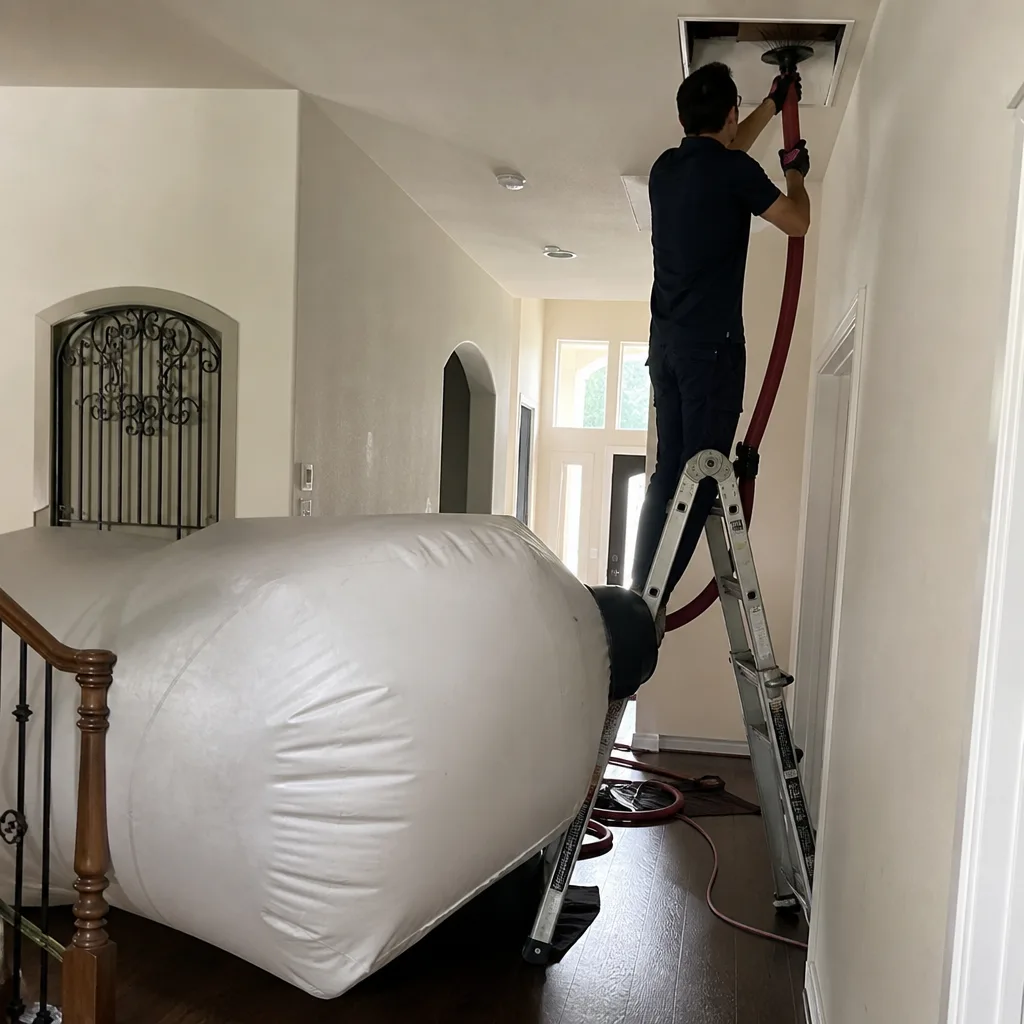
Start with a pressure test, not an assumption
Scheduling a duct leakage pressure test before committing to repair or sealing means you know the actual leakage rate in CFM25 rather than a technician’s visual estimate. If your system tests at 8% leakage, spot-sealing four joints might close 6% of that and cost $200. If it tests at 28%, you’re looking at a broader program. Numbers first, then decisions.
Combine duct work with air duct cleaning when timing aligns
If you’re already having ductwork sealed or repaired, pairing it with a full Duct Repair & Sealing in Houston scope during the same visit reduces total labor cost because access points are open and the crew is already in the attic. Scheduling them separately means two setup and teardown cycles. Ask when you call whether the timing makes sense for your specific system condition.
Don’t chase the $79 coupon
This is specific to Houston’s market and worth saying directly. Several national duct-service franchises run $79 whole-home specials in Houston – they circulate through Harris County zip codes heavily in spring and fall. What that price buys in practice is a shop-vac pulled past each register opening, no camera documentation, and an upsell presentation that can reach $600-$1,200 before the technician leaves. We’ve photographed what comes next in the ducts of homes that went through those visits. The before photo looks the same as if no one had come. Written upfront pricing with a documented photo record before and after costs more at the front end and costs less over time.
Get the work done in fall or early spring
Scheduling in October, November, March, or early April means attic temperatures in Houston are manageable – 90-100°F rather than 130-140°F. Technicians can work longer in each run without break cycles, which translates to shorter job duration and, in some cases, lower labor cost. Summer jobs in Houston attics are real work, and pricing reflects that.
Ask for the written price before agreeing to anything
Under Haven Standard Clause 1, CleanRun delivers a written price before any work begins – no exceptions. If another company tells you they need to open things up before they can quote, that’s not a technical necessity, it’s a sales practice. A trained technician can quote duct sealing from a visual inspection and a pressure test without cutting into anything first. Call (346) 251-8919 and we’ll give you a number in writing before the crew touches a panel.
What the CleanRun Documentation Process Looks Like on a Duct Repair Job
Tomas Reyes started CleanRun in 2013 around a single principle: show the customer what’s actually there before asking them to spend money on it. That’s now formalized in every job as the Documented Photo Record – every duct run photographed before work starts and after it’s complete, delivered to the customer as a standard deliverable, not an add-on.
On a duct repair job, that record typically includes: the plenum condition at the air handler, photos of each supply run collar showing whether mastic seal is intact or missing, photos of any flex duct sections showing inner liner condition, and post-repair photos of every sealed joint and replaced run section. If a pressure test is included, the pre- and post-repair CFM25 readings are documented in writing alongside the photos.
The equipment we use to do that documentation and the actual repair work includes Rotobrush systems for access and agitation, Nikro negative-pressure extraction equipment, and Abatement Technologies products where air quality is a factor. Sealants applied are trade-grade mastic or UL-listed foil tape depending on substrate. We don’t use duct tape – the rubber-adhesive type fails in Houston attic heat within 18 months.
Every job is also covered by the 365-Day Done Right Promise: if the repair isn’t right, we make it right, and that’s written on the job record, not stated verbally at the door. The crew member who completed the job is identified by name before they arrive, per Haven Standard Clause 3: Verified Crews.
Signs Your Houston Home Likely Has Duct Leakage
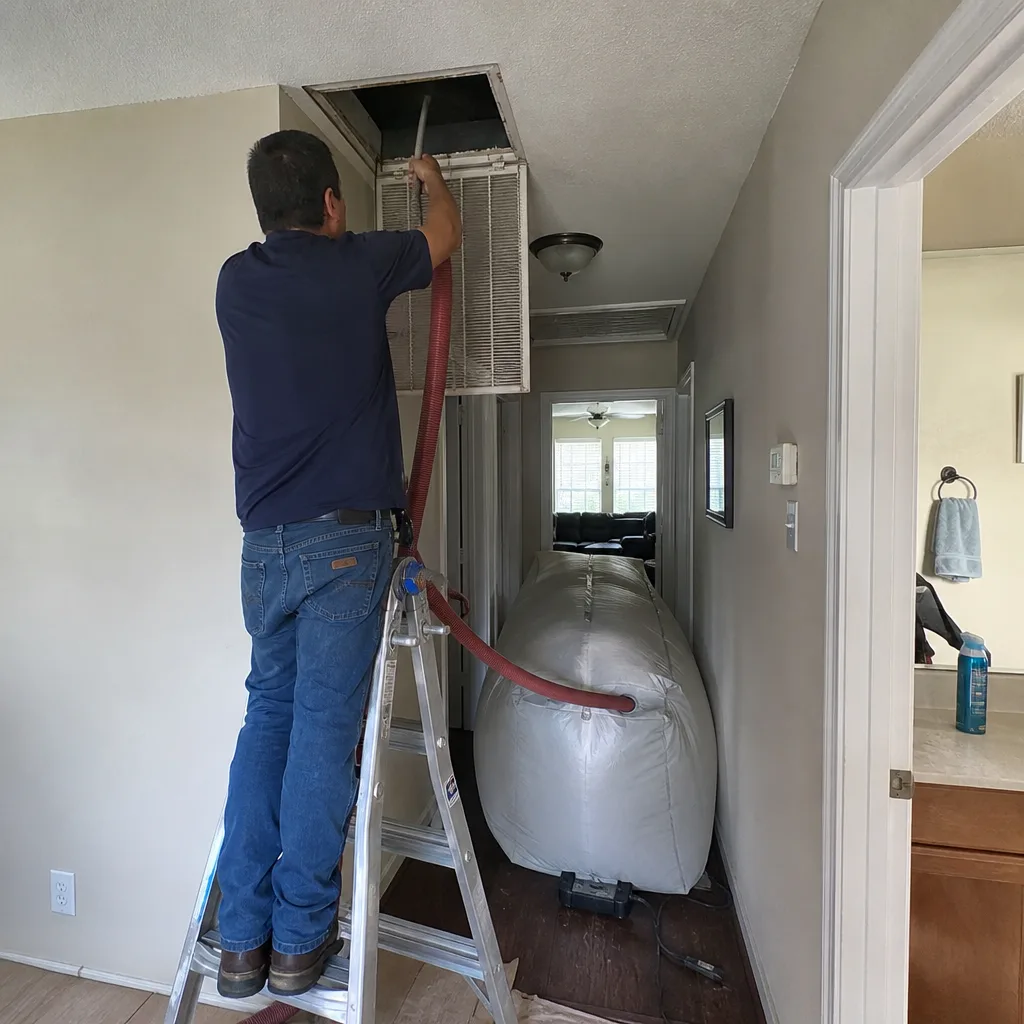
These aren’t definitive diagnoses – only a pressure test gives you a number you can act on – but they’re common patterns we see regularly across Houston neighborhoods:
- Uneven room temperatures: A master bedroom in the back of a Katy or Sugar Land home that runs 4-6°F warmer than the front rooms in July often has a collapsed or disconnected flex run feeding it, not a refrigerant problem.
- Utility bills that climbed without a clear reason: A duct system leaking 20-25% of conditioned air into an unconditioned attic adds roughly that percentage to your cooling load. In Houston, where a system runs 10-14 hours a day in summer, that’s measurable on your CenterPoint bill.
- Dustier-than-usual rooms: Return duct leaks near the air handler draw unconditioned attic air – and whatever particulate is in it – into the supply stream. If you’re wiping dust off flat surfaces weekly in a home you keep clean, it’s worth testing the return side of the system.
- High indoor humidity readings: Houston’s outdoor humidity averages 75-90% from May through September. A leaking return plenum pulling that air into the system can keep indoor relative humidity above 60% even when the thermostat is satisfied, which is the threshold where mold begins to become a biological concern.
- A system that short-cycles or runs constantly: When conditioned air leaks out before it reaches the register, the thermostat keeps calling for cooling. A system that runs continuously on a 90°F Houston afternoon may have an equipment problem – or it may have a duct problem. A pressure test costs less than a service call on the equipment.
FAQs – Duct Repair & Sealing Cost in Houston
How much does duct sealing cost in Houston for an average home?
Duct sealing for an average Houston home – roughly 1,800-2,400 square feet on a slab with attic ductwork – costs between $450 and $850 for mastic-based hand-sealing of joints and collars throughout the system. Whole-system Aeroseal treatment on the same home runs $900-$1,500. The right method depends on where the leaks are concentrated: hand-sealing is efficient when leaks cluster at accessible joints near the plenum; Aeroseal is more practical when leaks are distributed across dozens of small gaps throughout the system. Call (346) 251-8919 and we’ll give you a written number after a visual inspection – no estimate withheld pending “opening things up.”
Is duct sealing worth it in Houston?
In Houston specifically, yes – more so than in most U.S. markets. A duct system leaking 20% of conditioned air into a 130°F attic in July is functionally air-conditioning the attic at your expense. CenterPoint Energy’s own efficiency data suggests Houston homeowners with leaky duct systems overpay by $200-$500 annually in cooling costs depending on home size and system age. Sealing a system that tests at 20%+ leakage typically recovers the repair cost within 2-3 cooling seasons. The documentation we provide – pre- and post-repair pressure test readings – lets you verify that directly rather than taking it on faith.
How long does duct repair take in a Houston home?
A standard duct sealing job on a 2,000-square-foot single-story slab home in Houston takes 3-5 hours from the time the crew arrives to when the documentation is complete. Add 1-2 hours for two-story homes or for jobs that include replacing multiple flex duct runs. Aeroseal treatment on a similar home takes 4-6 hours because the pressurization and cure process requires the system to be sealed and run for a continuous period. We schedule a specific arrival window and the crew is identified by name before they arrive.
Does duct repair in Houston require a permit?
For most duct repair and sealing work in unincorporated Harris County and the City of Houston, no permit is required as long as the work doesn’t alter the system’s rated capacity or involve replacing the air handler or major HVAC components. However, some incorporated municipalities within the metro – Bellaire, West University Place, and parts of Missouri City – have local ordinances that require inspection for duct work done in conjunction with HVAC replacement. If a permit applies to your specific job and address, we tell you in writing before work starts. It affects cost and timeline, and you’ll know both upfront.
What’s the difference between duct sealing and duct cleaning – do I need both?
Duct cleaning removes accumulated debris – dust, construction particulate, allergens, and in older Houston homes sometimes mold colonies on flex duct inner surfaces – from the interior of the duct runs using negative-pressure extraction equipment. Duct sealing closes gaps, cracks, and failed joints in the duct structure to prevent conditioned air from escaping and unconditioned attic air from entering. They address different problems. Many Houston homes benefit from both, particularly homes built before 2005 that haven’t had either service done. Whether to sequence them together or separately depends on what the inspection camera shows in the first run we open. We photograph that run before recommending anything, and the written price covers whatever scope we agree on – not one dollar more without a revised written approval from you.
Can a duct leak cause mold in a Houston home?
Yes, and this is more specific to Houston than to drier Texas markets. A return duct leak that pulls humid Houston attic air – often at 80-90% relative humidity from May through October – into the supply stream can raise indoor humidity above 60%, which is the threshold where mold colonization on organic building materials becomes a realistic risk. We’ve photographed inner surfaces of return duct runs in Meyerland and Eastwood homes where the inner liner showed visible mold growth traceable to a failed plenum seal rather than a roof or plumbing source. If indoor humidity is elevated and no plumbing or roofing cause is obvious, a duct inspection is a logical next step. Call (346) 251-8919 for a written quote on a full system inspection.
Why Houston Homeowners Choose CleanRun for Duct Repair
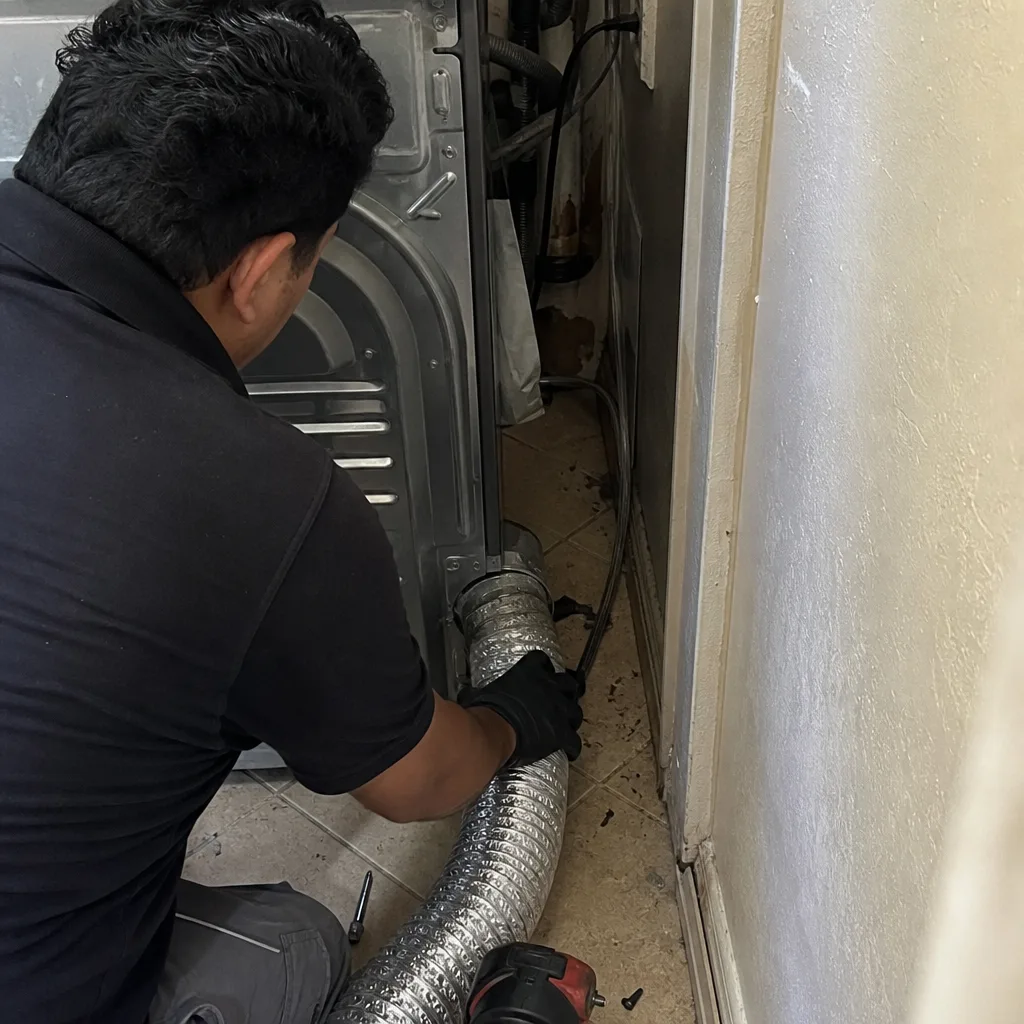
The honest answer is documentation. CleanRun has served more than 52,000 homes since 2013, and every single one received a written price before work started and a documented photo record when the crew left. That’s not a marketing position – it’s an operational standard under the Haven Standard, and it’s the reason we offer a Free Second Opinion on any written estimate. We’re confident our price will be competitive, but more than that, we’re confident our scope will be documented in a way that lets you verify the work was actually done.
Tomas Reyes built CleanRun around the idea that the duct service industry’s credibility problem – the $79 coupon, the upsell at the door, the shop-vac passed near a register and called a cleaning – is a documentation problem. When a customer can see the before photo, the after photo, and the pre- and post-repair pressure test readings, they don’t have to trust a salesperson. The evidence does the work.
Every technician on a CleanRun job is background-checked, uniformed, and identified by name before they arrive at your door – Haven Standard Clause 3: Verified Crews. The equipment on the truck includes Rotobrush, Nikro, and Abatement Technologies systems – not hardware-store shop vacs. And the 365-Day Done Right Promise means if the repair isn’t right, we make it right, in writing, with no manager approval required.
Key Takeaways
- Duct repair and sealing in Houston runs $350-$1,200 for most single-family homes, with the average job falling between $550 and $750.
- Aeroseal whole-system sealing costs $900-$1,800 and is most cost-effective when leaks are distributed across the full system rather than concentrated at a few accessible joints.
- Houston’s attic heat and humidity degrade flex duct faster than in drier Texas markets – inner liners begin to collapse in as little as 12-15 years.
- A pressure test (CFM25 measurement) before and after repair is the only way to verify that sealing actually reduced leakage – ask for the numbers in writing.
- No permit is required for most Houston duct repair and sealing jobs, but some inner-ring municipalities have their own requirements – confirm before work starts.
- Every CleanRun job includes a written price before work begins, a Documented Photo Record of every run, and is backed by the 365-Day Done Right Promise.
- A Free Second Opinion on any written estimate is available – bring the competitor’s quote and we’ll put our number next to it in writing.
Get a Written Price for Duct Repair in Houston
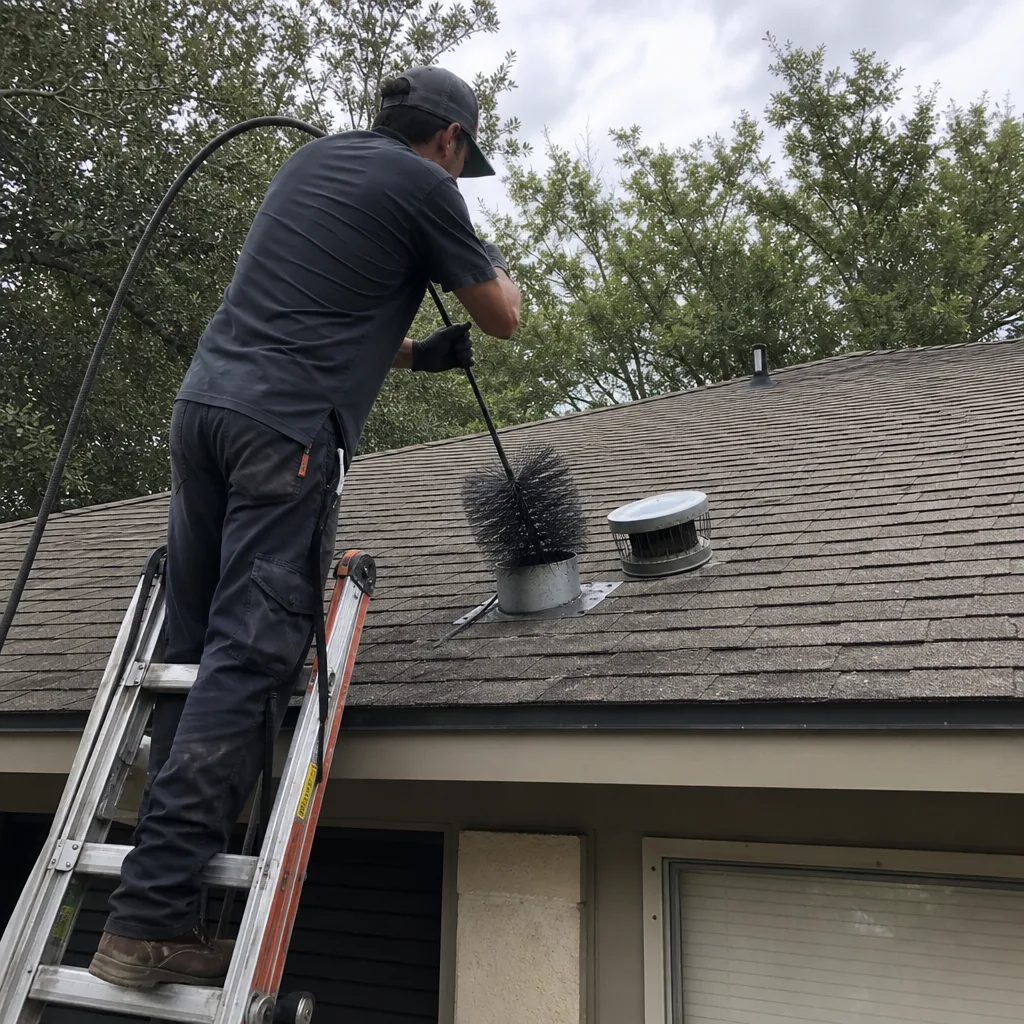
If your Houston home has rooms that don’t cool properly, utility bills that climbed without a clear cause, or a system that runs longer than it should, a duct inspection and pressure test is the right starting point. CleanRun will photograph every run, test the system’s leakage rate, and give you a written price for whatever our Duct Repair & Sealing services the evidence supports – before anyone touches a panel.
Call (346) 251-8919 to schedule a free estimate. A live person answers every call. The price you get will be in writing. That’s Haven Standard Clause 1, and it applies to every job we do in Houston.
Pricing reflects the Houston market as of 2026. CleanRun Air Duct Cleaning Houston offers free estimates – call (346) 251-8919.
Written by Tomas Reyes, Owner at CleanRun Air Duct Cleaning Houston, serving Houston, TX since 2013.
What Our Customers Say
"Flat price agreed up front, no per-vent add-ons at the end. That was the whole reason I did not call the coupon company."
- Suzanne B."On time, professional, and explained what the readings meant without talking down to me."
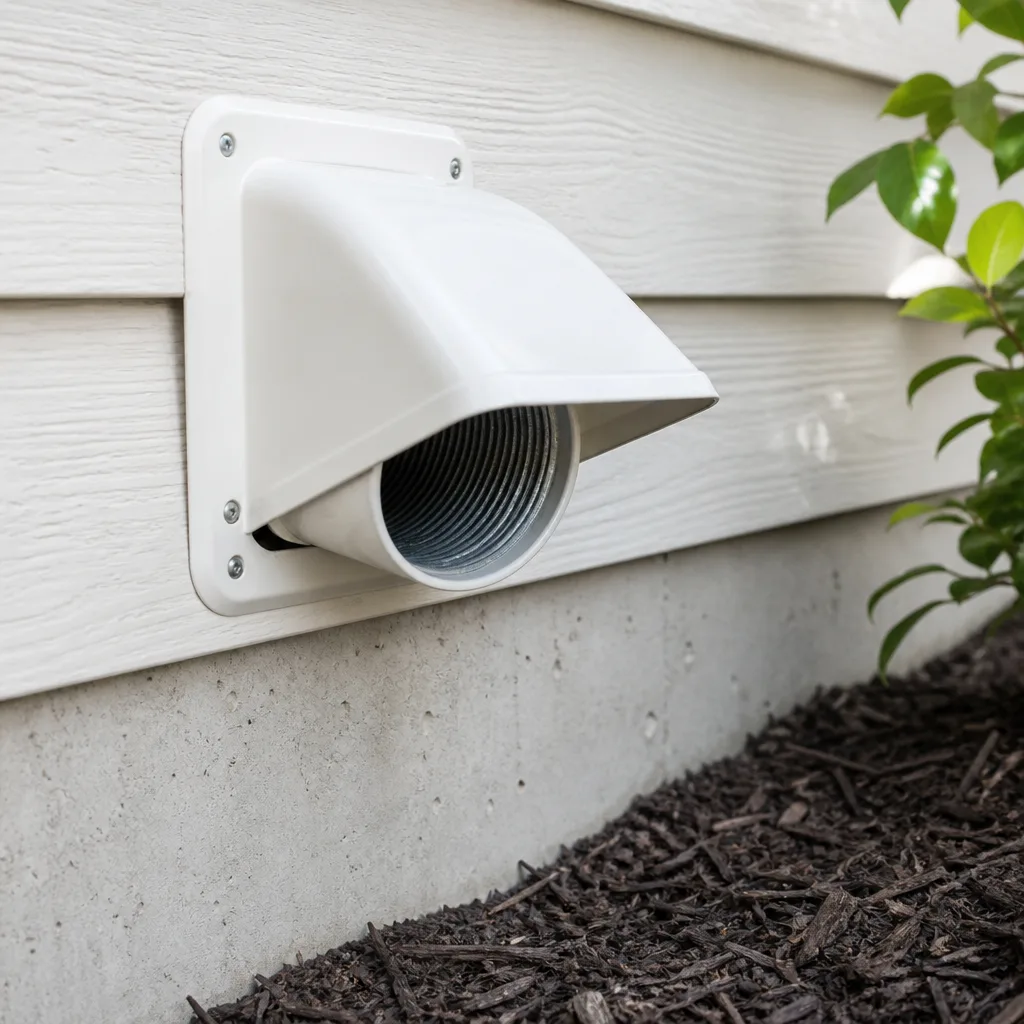
- Warren E."The dryer vent was almost completely blocked with lint. They showed me the photograph and I understood immediately why the dryer had been running twice."
- Lucia M.